
Revisiting Ark at Egwood: Before, During and After Bokashi
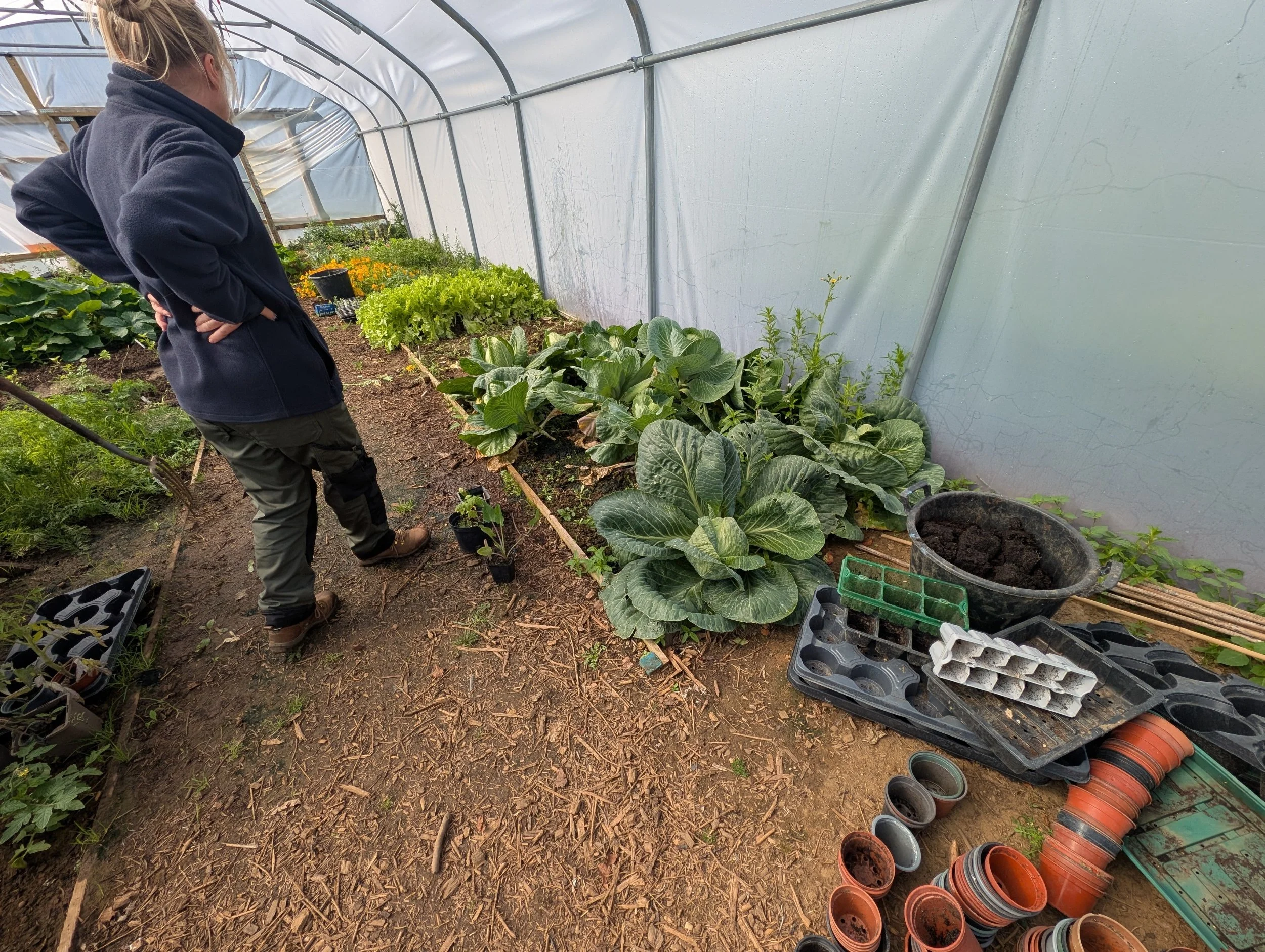
At Agriton, one of the most rewarding parts of our work is returning to projects months or years later and seeing what has actually happened.
Recently, we revisited the composting systems at Ark at Egwood, a remarkable charity and community based in Dorset that supports adults with learning disabilities through meaningful work, horticulture, conservation, and land-based activities.
When we first visited, the conversation centred around a familiar challenge faced by many gardens, farms and community projects:
How do we turn organic "waste" into a resource while improving the health of our soil?
The answer was not simply to make more compost. It was to rethink the entire process.
This revisit gave us the opportunity to see the results and, importantly, document the journey from start to finish.
The Video: Before, During and After
The accompanying video tells the complete story of the project.
You'll see the compost bays before Bokashi was introduced, the process during fermentation, and the results after the system had been established.
The footage captures:
The original composting setup.
The creation of the Bokashi heaps.
The addition of Effective Microorganisms (EM), clay minerals and seashell lime.
The covering and fermentation process.
The finished material and condition of the compost bays after treatment.
Rather than a snapshot in time, the video shows the entire transformation and provides a real-world example of Bokashi in action.
Why Look Beyond Traditional Composting?
Conventional composting has many benefits, but it also comes with a challenge.
Aerobic composting relies on oxygen. As microorganisms break down organic matter, significant amounts of carbon are released into the atmosphere as carbon dioxide. Heat, steam and volume reduction are often seen as signs of success, but they are also signs that organic matter is being lost.
Research comparing Bokashi fermentation with traditional composting found that composting resulted in approximately 62% material loss, whereas Bokashi retained around 97% of the original material.
For projects like Ark at Egwood, where organic matter is valuable, retaining those nutrients and carbon stores is incredibly important.
What Makes Bokashi Different?
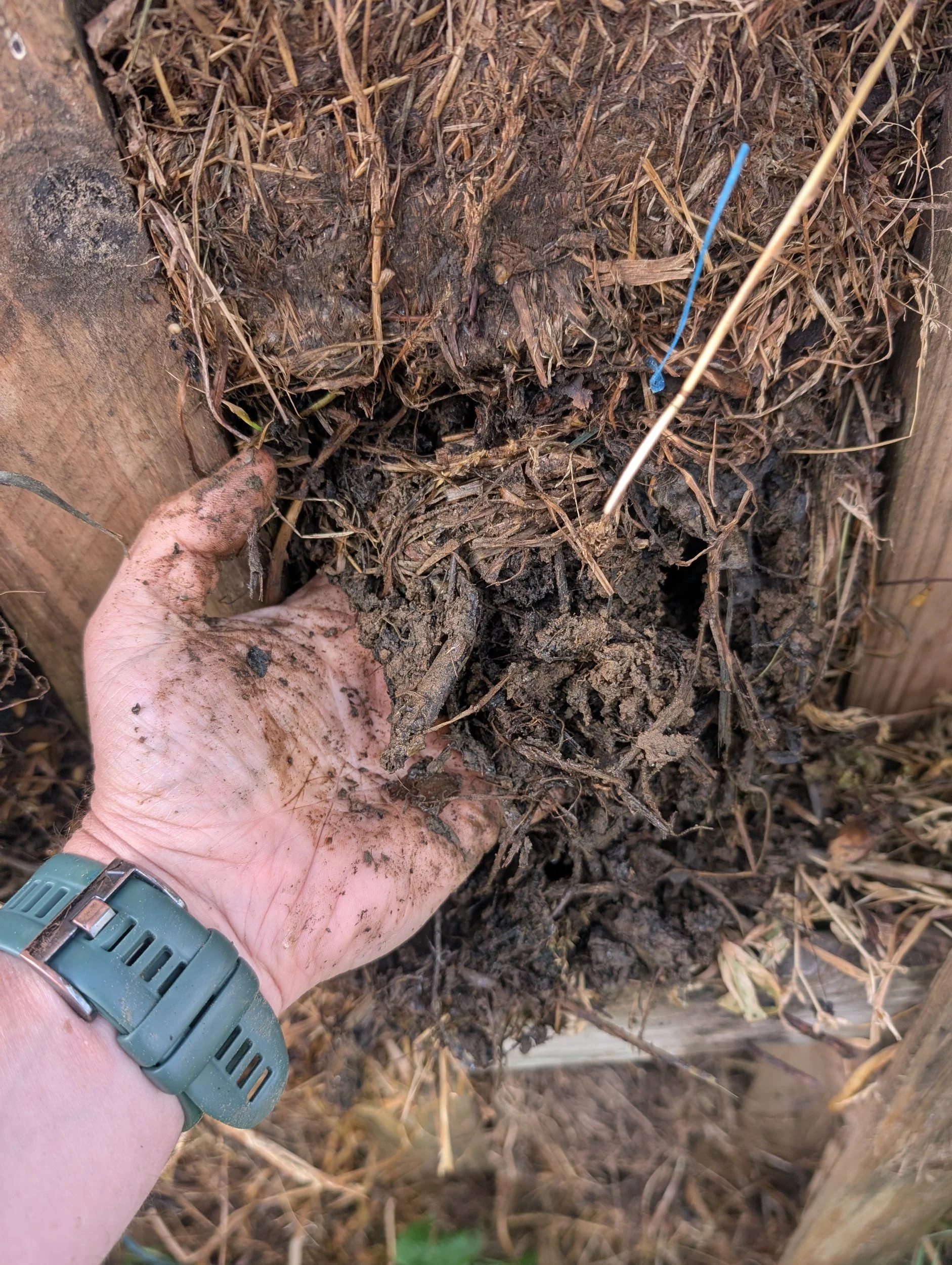
Bokashi is the Japanese word for "fermented organic matter."
Instead of encouraging decomposition through oxygen and heat, Bokashi uses fermentation.
Organic materials are mixed with Effective Microorganisms, clay minerals and seashell lime before being covered and sealed from oxygen. This creates an anaerobic environment where fermentation can occur.
The process is fundamentally different from composting:
CompostingBokashiAerobicAnaerobicHot processCold processOrganic matter breaks down rapidlyOrganic matter is preservedCarbon releasedCarbon retainedNutrients can be lostNutrients retained
The result is a biologically active soil amendment that can be incorporated back into the soil to feed microbes and support long-term soil fertility.
Returning to Ark at Egwood
What struck us most during our return visit was not simply the condition of the compost bays.
It was the shift in mindset.
Instead of asking:
"How do we get rid of this material?"
the focus had become:
"How do we keep these nutrients cycling through the system?"
Grass cuttings, plant material and organic residues were no longer viewed as waste streams. They had become valuable inputs for future soil fertility.
That change in thinking is often the biggest transformation of all.
Building Soil Rather Than Losing It
Healthy soils rely on more than nutrients.
They rely on carbon, biology, structure and diversity.
Long-term field research comparing Bokashi and compost over seven growing seasons demonstrated that Bokashi can be successfully used as a soil improver while helping maintain soil fertility and biological activity.
For organisations managing land, gardens or growing spaces, that means:
Improved soil structure
Better water retention
Greater biological activity
Enhanced nutrient cycling
Increased resilience during extreme weather
Reduced need for imported inputs
Every load of organic material retained on-site becomes an investment in future soil health.
From Waste to Resource
One of our favourite observations comes from a municipal Bokashi project in Iceland:
"This material is only waste when it is treated as such."
That perfectly reflects what we saw at Ark at Egwood.
The compost bays are no longer simply a place where materials are disposed of.
They have become part of a circular system where nutrients, carbon and biology remain within the site and continue supporting future growth.
What the Results Show
The video demonstrates something that statistics alone cannot.
It shows how a community project can take everyday organic materials and transform them into a valuable resource.
The before footage shows the starting point.
The during footage shows the practical reality of creating Bokashi heaps.
The after footage shows the results of choosing fermentation over decomposition.
Together they tell the story of how a different approach to organic materials can support healthier soils, stronger ecosystems and more resilient communities.
Looking Forward
As organisations face increasing pressure to reduce waste, improve sustainability and make better use of local resources, projects like Ark at Egwood provide an inspiring example of what is possible.
Not because they adopted a new product.
But because they adopted a new way of thinking.
One that recognises that healthy communities depend on healthy soils, healthy soils depend on biology, and biology depends on returning organic matter back to the land.
We would like to thank everyone at Ark at Egwood for welcoming us back and for continuing to demonstrate what can be achieved when communities work with nature rather than against it.
The compost bays tell one story.
The soil will tell the next.
