
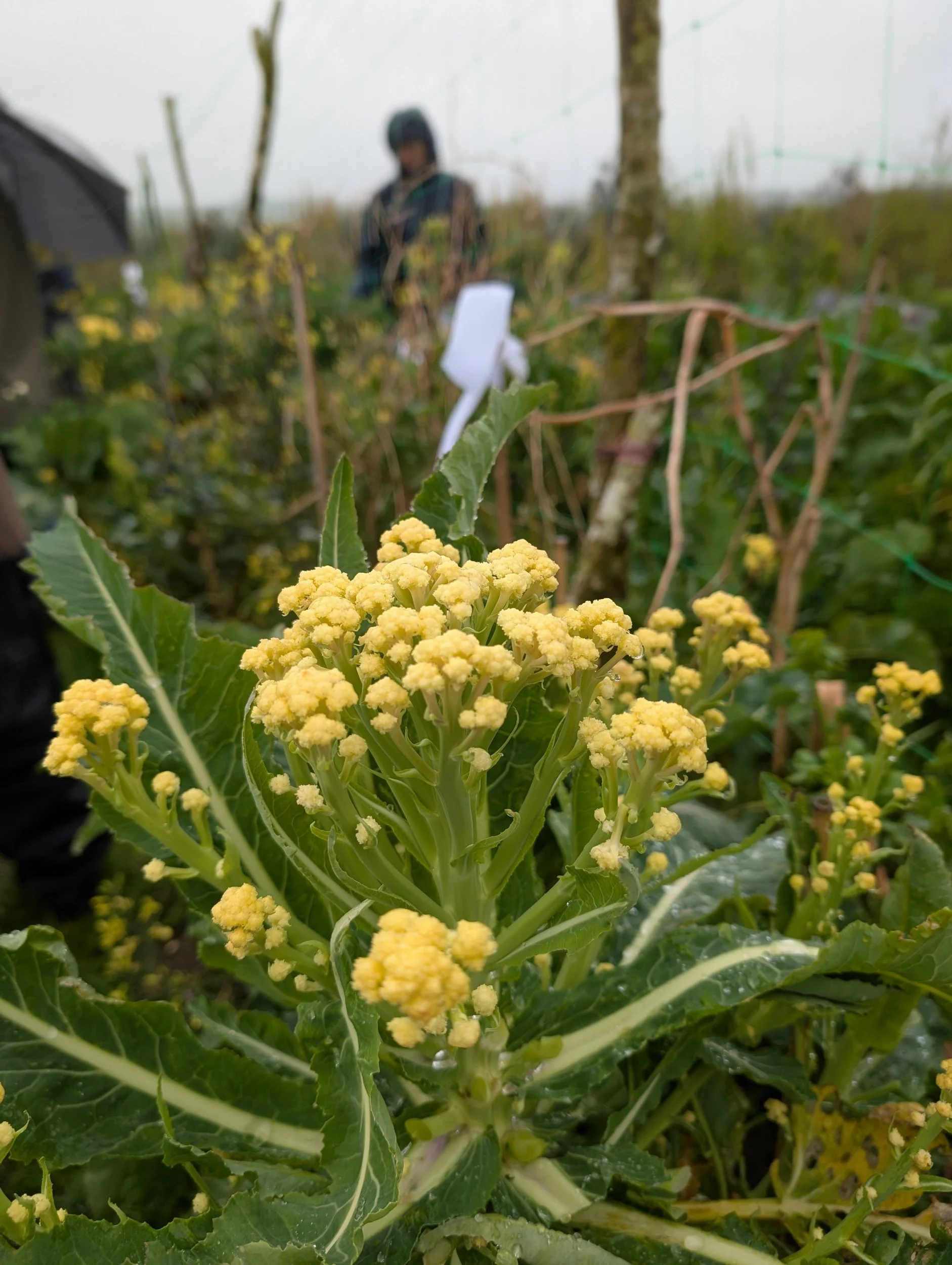
Credit Woolsery Project
For years in the UK we designed gardens and landscapes around one assumption:
That heat was temporary.
A few hot days.
Maybe a hosepipe ban.
Then back to normal.
But the last few seasons have started to expose something bigger. Soil surfaces are baking. Grass is burning off. Compost heaps are drying out before biology can finish the job. Trees are showing stress earlier in the season. Even established landscapes are struggling to regulate temperature and moisture.
The conversation is changing from:
“How do we water more?”
to:
“How do we cool landscapes naturally?”
At Agriton, we believe the answer starts underground first.
Not with more irrigation.
Not with more inputs.
But with biology, shade, structure, carbon, and living systems.
Or put another way:
feeding the feeders.
The New Role of Shade
Regenerative grower and agroforestry advocate Josh Sparkes from the Woolsery Collective recently summed it up perfectly:

Vertical Growing Birch Farm.
“Shade will become a premium on farms.”
And he’s right.
Across agriculture, horticulture, market gardens, and even domestic gardens, exposed soil is becoming one of the biggest liabilities in the landscape.
Bare ground heats rapidly.
Moisture evaporates faster.
Microbial activity becomes unstable.
Fungal networks collapse back.
Organic matter oxidises.
Carbon disappears into the atmosphere.
The problem is not just drought.
It’s thermal stress on biology.
Healthy soil is alive — and living systems need protection.
Agroforestry Is Not Just About Trees

Credit Josh Sparkes
Traditionally, UK gardening focused heavily on open spaces and ornamental borders.
But increasingly, RHS Chelsea, regenerative agriculture, and practical farm design are all converging around the same idea:
Layered systems work better.
This is where agroforestry principles become incredibly important — even at garden scale.
Agroforestry is often misunderstood as simply “adding trees.”
In reality, it is about creating stacked biological systems that support one another:
High canopy
Mid canopy
Shrub layer
Ground cover
Root crops
Fungal networks
Soil microbiology
Nature rarely leaves soil exposed.
Forests certainly don’t.
The moment we recreate layered systems, we begin cooling the environment naturally.
High Canopies: The Garden Ceiling
One of the most striking themes from recent Chelsea gardens has been the move toward elevated canopy systems.
Not dense, dark woodland.
But filtered “high shade.”

Scots Pine (Pinus sylvestris) is becoming an increasingly important species in this discussion.
The multi-stem “brothers” shown in the Asthma + Lung UK Garden demonstrated something fascinating:
the ability to create cooling architecture without heavy moisture demand.
These trees effectively raise the “ceiling” of the landscape.
That matters more than people realise.
A high canopy:
reduces direct solar radiation onto soil
lowers surface temperatures
slows evaporation
creates airflow
reduces thermal stagnation
protects microbial life
In many ways, it acts like a living climate control system.
This is where agroforestry and regenerative gardening begin merging together.
The Return of the Understory
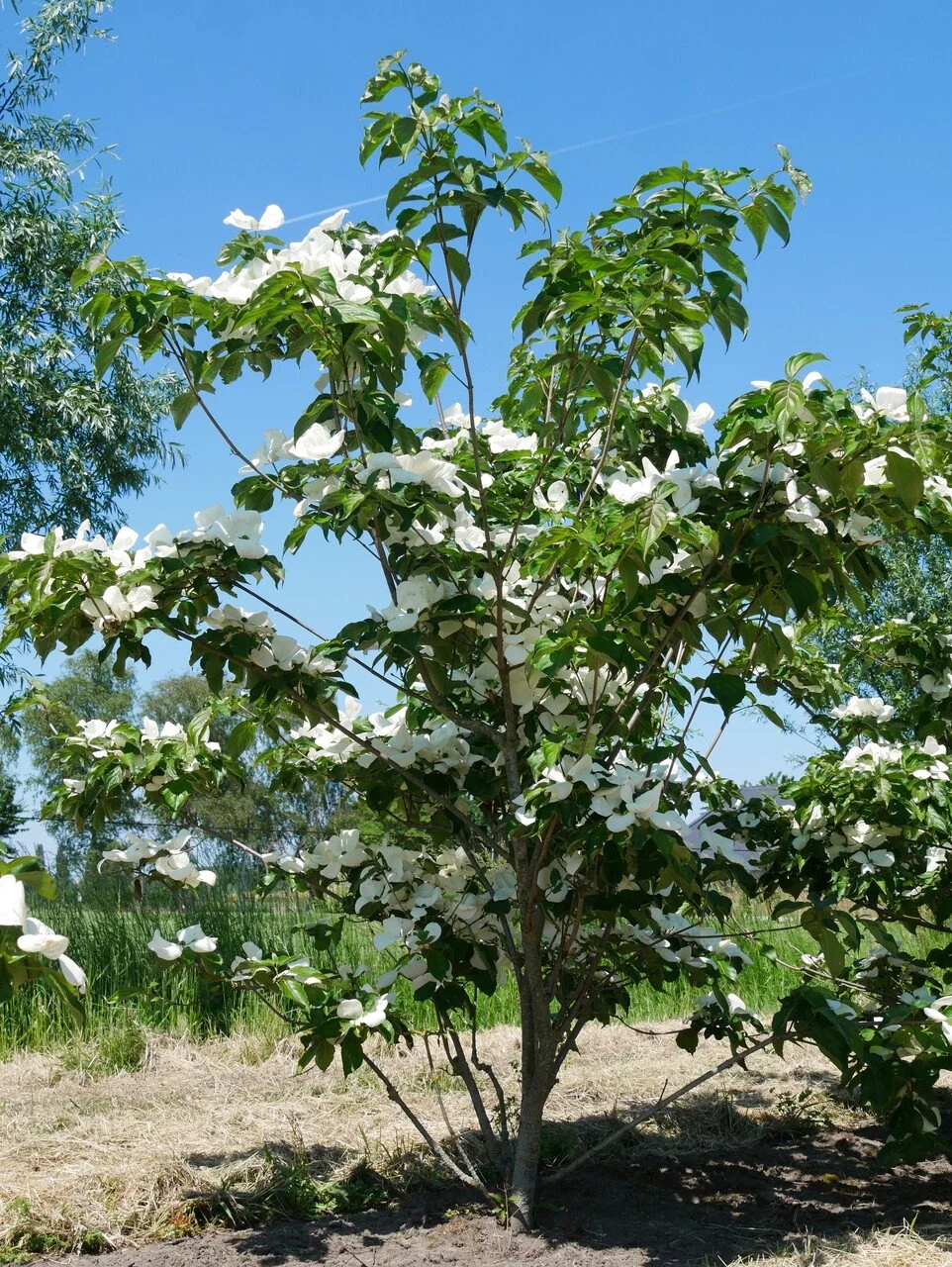
Cornus VENUS ('KN30 8')
Once you create filtered shade, another opportunity appears:
The understory.
Large-leafed, shade-tolerant plants suddenly become functional cooling tools rather than purely ornamental features.
Species like:
Cornus × elwinortonii ‘VENUS’
Cycas revoluta
ferns
moisture-holding perennials
fungal-supporting woodland species
all help create humid microclimates closer to the soil surface.
These systems matter because biology hates extremes.
Microbes perform best in moderated environments:
stable moisture
moderated temperatures
carbon availability
oxygen balance
root exudates
fungal associations
Once soils hit excessive temperatures, biology slows dramatically.
And when biology slows:
nutrient cycling slows.
The Missing Conversation: Indigenous Microorganisms (IMOs)
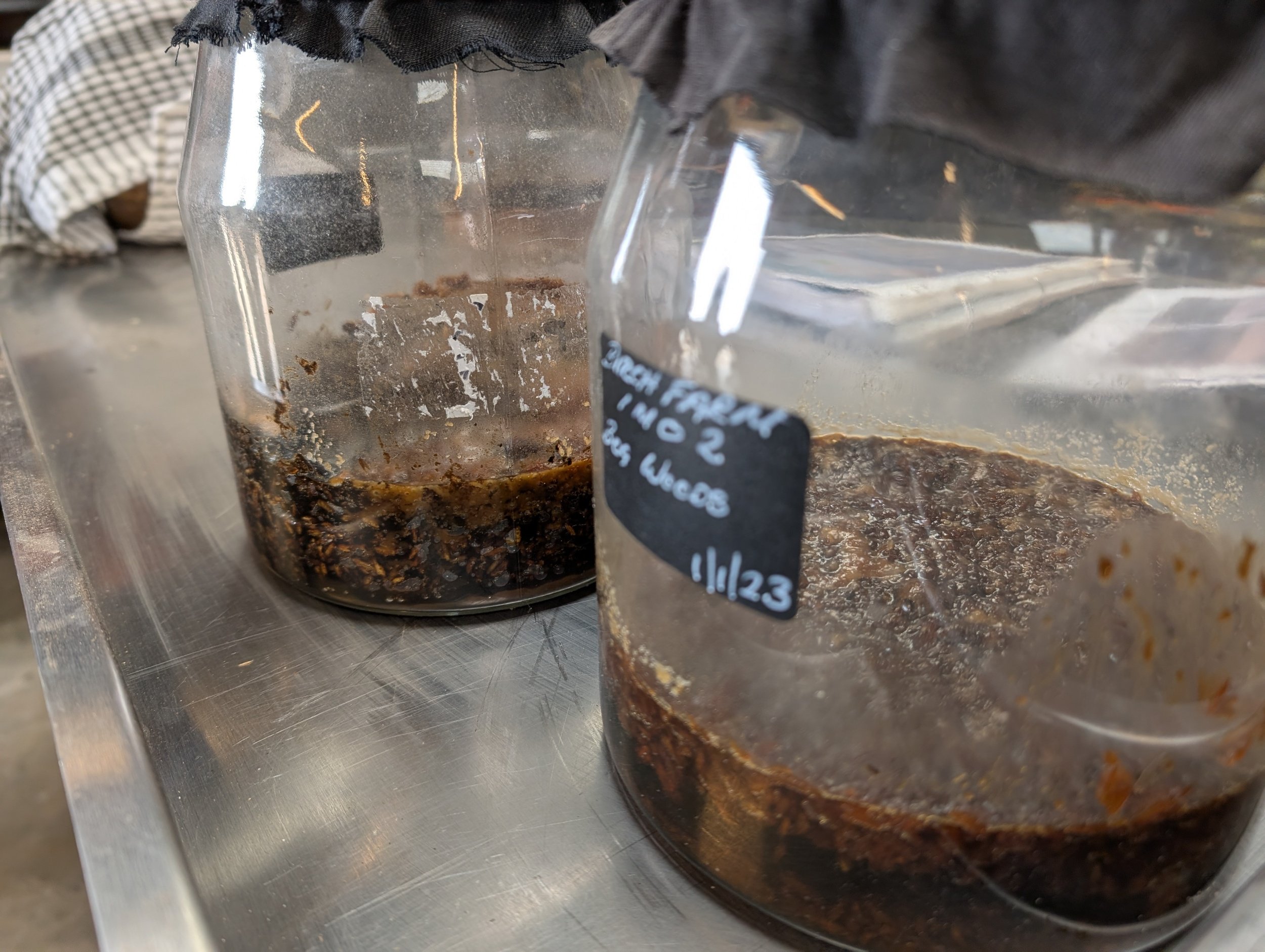
IMO 2 Credit Birch Farm
One of the most exciting parts of the regenerative movement right now is the growing awareness around Indigenous Microorganisms (IMOs).
This concept, heavily influenced by Korean Natural Farming (KNF), focuses on collecting and cultivating native biology from thriving ecosystems — often woodland floors or undisturbed fungal-rich environments.
Why does this matter?
Because forests already solved resilience.
They solved:
moisture retention
carbon cycling
fungal networking
nutrient exchange
thermal regulation
biological succession
The biology under a mature woodland canopy is incredibly different from exposed agricultural ground.
At Woolsery Collective, Josh Sparkes has been exploring these principles through natural farming, woodland ecology, and biologically-led growing systems — looking at how forests and agroforestry can influence productive landscapes.
The lesson is simple:
Healthy ecosystems are rarely exposed ecosystems.
Fermentation, Carbon and Soil Cooling
At Agriton we often talk about bokashi fermentation not simply as “waste recycling” but as a carbon retention strategy.
Traditional aerobic decomposition can release huge amounts of carbon as CO₂ through rapid oxidation. Even the SPNA long-term field trials comparing compost and bokashi highlighted the difference between aerobic breakdown and anaerobic fermentation systems.
The key difference is philosophical as much as practical:
Composting often accelerates release.
Fermentation aims to stabilise and retain.
That matters enormously in a warming climate.
Because soil organic matter acts like:
a sponge
a battery
a biological pantry
a temperature buffer
Every percentage increase in organic matter improves water-holding capacity, microbial resilience, and nutrient cycling.
And critically:
shaded soils with high biological activity lose less moisture.
Cooling Landscapes Naturally

Lost Garden Hiligan
The “tropical foliage” trend emerging at Chelsea is not really about aesthetics.
It is climate adaptation.
Big leaves.
Layered planting.
Canopy systems.
Protected soils.
Deep roots.
Moisture retention.
Living mulches.
These are all ecological cooling systems.
Even deep-rooted plants like Rosa ‘Geranium’ begin playing an important role because they:
stabilise soils
access deeper moisture
support microbial exchange
reduce irrigation demand
This is no longer simply gardening.
It is microclimate engineering through biology.
The Soil-First Future
The future UK landscape may look very different from the one many of us grew up with.
Less exposed soil.
More canopy.
More layered systems.
More perennial structure.
More agroforestry.
More biological thinking.
And importantly:
more respect for the tiny workers below ground.
Because ultimately, cooling landscapes is not just about plants.
It is about creating conditions where biology can function.
Healthy soils regulate water.
Healthy soils regulate nutrients.
Healthy soils regulate carbon.
Healthy soils regulate temperature.
And increasingly, the most valuable thing on farms, gardens, and landscapes may not be sunlight alone.
It may be intelligently managed shade.
Or as Josh Sparkes put it:
“Shade will become a premium on farms.”
