
What happens when a farm stops asking, “What should we add?” and starts asking, “How can we help the ecosystem work for itself?”
That question sits at the heart of the work taking place at Birch Farm, where Josh is developing a highly diverse, low-input growing system inspired by Japanese and Korean Natural Farming.
Rather than relying on a constant supply of imported compost, synthetic fertilisers or chemical crop-protection products, Birch Farm focuses on creating fertility from within the farm itself.
The result is a system built around living roots, fungi, locally adapted microorganisms, perennial crops, agroforestry, close planting and habitat creation.
A huge thank you to Josh for allowing us to visit, film and share his work. His openness, experimentation and willingness to challenge conventional thinking make Birch Farm a fascinating example of what regenerative food production can look like.
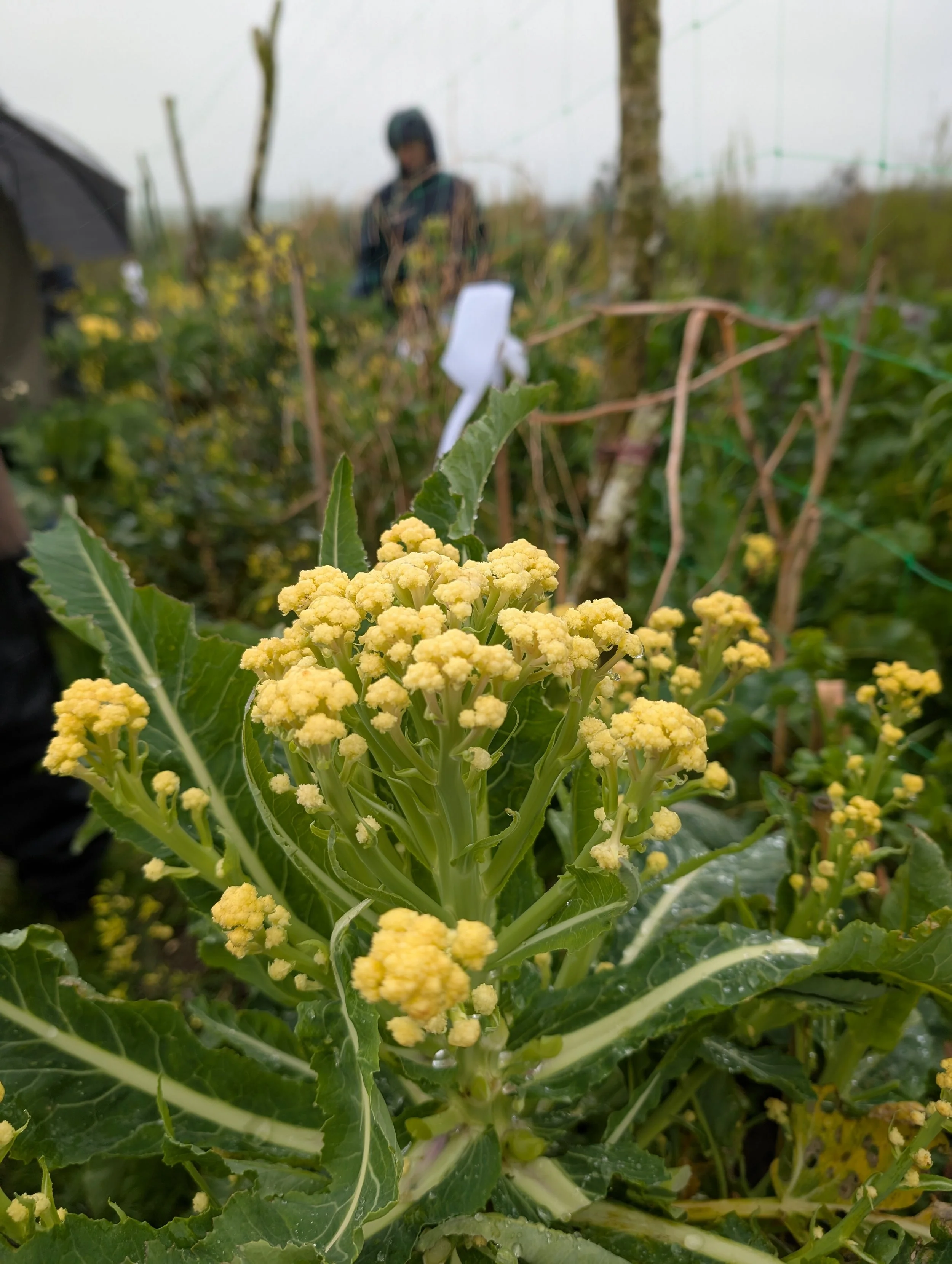
Pearly Everlasting, Growing At Birch Farm
Moving beyond the endless input cycle
Much of modern agriculture depends on repeated external inputs.
When soils lose organic matter, biological activity and structure, growers often respond by applying more fertiliser, compost and crop-protection products. These inputs may maintain production, but they do not always address the underlying condition of the soil.
At Birch Farm, the focus is different.
Rather than feeding each crop individually, the aim is to create a functioning ecosystem that can cycle nutrients, retain moisture, support natural predators and build fertility over time.
This does not mean abandoning management altogether. Birch Farm remains a productive growing business, so planting, weeding, harvesting and crop care are still necessary.
The difference is that each intervention is considered in relation to the wider system.
Fertility through diversity

Focused on biodiversity loss reduction, such as removing invasive species or managing hedgerows.
One of the foundations of the Birch Farm approach is plant diversity.
Instead of growing large blocks of a single crop, beds are designed as polycultures containing several vegetable families alongside aromatic herbs and supporting plants.
The aim is to create plant communities rather than isolated crops.
Different plants contribute different root structures, root exudates and relationships with soil microorganisms. Together, these roots support a broader and potentially more resilient soil food web.
Birch Farm aims to include at least five vegetable families within a bed, with aromatic herbs used to attract beneficial insects and increase diversity.
Some combinations are also intended to help overcome the biological limitations of individual crops.
Brassicas, for example, do not form the same mycorrhizal relationships as many other plants. Birch Farm therefore includes crops such as Japanese Black Oats, which can help maintain fungal connectivity within the bed.
The French Intensive Method
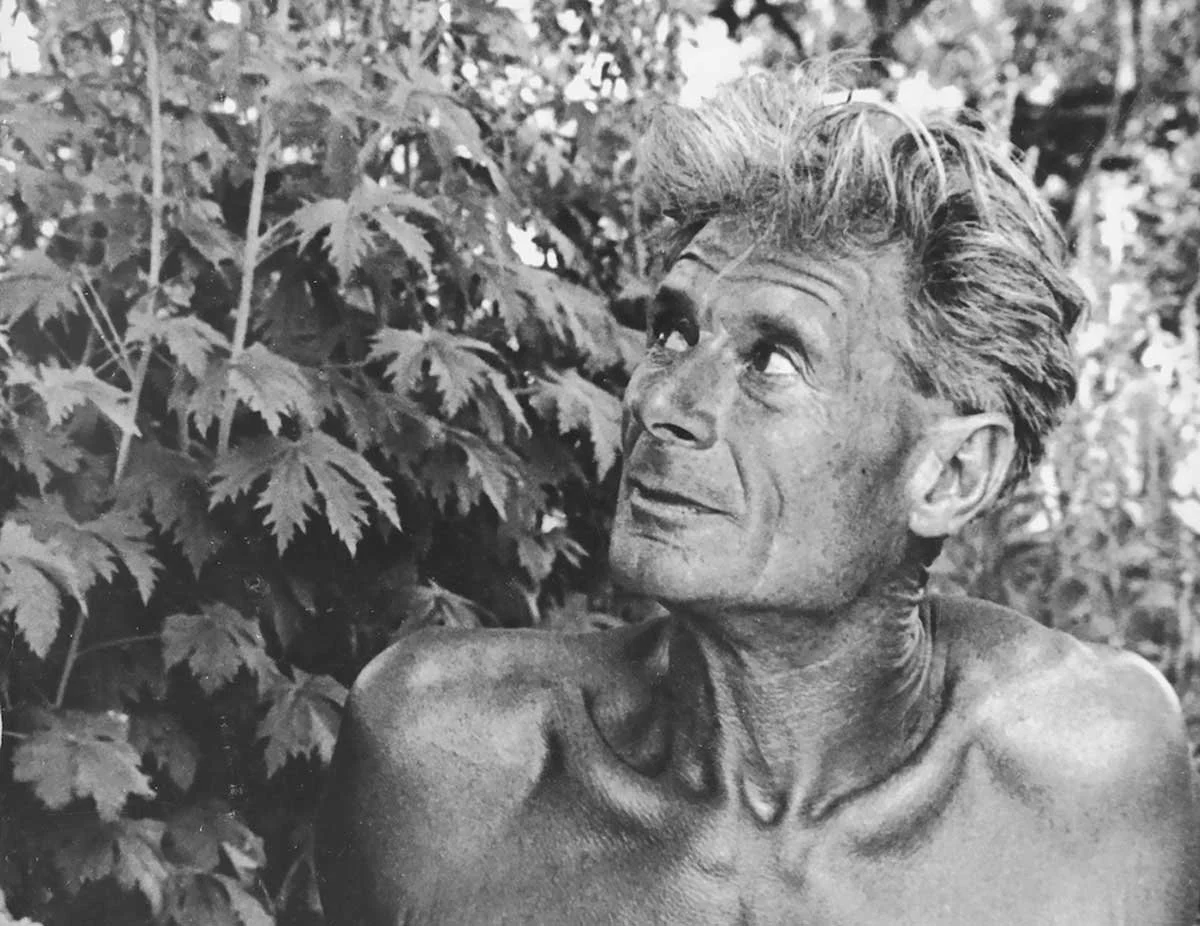
Alan Chadwick, a British master horticulturalist who was a pioneer in biodynamic agriculture
Plants at Birch Farm are spaced approximately 25% closer together than many conventional recommendations.
This approach, influenced by the French Intensive Method and the work of Alan Chadwick, creates a near-continuous canopy above the soil.
That canopy performs several useful functions.
It shades the ground, suppresses weed germination and reduces moisture loss. The close spacing also helps trap moisture released through plant transpiration, creating a more humid microclimate around the crops.
Instead of leaving bare soil between widely spaced plants, the crop itself becomes a form of living mulch.
Building fertility without relying on bought-in compost
One of the most striking features of the Birch Farm system is its limited use of external compost.
That does not mean organic matter is unimportant. Quite the opposite.
The farm builds organic matter through living roots, crop residues, weeds, leaf fall and chop-and-drop mulching.
Weeds are not always removed from the system. They may be cut and left on the soil surface, where they protect the ground, retain moisture and provide food for decomposer organisms.
This allows fertility to be cycled in place rather than continually imported.
According to research shared by Birch Farm, its soil showed higher fertility and greater soil-fauna abundance than the conventional and standard no-dig systems used for comparison.
The wider lesson is not necessarily that every grower should stop using compost. Compost can be an extremely valuable soil amendment.
Instead, Birch Farm challenges us to consider whether more fertility can also be generated through plant diversity, permanent roots, microbial activity and better biological cycling.
Capturing Indigenous Microorganisms

IMO (Indigenous Microorganisms) collection box, a tool used heavily in Korean Natural Farming (KNF)
A central part of the Birch Farm fertility programme is the use of Indigenous Microorganisms, commonly known as IMOs.
IMOs form part of Korean Natural Farming. The principle is to capture microorganisms from a healthy local ecosystem, multiply them and introduce them into the farm.
These microorganisms are already adapted to the surrounding climate, seasonal conditions and local environment.
Rather than relying only on organisms cultured elsewhere, the IMO process aims to work with biology that originates from the local landscape.
IMO 1: Capturing local biology
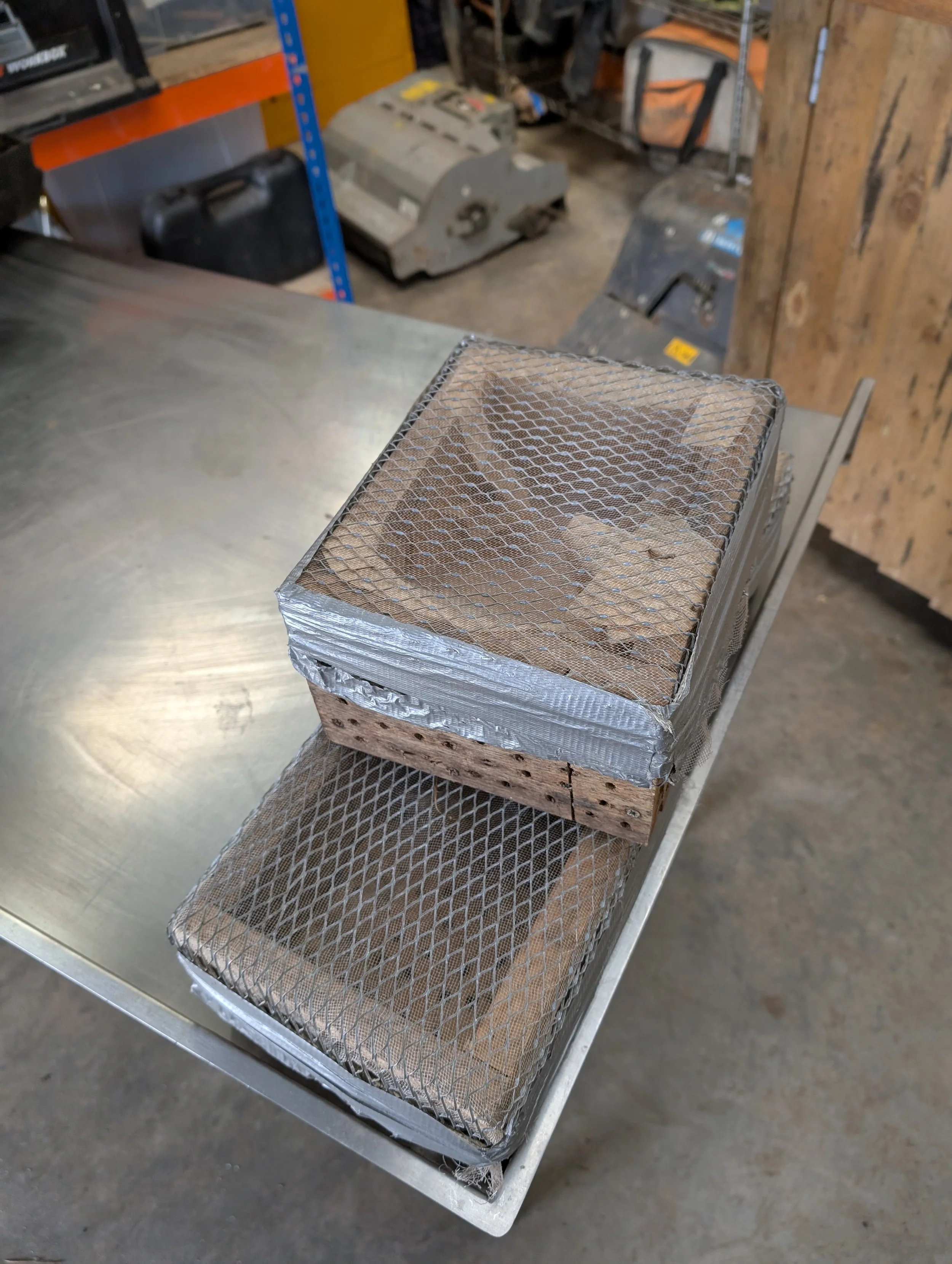
Homemade IMO 1 collection box (often called an IMO catcher), a core tool used in [Korean Natural Farming (KNF)
The first stage involves placing cooked rice in an untreated wooden box.
The rice is cooked until it remains slightly firm in the centre. This helps reduce the risk of the material becoming overly wet and anaerobic.
The box is then placed in an undisturbed woodland or another biologically active location.
Fungi and bacteria colonise the rice, creating a visible bloom of local microbial life.
This becomes IMO 1.
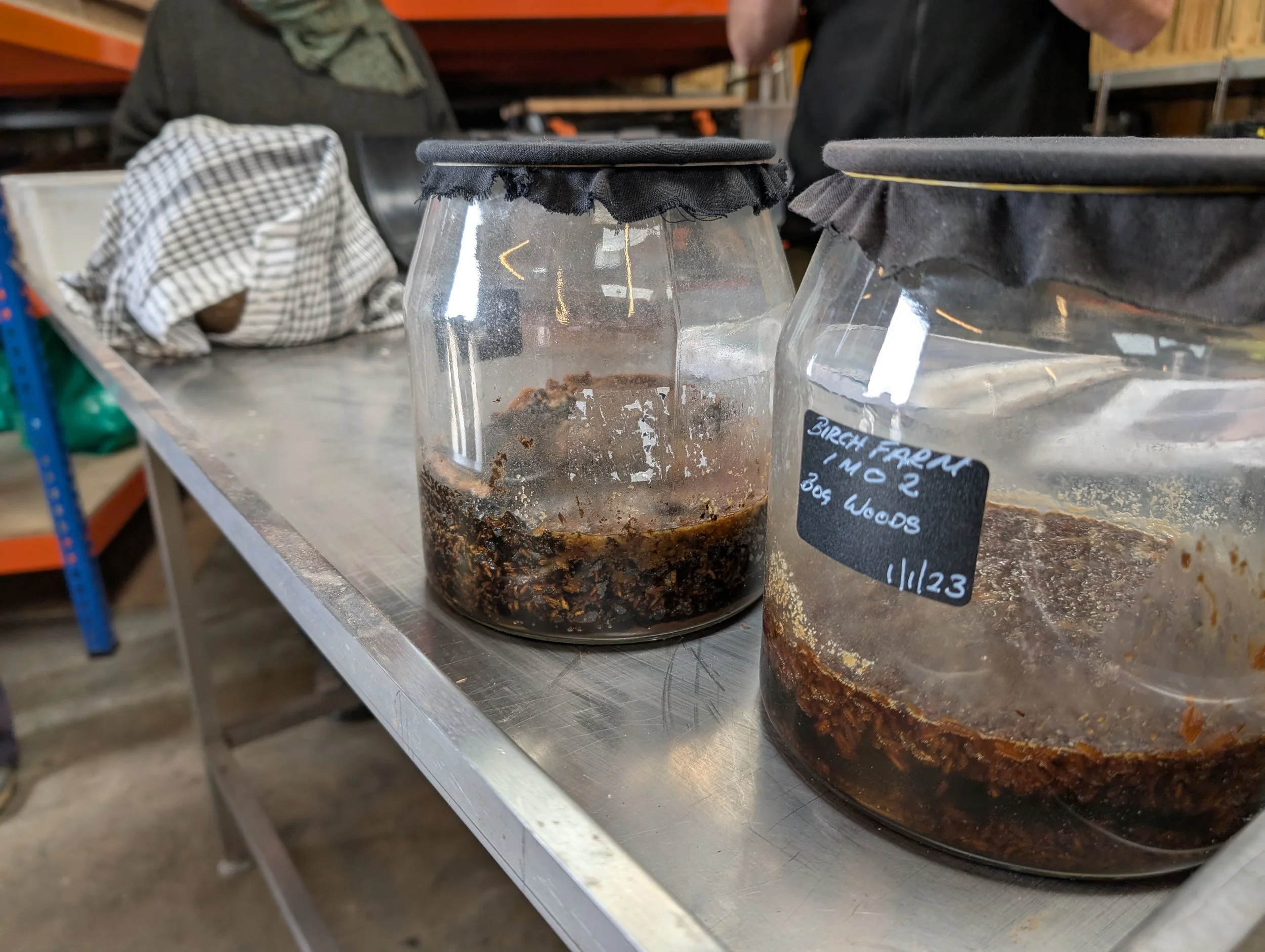
Indigenous Microorganisms (IMO) Level 2 mixture.
IMO 2: Preserving the culture
The captured microorganisms are mixed with unrefined brown sugar.
The sugar creates osmotic pressure, placing the microorganisms into a dormant or stable state.
Josh describes this as similar to “Han Solo in carbonite”: the biology is preserved and can remain available for future use.
This stage is known as IMO 2.
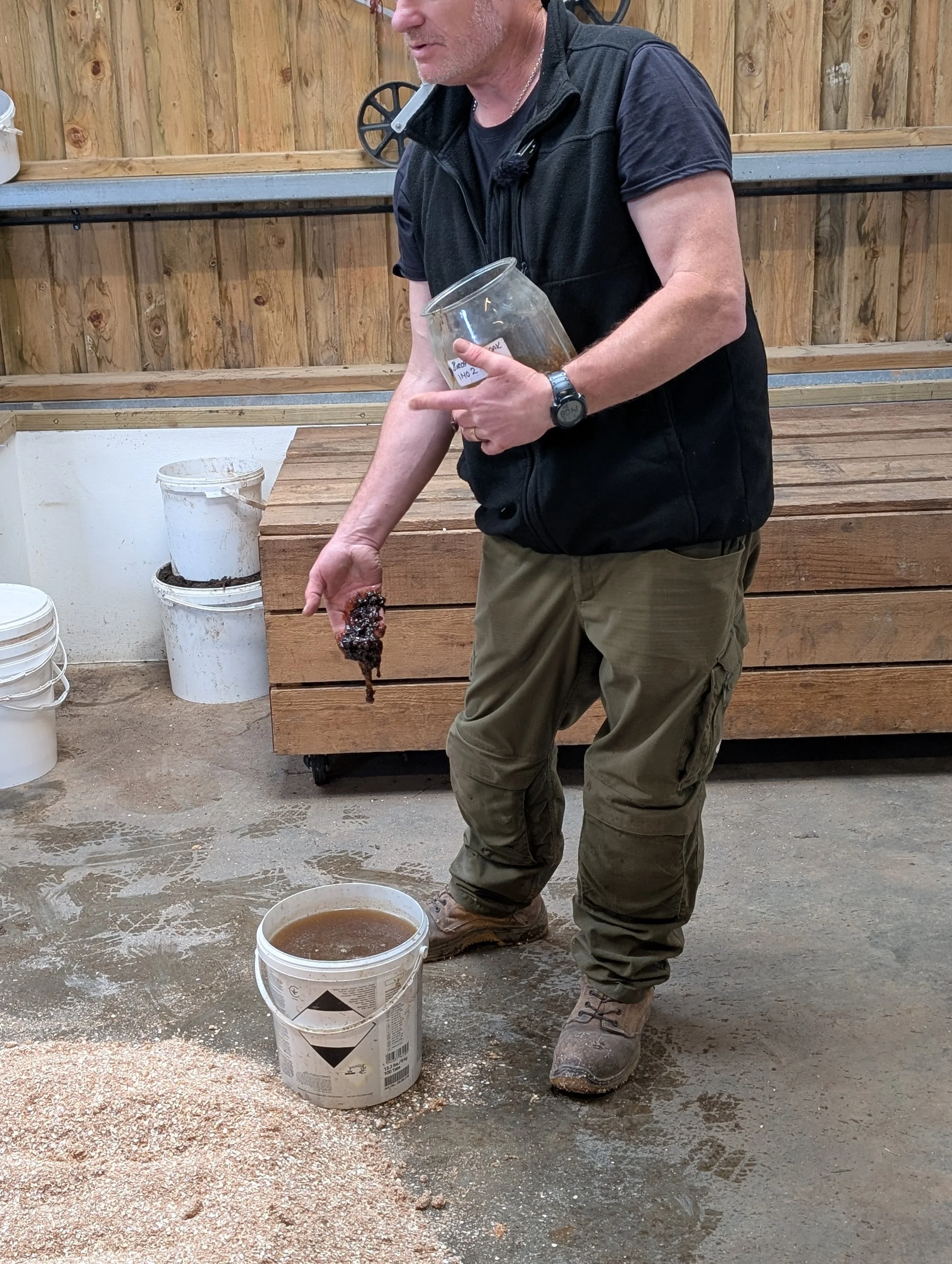
Inoculating 2 parts Milled Wheat Bran(carbohydrate) to 1 part Sawdust(carbon) and 1 part Wood Chips/shavings(carbon) with your IMO2
IMO 3: Multiplying the microorganisms
IMO 2 is then mixed with carbohydrate-rich materials such as bran and oats.
This stage wakes the microorganisms and allows their population to increase.
The process is managed over approximately 14 days, with the material gradually heating and then cooling.
Temperature control is important. The aim is to multiply the captured biology without allowing the heap to become excessively hot and thermophilic, which could reduce the diversity of the microorganisms being cultivated.
The result is IMO 3: a larger quantity of biologically active material ready for the next stage.
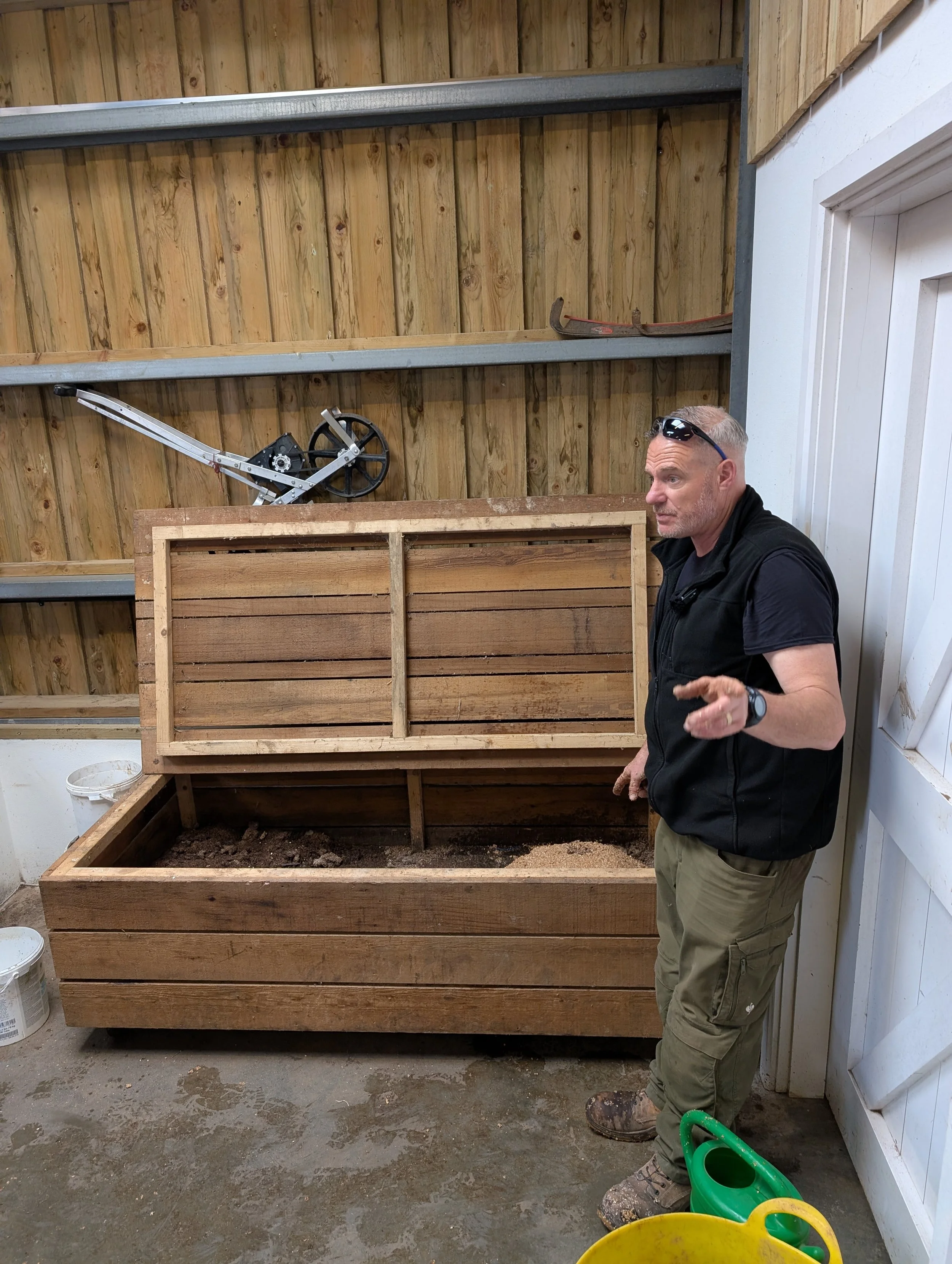
IMO 4 is the fourth stage of cultivating Indigenous Microorganisms (IMO) in Korean Natural Farming, where finished IMO 3 is mixed with local native soil to adapt wild microbes to your specific garden or farm environment
IMO 4: Adapting the biology to the farm
The final stage involves mixing IMO 3 with soil from Birch Farm.
This introduces the microorganisms to the farm’s particular mineral, physical and chemical conditions before they are applied more widely.
The finished material, IMO 4, can then be broadcast onto growing areas as a locally adapted microbial inoculant.
The process is not simply about adding more microbes. It is about building a relationship between the biology of the surrounding landscape and the soil of the farm.
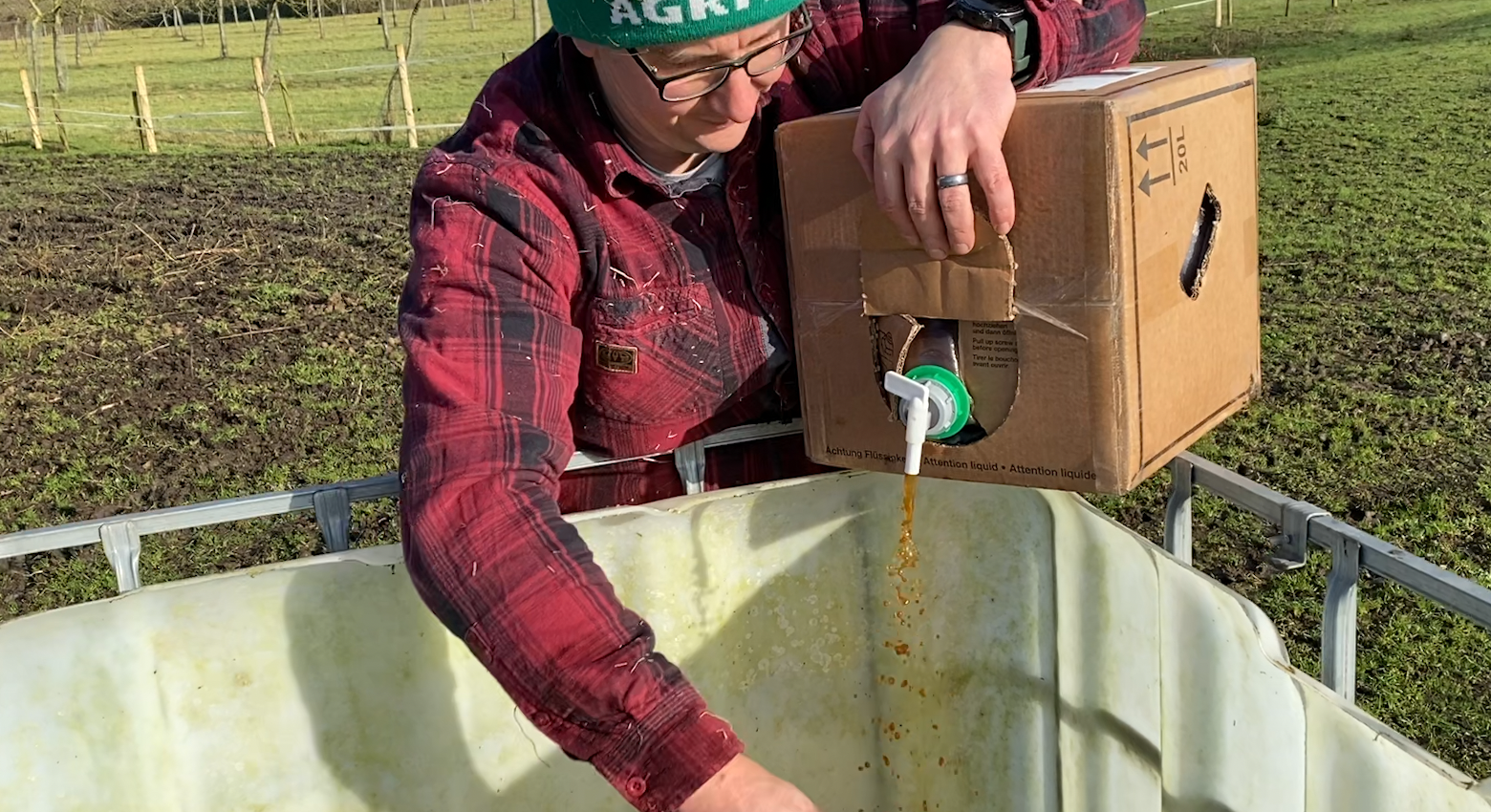
Where Effective Microorganisms fit
Although Birch Farm places strong emphasis on capturing and developing Indigenous Microorganisms, Josh does not see the choice as simply IMO or an off-the-shelf microbial product.
He sees Effective Microorganisms, or EM, as a practical bridge between the two.
Producing IMO is a valuable process because it captures biology from the surrounding landscape and gradually adapts it to the farm. However, it also requires time, suitable collection locations, careful temperature management and an understanding of each stage.
For growers who are beginning to explore biological farming, EM can provide a more accessible starting point.
EM offers a stable, ready-to-use consortium of beneficial microorganisms, allowing growers to begin working with microbial fermentation and biological cycling without first completing the full IMO capture and multiplication process.
At Birch Farm, EM is therefore not viewed as a replacement for Indigenous Microorganisms. Instead, it sits between conventional input-dependent growing and the more advanced practice of capturing and cultivating biology from the local environment.
The progression could look something like this:
Conventional inputs → accessible biological products such as EM → locally captured and farm-adapted IMOs
EM can provide a consistent and repeatable introduction to microbial processes. IMO then takes that work further by developing cultures connected to the specific climate, woodland, soil and wider ecology surrounding the farm.
Both approaches encourage the grower to think differently.
Rather than seeing fertility only as something delivered in a bag, bottle or load of compost, fertility begins to be understood as the outcome of living relationships between plants, microorganisms, minerals, organic matter and management.
This is an important lesson from Birch Farm: biological farming does not need to be an all-or-nothing leap.
Growers can begin with an accessible microbial tool, learn how fermentation and soil biology work, and gradually move towards creating more of their fertility from within their own landscape.
Rethinking pests
Birch Farm also challenges the way we think about pests.
Instead of treating every caterpillar, slug or beetle as an enemy, the farm looks at the ecological function of each organism.
Pest populations can be symptoms of imbalance. When predator habitats are missing, certain species can multiply without effective natural control.
Birch Farm therefore focuses on creating habitat for birds, beetles, parasitic wasps and other predators.
This does not mean crops are never damaged. During the transition from a simplified system to a more diverse one, pest pressure may temporarily increase while predator populations recover.
However, the long-term goal is ecological regulation rather than repeated eradication.
Even the Cabbage White butterfly is viewed differently. Its feeding can stimulate perennial kale plants to produce fresh growth that may later be harvested.
The principle reflects a quote associated with Masanobu Fukuoka:
“If we kick nature out the front door, she’ll come back through the window with a pitchfork.”
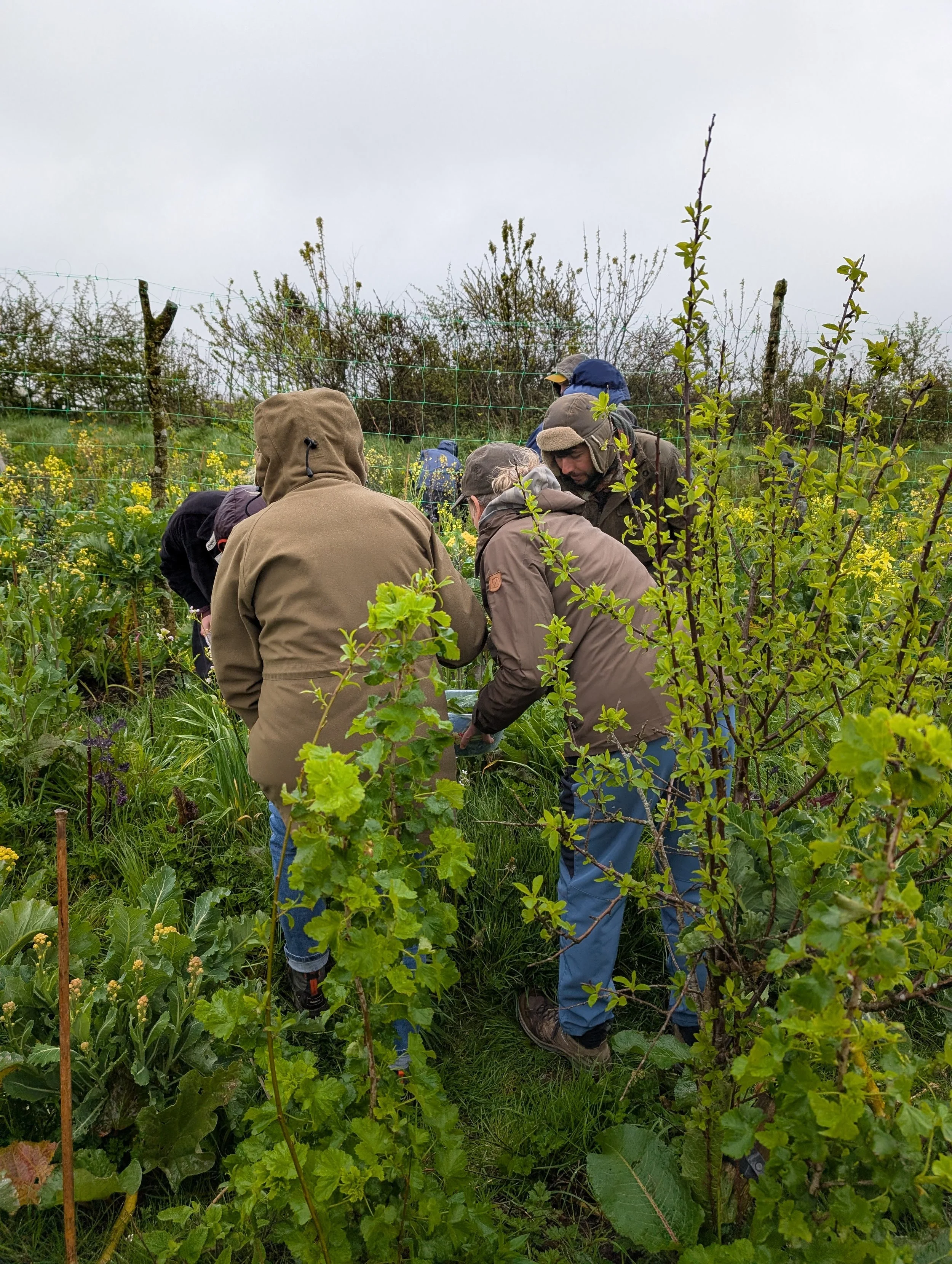
Korean Natural Farming (KNF) create optimal shade by mimicking forest canopies, protecting soil biology, and reducing heat stress. They combine multi-layered tree planting with natural microbial management to keep understory plants cool.
Agroforestry and the value of shade
Birch Farm is gradually moving towards an agroforestry and food-forest structure.
Trees are incorporated into the growing system rather than being separated from crop production.
Their roots access deeper mineral reserves, leaf fall contributes organic matter and the tree rows provide habitat corridors for beneficial wildlife.
The shade they create may also become increasingly valuable.
As summers become hotter, dappled shade can protect leafy crops from excessive heat, reduce moisture loss and help prevent bolting or bitterness.
Tree roots also maintain long-term relationships with fungal networks, helping connect different parts of the farm below ground.
At Birch Farm, shade is not seen as lost productivity. It is treated as a strategic resource.
From annual crops to perennial food systems
Annual vegetable production can be vulnerable to drought, wind, heavy rain and sudden temperature changes.
Birch Farm is therefore experimenting with a wider range of perennial edible plants.
These include perennial kales, sea kale and other edible ornamentals, sometimes referred to as edimentals.
Perennial crops maintain living roots throughout more of the year. This supports soil biology, reduces disturbance and allows plants to establish deeper, more resilient root systems.
They may also help fill seasonal gaps when conventional annual crops are less productive.
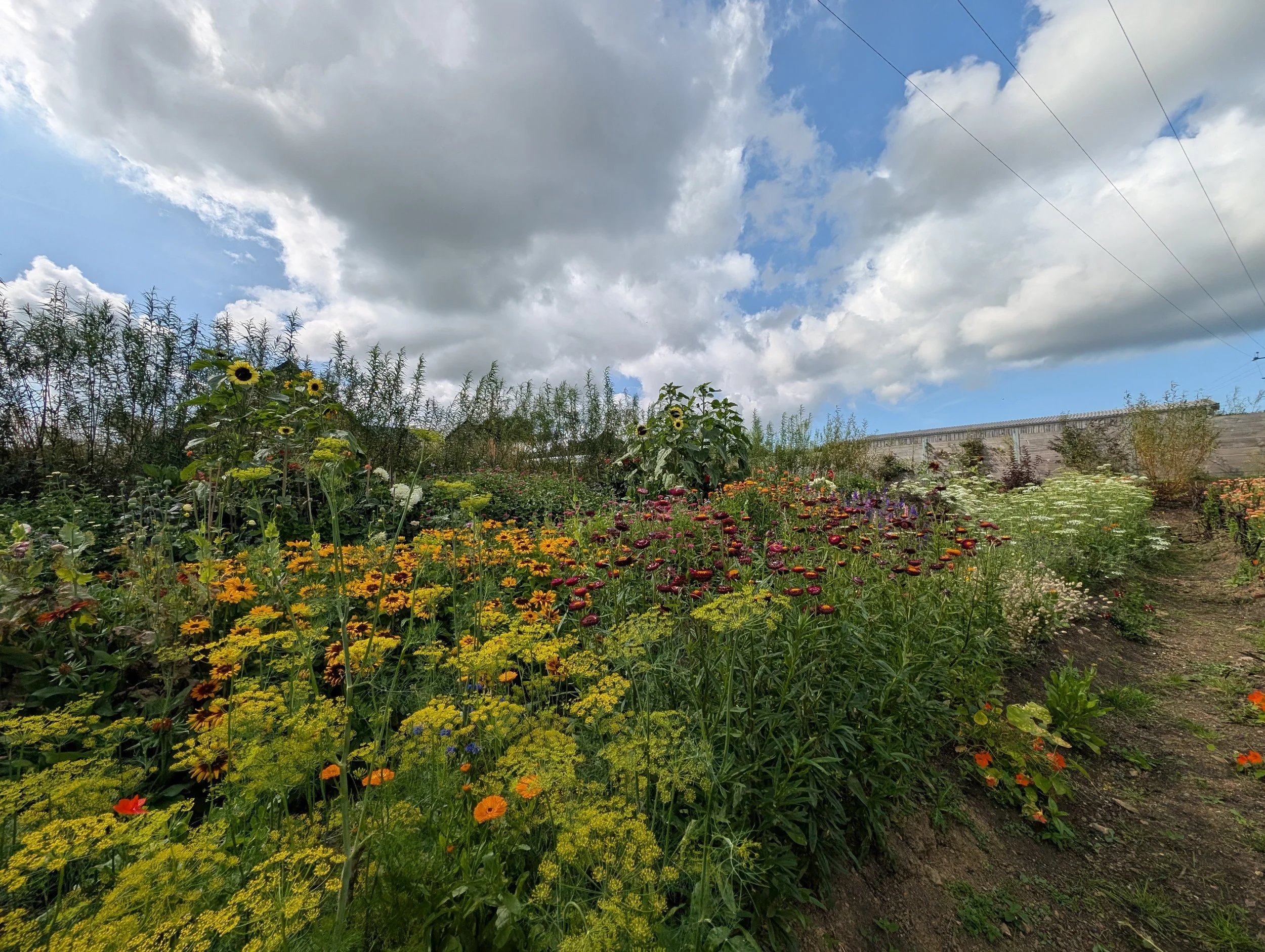
The garden was created using approximately 380 tonnes of recycled power-station material.
The recycled aggregate garden
One of the most unusual areas at Birch Farm is its recycled aggregate garden.
The garden was created using approximately 380 tonnes of recycled power-station material.
Rather than creating a flat, uniform landscape, the aggregate forms mounds, dips, banks and different aspects.
These variations create a range of microclimates and habitats.
Warm, south-facing areas provide basking locations for reptiles, while exposed banks support solitary bees and other insects.
The aggregate also acts as a mineral mulch. According to Birch Farm, this garden has required no irrigation for several years and does not depend on routine feeding or staking.
It is a powerful example of how a waste material can become the foundation of a productive and biodiverse growing space.
Farming as observation
The Birch Farm approach is not a fixed recipe.
It relies heavily on observation, experimentation and the farmer’s relationship with the land.
Josh describes the system as a practical form of natural farming. It accepts that commercial growers still need to intervene, but those interventions should move the farm towards greater resilience rather than greater dependency.
The farmer’s sight, smell, experience and intuition become as important as laboratory analysis.
As Fukuoka suggested, natural farming is not only about cultivating crops. It is also about cultivating the farmer.
A practical journey towards biological independence
Birch Farm does not present a rigid blueprint that should be copied onto every farm.
Soils, climates, crops, markets and levels of experience differ everywhere.
What it offers is a compelling example of how a farm can move progressively towards greater biological independence.
For some growers, that journey may begin with EM as a reliable, accessible microbial option. As their confidence and understanding develop, they may begin capturing Indigenous Microorganisms and producing cultures adapted to their own soil and landscape.
By combining tools such as EM with IMOs, polycultures, perennial crops, agroforestry and natural predator habitats, Birch Farm is reducing its dependence on imported fertility while creating a richer and more resilient ecosystem.
The important point is not that every external input must disappear immediately.
It is that each step should help the farm become more biologically capable, locally adapted and less dependent over time.
Birch Farm invites us to ask a bigger question:
What abundance might return if we stopped trying to control every part of nature and gave the ecosystem more room to work?
A huge thank you again to Josh at Birch Farm for sharing his time, knowledge and extraordinary work with us.
