
From Corner Shop to Community Sanctuary: 5 Things LOVE Farm Oxford Can Teach Us About Land, Food and Belonging
What if a farm’s most important crop wasn’t food, but community?
Tucked away at Wootton, between Oxford and Abingdon, is a project that challenges some of our assumptions about land, growing, community and even the way we think about an economy.
It is called L.O.V.E. — Local Organic Voluntary Economies.
The L.O.V.E. Project describes itself as an Oxfordshire land-based social enterprise that uses local land and the skills of local people to support individual and community wellbeing. Its work has included care farming, outdoor education, mindfulness, community activities and local enterprise. Love Care Farm
But spending time understanding what is happening at LOVE Farm reveals something deeper.
This isn't simply a vegetable-growing project.
It's about connection.
Connection to land.
Connection to food.
Connection to nature.
And perhaps most importantly, connection to each other.
Here are five things that particularly struck us.
1. Community starts with relationships, not infrastructure
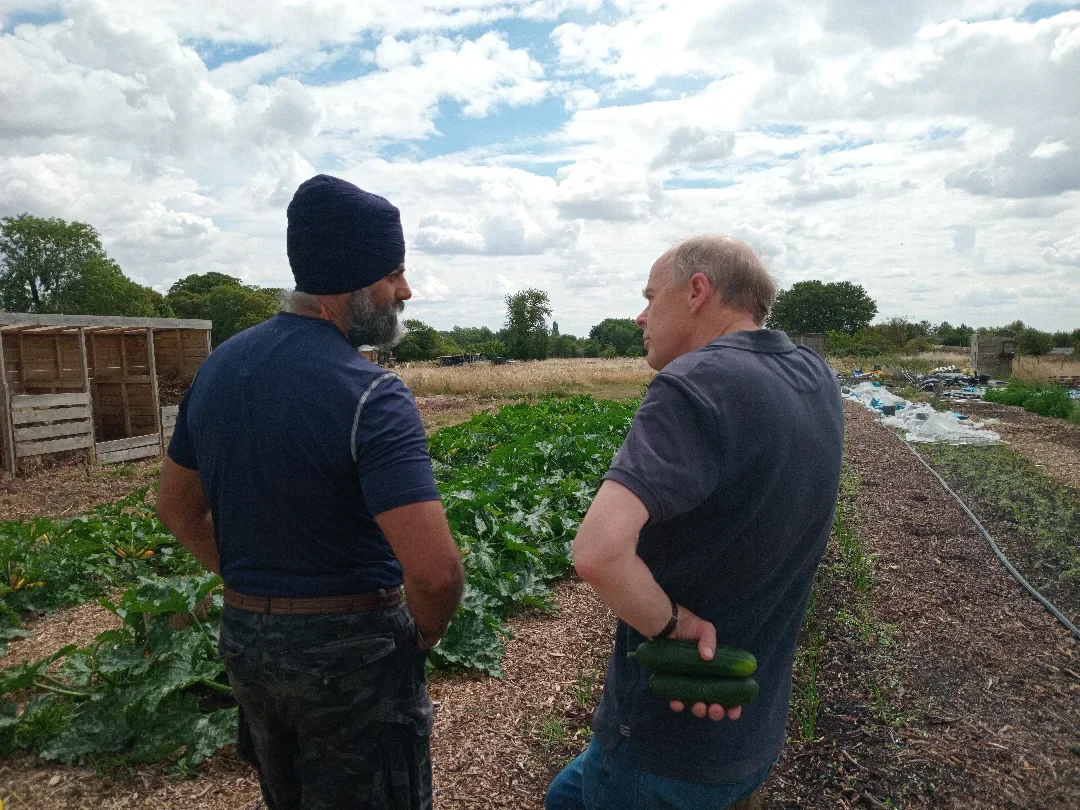
Bill — B'Lkaar Singh — didn't arrive here through a conventional farming career.
After moving from London to Oxford, he spent years working behind the counter of the local corner shop bought by his father.
That might seem a long way from farming, but perhaps it was actually the perfect education in community.
A local shop is one of those increasingly rare places where generations cross paths every day. You learn who people are, who needs support, who has something to offer and what is happening within the community around you.
Those relationships eventually connected Bill with the land.
His story also sits within a wider history of stewardship around the site, where relationships, loyalty and commitment to the land have mattered alongside conventional ideas of ownership.
There's a useful lesson here.
We often talk about rebuilding local food systems, but local food systems aren't built by technology alone.
They are built through people knowing each other.
Trust is infrastructure too.
2. LOVE is intended to be practical
LOVE isn't simply the name of the farm.
It stands for:
Local Organic Voluntary Economies
The project's philosophy talks about caring for people and the environment, voluntary contribution and making use of the resources and skills already present within communities. Its origins were similarly practical: Bill and Raul Ospina began by voluntarily helping a local landowner grow vegetables and care for animals, with produce shared in return. Other landowners and volunteers subsequently became involved. Love Care Farm
For Bill, those ideas also emerged from a difficult period personally.
Following the breakdown of his marriage, he began exploring what love actually meant beyond romance or sentiment.
That eventually became a book:
Falling in Love with Love
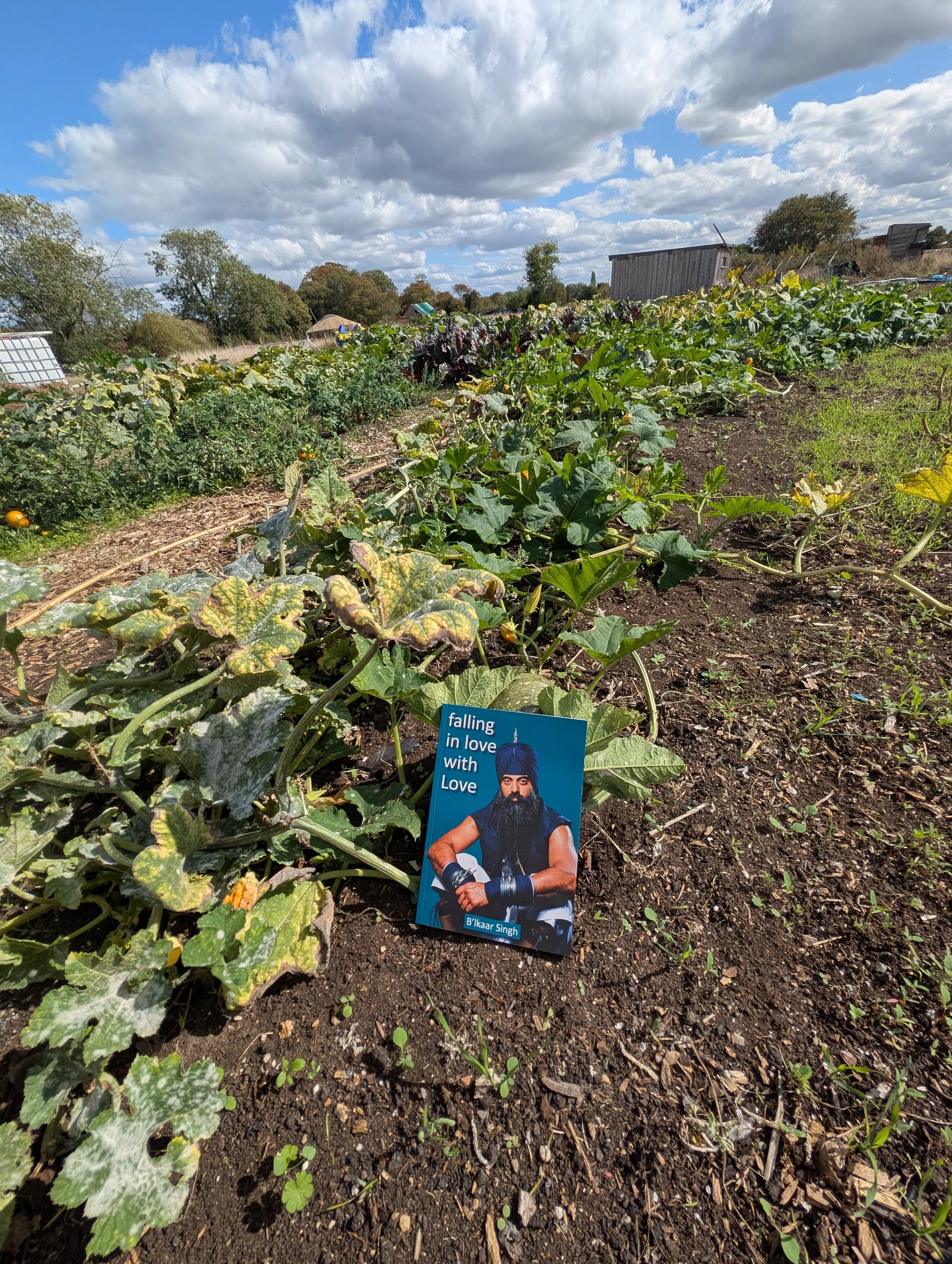
Published in 2011, the book by B'Lkaar Singh sets out much of the thinking that would help shape his approach to LOVE. Google Play
But what's particularly interesting is what happened afterwards.
Rather than leaving the ideas on the page, he started trying to build them physically.
Land became growing space.
Growing space became community space.
Community space became somewhere people could work, eat, learn, talk, breathe and simply spend time.
That's when philosophy becomes practical.
Want to read the book?
Agriton also has a limited number of copies of Falling in Love with Love that we're giving away free.
There's no charge. We'd simply like to get them into the hands of people interested in community, local food systems, growing, wellbeing and the ideas behind LOVE.
If you'd like one, get in touch with Agriton UK while copies are available.
You can also find the published book online here:
Falling in Love with Love by B'Lkaar Singh
3. What if we thought about land as stewardship?
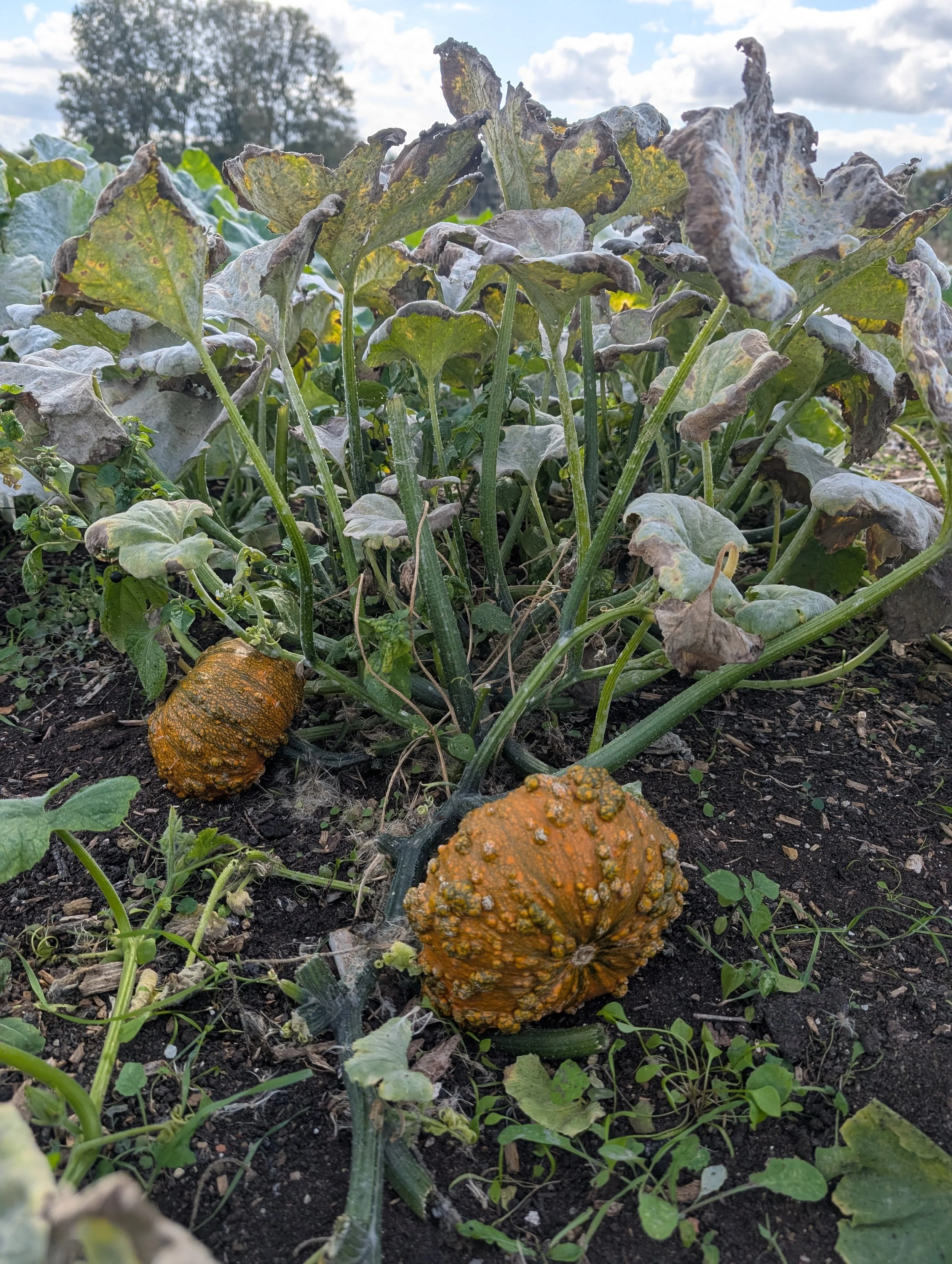
One of the things that makes LOVE Farm interesting is the relationship between people and land.
The question we normally ask is:
Who owns it?
LOVE invites a slightly different question:
What could this land do for the people living around it?
The L.O.V.E. Project has historically worked across several Oxfordshire sites, with land used for growing, animals, education, wellbeing and community activity. Its official site identifies Wootton as one of those locations. Love Care Farm
A relatively small area of land can, of course, grow vegetables.
But that's only one measure of productivity.
That same land can create:
opportunities to learn;
confidence and practical skills;
friendships;
physical activity;
access to nature;
biodiversity;
fresh food;
and somewhere someone simply feels that they belong.
Perhaps the value of land shouldn't always be measured only by yield per hectare.
4. Growing food can also grow people
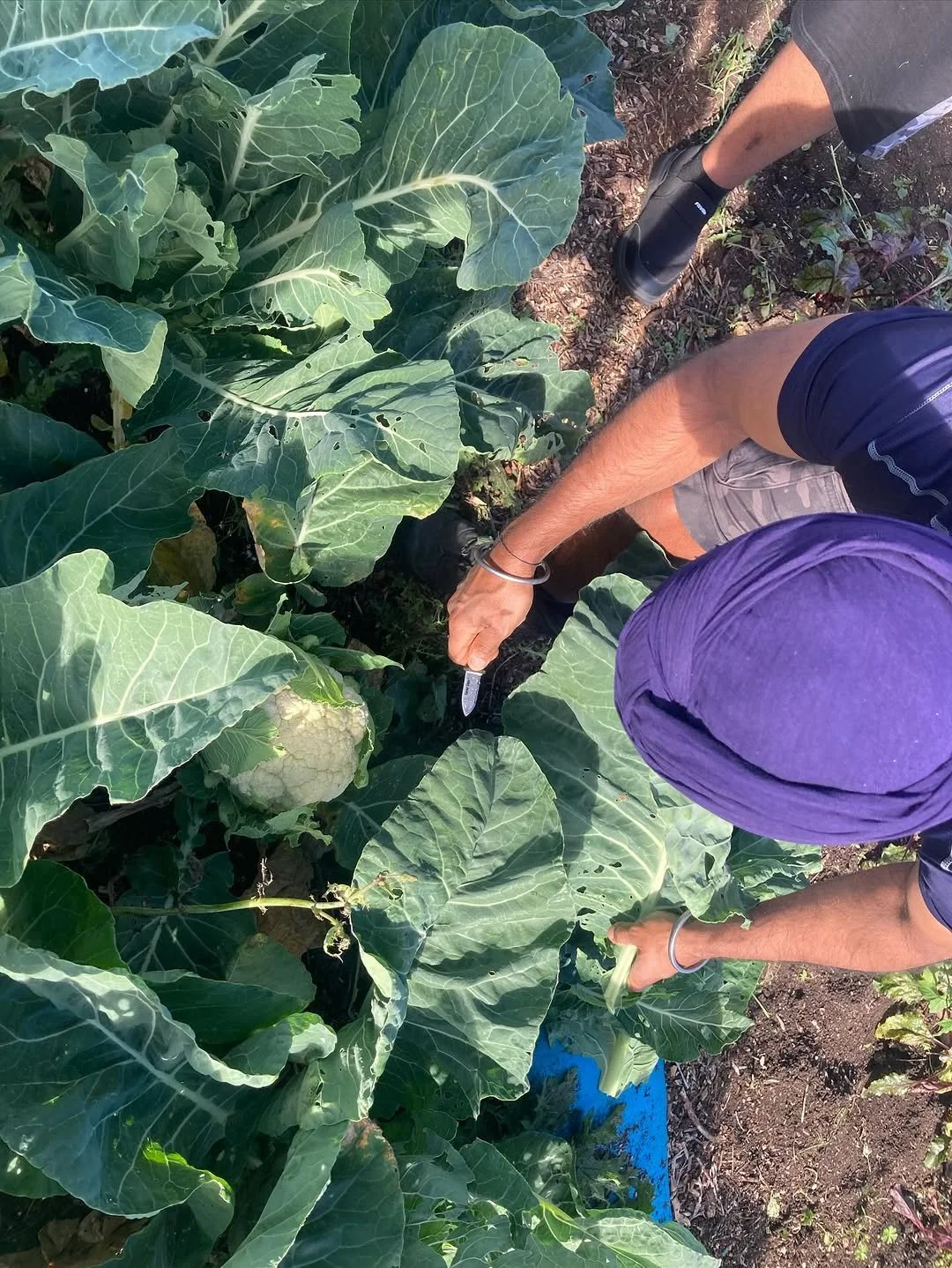
This is where LOVE Farm connects particularly strongly with the work we're interested in at Agriton.
We talk a lot about healthy soil.
And rightly so.
Healthy soil supports plant growth, water management, nutrient cycling and resilient growing systems.
But something else happens around food growing that is harder to measure.
People start talking.
Children start asking where food comes from.
Someone who may have been isolated suddenly has somewhere useful to be.
Knowledge passes between generations.
A person plants something, looks after it and eventually harvests it.
In that moment, food stops being something that simply appears on a supermarket shelf.
The official L.O.V.E. Project describes its activities as including care farming, outdoor education, mindfulness, meditation, yoga, community events and local enterprise alongside use of the land. Love Care Farm
That's a powerful combination.
Because when someone grows food, they're not simply producing a vegetable.
They're rebuilding a relationship with the system that feeds them.
5. Could an economy begin with giving?
Perhaps the most challenging part of the LOVE philosophy is its relationship with transactions.
Most modern exchanges begin with a question:
“What do I get?”
The idea behind Local Organic Voluntary Economies begins somewhere else.
What can I contribute?
Can someone provide land?
Can somebody else bring seeds?
Could another person share knowledge?
Can someone cook?
Repair something?
Teach?
Listen?
Grow?
The original story of L.O.V.E. began without money changing hands: people volunteered labour, landowners shared produce, more people joined, and additional land became available. Love Care Farm
Of course, money still matters.
Infrastructure costs money.
Tools cost money.
Water systems, buildings, transport and materials cost money.
LOVE isn't pretending otherwise.
But perhaps money doesn't always have to be the starting point of the relationship.
Sometimes the first currency can be:
time, trust, knowledge, kindness or simply turning up.
And something interesting happens when people receive without immediately being asked for something in return.
Very often, they want to contribute.
Not because they have been invoiced.
Because they belong.
Soil belongs in this conversation too
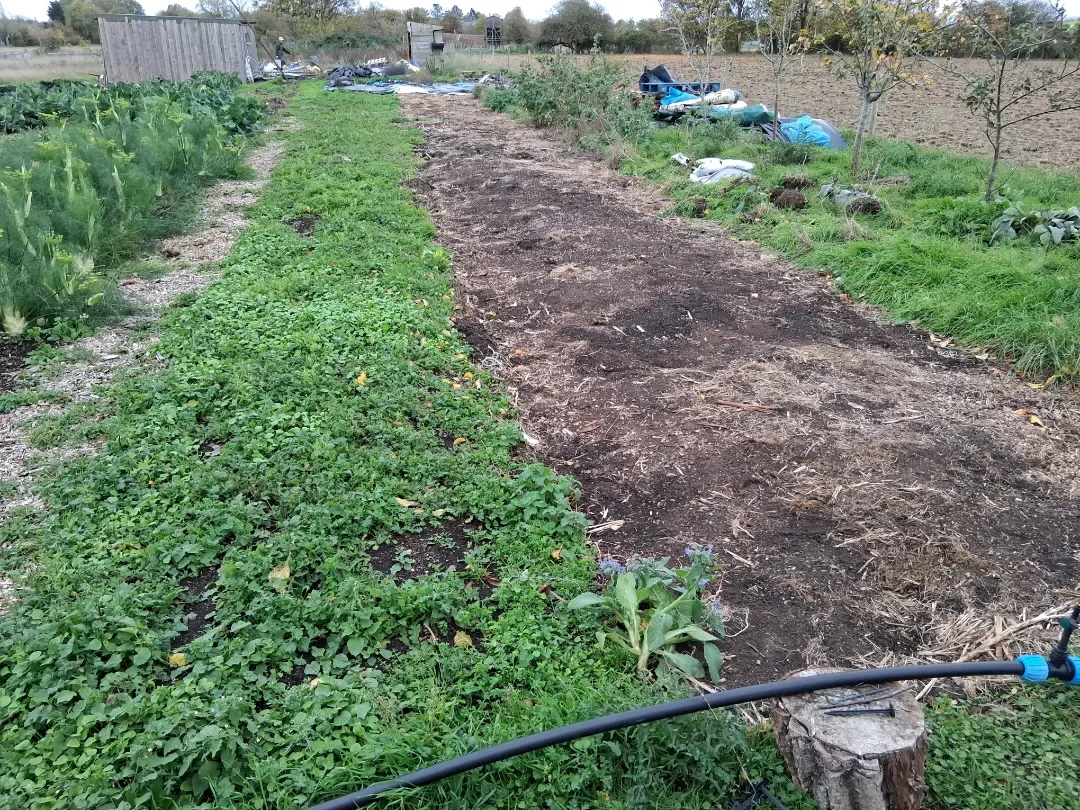
Our connection with LOVE Farm has also led us into conversations about soil biology, natural farming and microorganisms.
At Agriton we've previously explored work around LOVE Farm looking at Indigenous Microorganisms (IMO), microbial diversity, soil structure and natural farming approaches. Agriton Group UK
And this is where the environmental and social sides of the story begin joining together.
Think about the cycle:
Soil → plant → food → people → organic material → compost → soil
Improve the soil and you create opportunities to grow better.
Grow food and you create opportunities to teach.
Teach people and you create confidence.
Confidence creates participation.
Participation creates community.
And communities that understand their soil have another reason to care for the land beneath them.
That's why we've become increasingly interested in community composting as more than simply a waste-management solution.
It can be education infrastructure.
Food waste becomes a lesson about decomposition.
Apple pulp becomes a lesson about fermentation.
Leaves become a lesson about fungi.
Compost becomes a lesson about nutrient cycling.
And soil becomes something alive rather than just the brown stuff beneath our feet.
From soil health to human health
There is another connection here too.
When we're discussing soil health, food systems and community wellbeing, we shouldn't automatically treat human health as a completely separate subject.
Growing food encourages movement.
Gardening gets people outside.
Shared growing creates social contact.
Learning practical skills can provide purpose.
Nature provides space away from screens and noise.
And local food projects reconnect people with what they eat and where it comes from.
This isn't about claiming that a vegetable garden solves every social or health problem.
It doesn't.
But it does demonstrate that soil, food, environment and human wellbeing are interconnected systems.
Perhaps we've spent too long trying to deal with all of those things separately.
What does local resilience actually look like?
We hear the word resilience constantly.
Climate resilience.
Food resilience.
Community resilience.
Mental-health resilience.
Economic resilience.
Usually they are discussed as separate challenges requiring separate interventions.
LOVE Farm offers another possibility.
Perhaps some of them can be addressed in the same physical space.
A piece of land can produce food while providing somewhere for people to meet.
A compost system can process organic material while teaching children how ecosystems work.
A vegetable bed can grow dinner while providing someone with a reason to get outside in the morning.
A quiet space can offer someone somewhere to sit when the rest of life feels overwhelming.
No individual one of these things fixes everything.
But bring enough of them together and something begins to happen.
You start rebuilding connection.
Can you help LOVE Farm?

This is probably the most important part of this article.
Projects like LOVE Farm don't grow because one person does everything.
They grow because people contribute what they can.
And that doesn't necessarily mean money.
Perhaps you're a grower.
Perhaps you're an educator.
Perhaps your business has materials that could be reused.
Perhaps you're involved with composting or soil.
Maybe you know someone with equipment.
Maybe you're experienced in horticulture.
Perhaps you understand funding.
Maybe you could volunteer.
Or perhaps the most useful thing you could do is simply introduce LOVE Farm to somebody who could help.
So we'd like to ask:
Could you offer time?
Could you offer knowledge?
Could you offer materials?
Could you offer equipment?
Could your business collaborate?
Could you help tell the story?
Sometimes helping doesn't require doing something enormous.
It can begin with one question:
“What have I got that somebody else could use?”
If you want to find out more about L.O.V.E., you can explore the project here:
And if the idea interests you, take a book
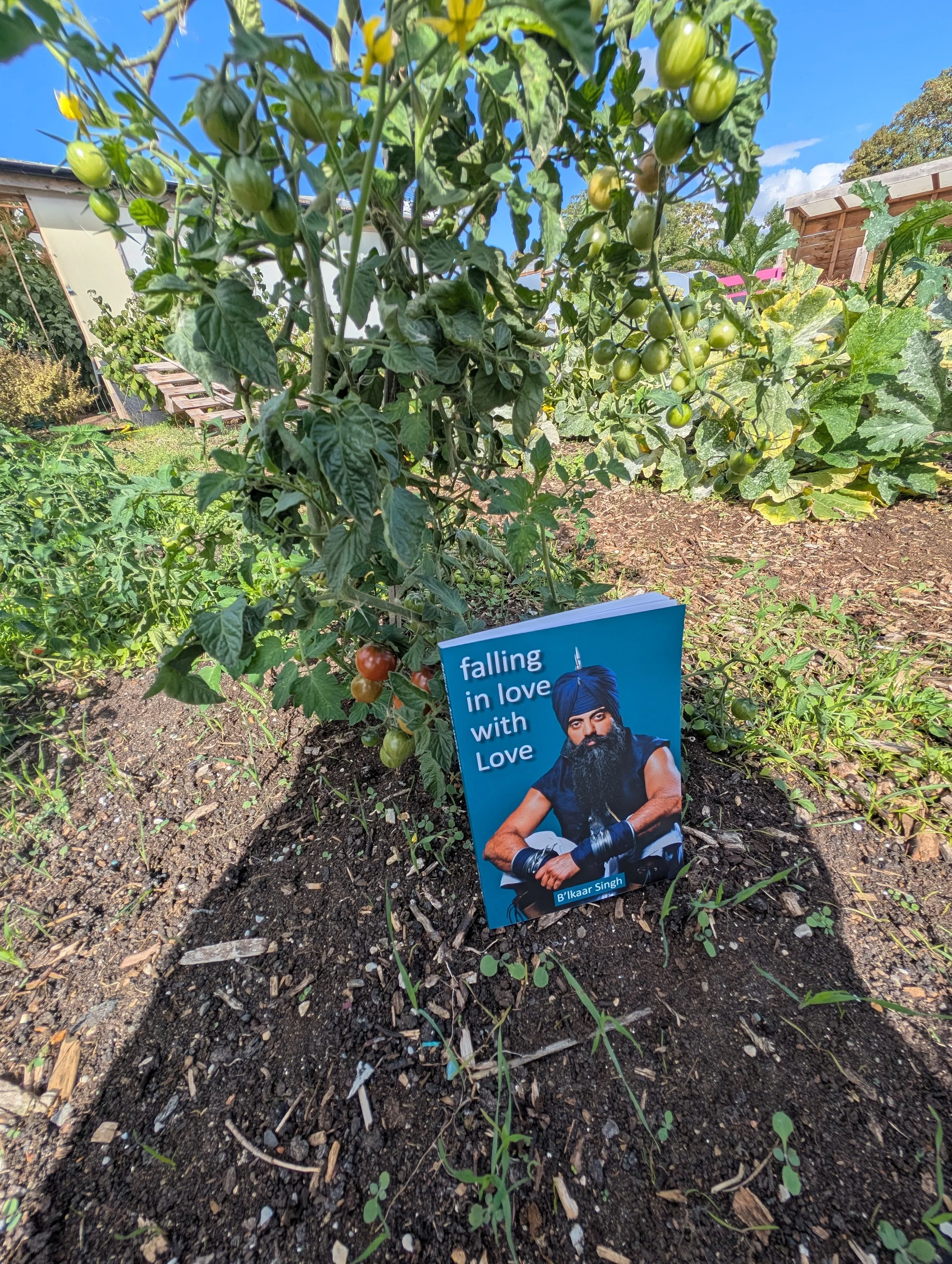
We also want to put one of LOVE's principles into practice ourselves.
Rather than simply telling people about Bill's philosophy, Agriton has copies of his book Falling in Love with Love available to give away free while stocks last.
If you're interested in community food, regenerative growing, social farming, local economies or simply thinking differently about how we relate to one another, we'd love you to have one.
Get in touch with Agriton UK and ask for a copy.
No sales pitch.
No obligation.
Just read it.
Pass it on if you want to.
Start a conversation.
Perhaps that is rather fitting.
Falling in LOVE
There is something refreshing about a community project prepared to use the word love seriously.
Not love as branding.
Not romantic love.
But love expressed through action.
Looking after soil.
Growing food.
Making somebody welcome.
Giving something without immediately expecting repayment.
Teaching a child.
Helping a neighbour.
Protecting land.
Listening.
Showing up.
Local Organic Voluntary Economies may initially sound idealistic.
But projects like LOVE Farm invite us to ask whether some of those ideas are actually far more practical than we imagine.
Perhaps the unusual thing isn't trying to build communities around giving, local food and shared responsibility.
Perhaps the unusual thing is that we've constructed a world where doing so can feel radical.
And maybe the best place to begin isn't:
“What can I get from this?”
But:
