Less Turning, More Inclusion: Introducing Bokashi at ARK at Egwood CIC
A composting system that depends on regular heavy turning is only useful when the people on site are able to turn it.
That was an important consideration when Agriton UK visited ARK at Egwood CIC near Ilminster, Somerset. The 12-acre community project uses growing, animal care and practical outdoor activities to support people experiencing mental health challenges, learning disabilities and social isolation, as well as young people needing an alternative form of education.
ARK grows fruit, vegetables and cut flowers, prepares free meals for its staff and volunteers, and shares produce with the local community. This creates plenty of garden and kitchen waste, but it also creates an opportunity: could more of that material be processed on site and returned to the soil?
The problem with the existing compost heaps
ARK was already composting its garden waste, but its large heaps were slow to break down and needed regular turning.
That physical work can become a barrier within a community project. Some volunteers may enjoy turning a compost heap, but others may not have the strength, mobility or confidence to take part.
The answer was not to stop composting. It was to change the process.
Agriton Home & Garden Manager Martyn Richards visited ARK to help the team introduce a no-turn Bokashi system for both garden and kitchen waste.
Fermentation instead of decomposition
Traditional composting is an aerobic process. It relies on oxygen, which is why a conventional heap needs enough structure and regular turning to keep air moving through it.
Bokashi uses a different process.
Organic material is treated with beneficial microorganisms, compacted to remove air and covered. In this low-oxygen environment, the material ferments rather than simply being left to rot.
The microorganisms begin working through the organic matter while helping to retain more of the material within the system. Once fermentation is complete, soil organisms continue the process when the material is applied to the ground or incorporated into a composting system.
This approach removes the need to repeatedly turn a heavy heap. It still requires care when building the pile, but much of the ongoing work is left to the microorganisms.
Building the green-waste Bokashi pile
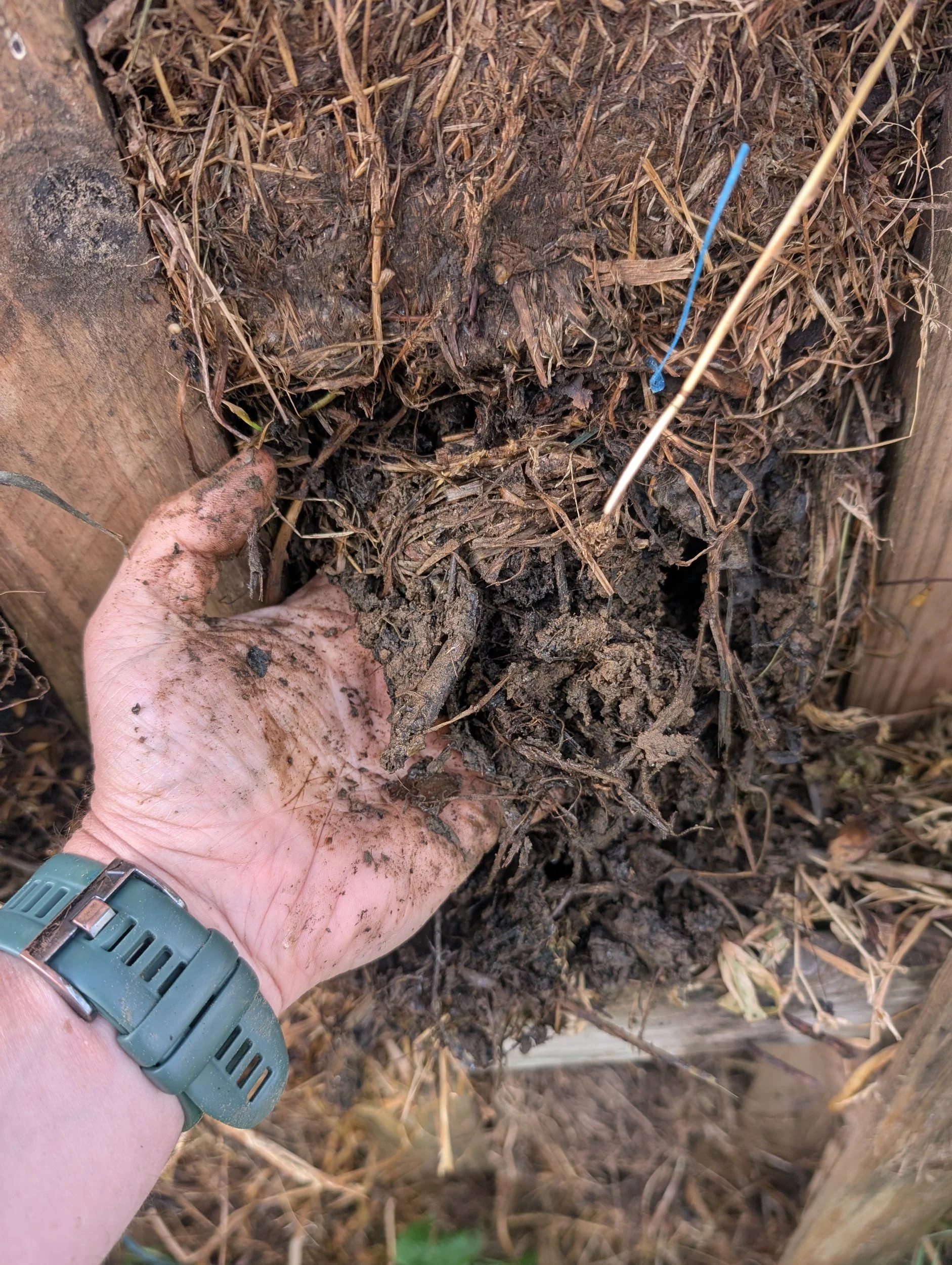
ARK’s garden waste is processed using a layered approach.
A base of dry, carbon-rich material such as stalks, woody cuttings and other “browns” is followed by a layer of fresh, nitrogen-rich material such as grass and green plant waste.
Each layer is treated with diluted Actifirm, Agriton’s ready-to-use microbial inoculant. Moisture is important: the material should feel thoroughly damp when squeezed, but it should not be dripping or waterlogged.
The pile is then compacted. At ARK, that meant trampling the layers underfoot—a practical job that also proved considerably more entertaining than turning a heap with a fork.
Compaction removes large pockets of air and helps create the conditions needed for fermentation. Once filled, the pile is covered securely to limit further oxygen entering the material.
It can then be left alone for approximately 12 to 14 weeks.
Compost does not have to look perfect
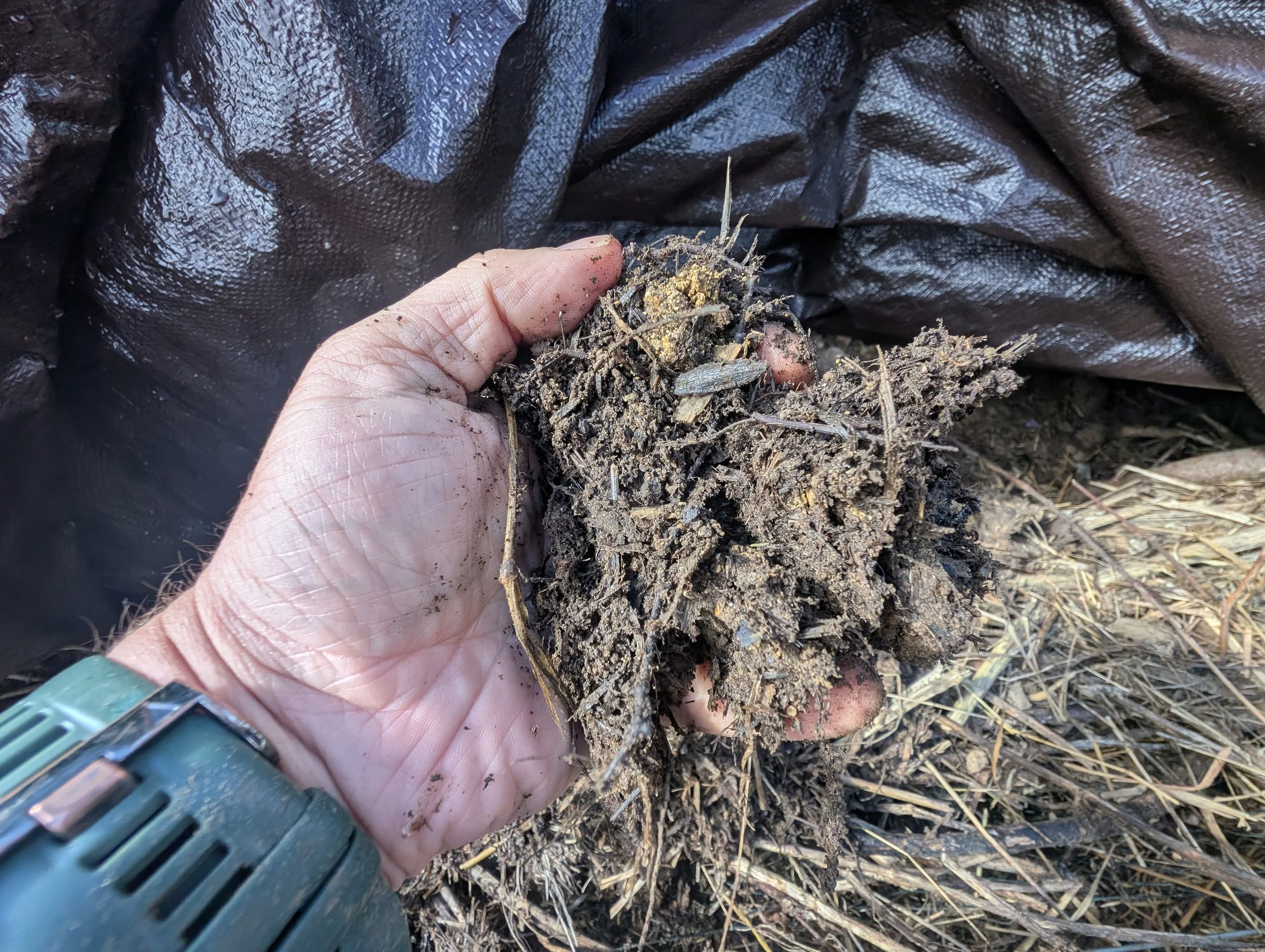
The material produced through this process may not resemble the fine, sieved compost found in a bag.
It can still contain visible sticks, fibres and pieces of the original plant material. That does not automatically mean the process has failed. Fermentation prepares and preserves the organic material, but the physical breakdown continues when it meets the wider soil food web.
For use as a mulch or soil improver, a more rustic material can be useful. Larger pieces provide structure, create habitats and continue to break down over time.
The aim is not to manufacture something that looks perfect. It is to produce a biologically useful material that can be returned to the land.
Bringing kitchen waste into the circle
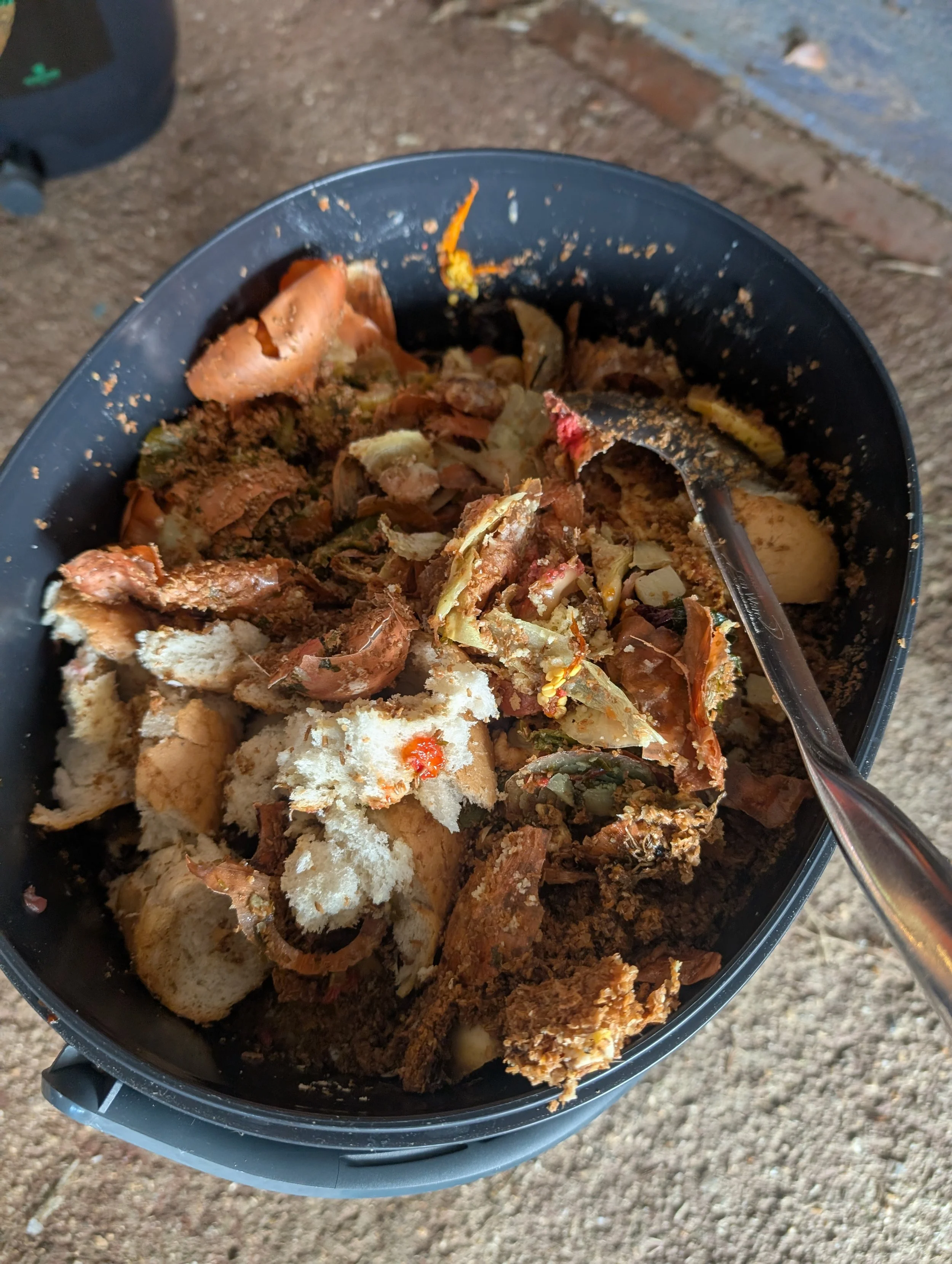
ARK prepares free hot meals for its team and volunteers, sometimes feeding up to 100 people in a day. Inevitably, that produces a substantial amount of food waste.
Previously, much of this material was collected for disposal. The new system gives ARK the opportunity to keep it on site and use it to support future crops.
A four-bin Bokashi rotation is being introduced in the kitchen. Food scraps are placed into a sealed Bokashi bin, sprinkled with Bokashi bran and compressed to remove air.
Unlike a conventional garden compost heap, the bins can accept cooked food, meat, fish, dairy, peelings, eggshells and plate scrapings. Large quantities of liquid should be drained or strained first.
When one bin is full, it is sealed and left to ferment while the next bin is brought into use. By rotating four bins, the kitchen can continue collecting food waste while the full containers complete their fermentation period.
A successful batch should have a sweet-and-sour, pickled or fermented smell. It should not smell putrid.
Once fermented, the food waste can be added to the green-waste system, incorporated into another compost heap or buried beneath the soil where it can continue breaking down.
Making composting more accessible
For ARK, this project is not only about producing compost more quickly.
It is about creating a system that fits the people using it.
Removing the need for regular turning reduces heavy lifting and makes it easier for more volunteers to take part. The process provides practical, shared jobs—from collecting food scraps and adding Bokashi bran to layering garden material and, occasionally, jumping up and down on it.
That matters in a setting where horticulture is being used to support confidence, movement, routine and social interaction.
Keeping valuable material on site
The system also allows ARK to connect different parts of its work.
Food is grown on the land. It is prepared in the kitchen and shared with the community. The scraps are fermented alongside the garden waste and returned to the soil, helping to support the next crop.
Material that was once treated as a disposal problem becomes part of a local cycle.
For Agriton, this is exactly where Bokashi can make a practical difference. It is not about telling people that every compost heap must be managed in the same way. It is about choosing a process that suits the available materials, space and people.
At ARK, that means less turning, more participation and a great deal more organic material being returned to the soil.
And occasionally, progress really does involve jumping up and down on a compost heap.