IMO 1–4: Farming With What’s Already There (and Knowing When to Guide It)
There’s a quiet shift happening in farming and growing.
Not louder. Not bigger.
Just… more observant.
Instead of asking “what do I add?”
The better question is becoming:
“What’s already here—and how do I work with it?”
That’s where Indigenous Microorganisms (IMO) come in.
And if you’ve spent any time around systems like Korean Natural Farming—or places like Woolsery Birch Farm—you’ll know this isn’t theory. It’s practical, hands-in-the-soil work.
For me, this path was opened up through Nev Protas, who introduced me to these systems—not as a product, but as a way of thinking.
What is IMO?
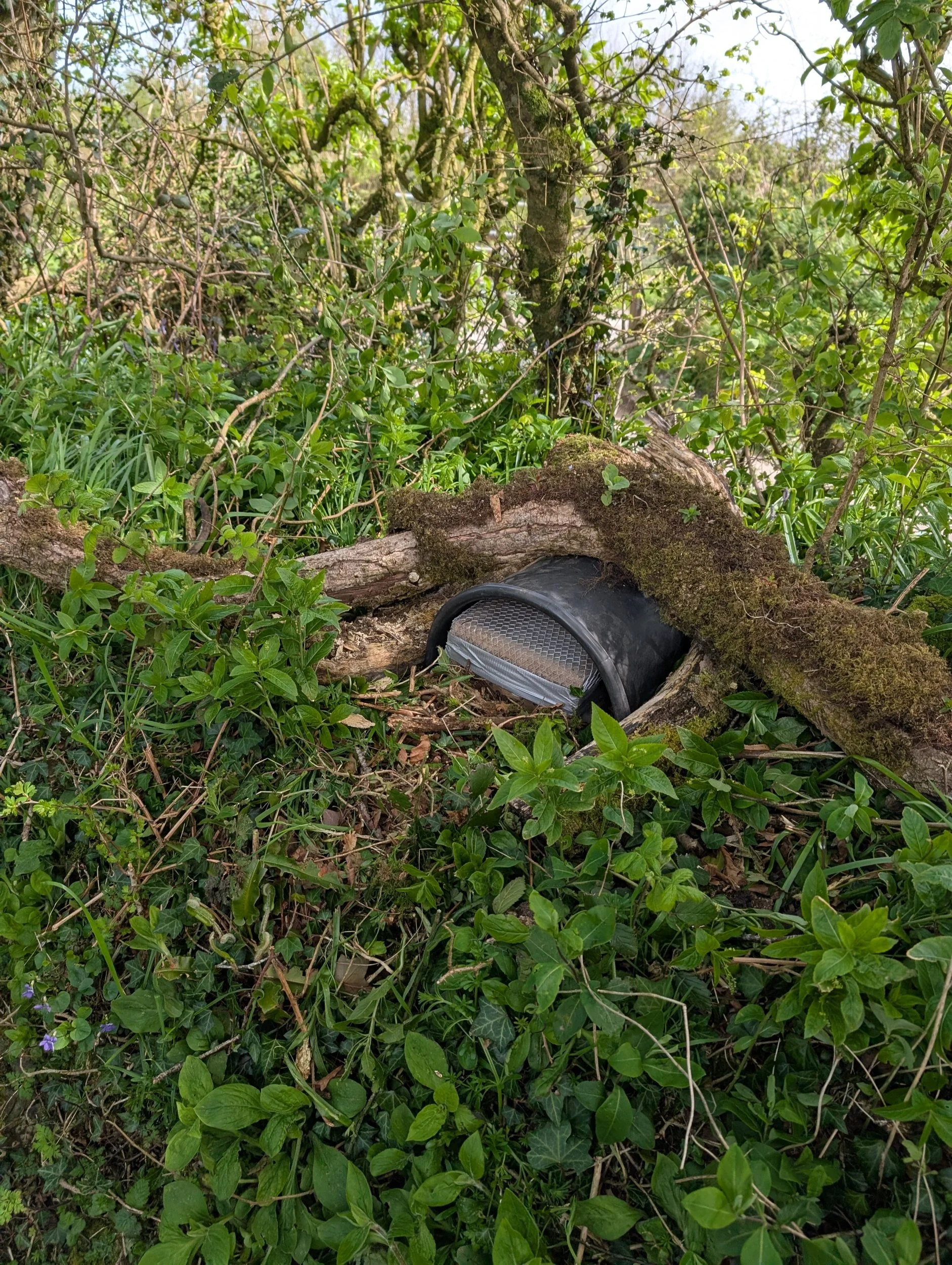
Credit Woolsery Project Birch Farm
IMO is simple in principle:
Capture local microbes → multiply them → return them to the soil
But the nuance is everything.
You’re not importing biology.
You’re culturing what already thrives in your environment.
That means:
Better adaptation
Stronger resilience
Less reliance on external inputs
It’s biology that already understands your soil, your climate, your problems.
IMO 1–4: The Process
IMO 1 – Capture
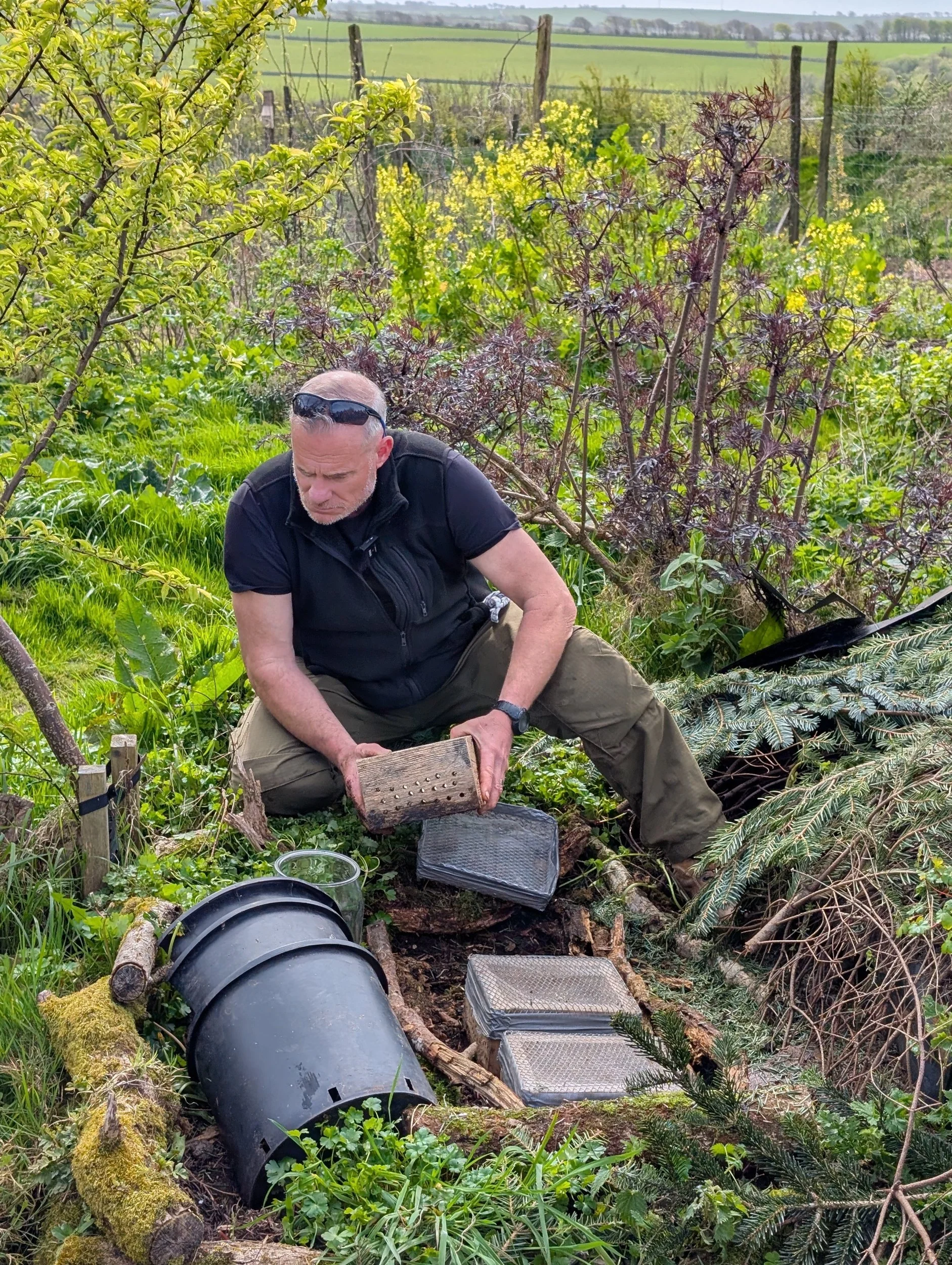
Credit Woolsery Project Birch Farm
You head to a biologically rich place—woodland floor, leaf litter, undisturbed soil.
Cooked rice goes into a breathable box and gets left to colonise.
What comes back isn’t just mould—it’s a snapshot of your local microbial community.
IMO 2 – Stabilise
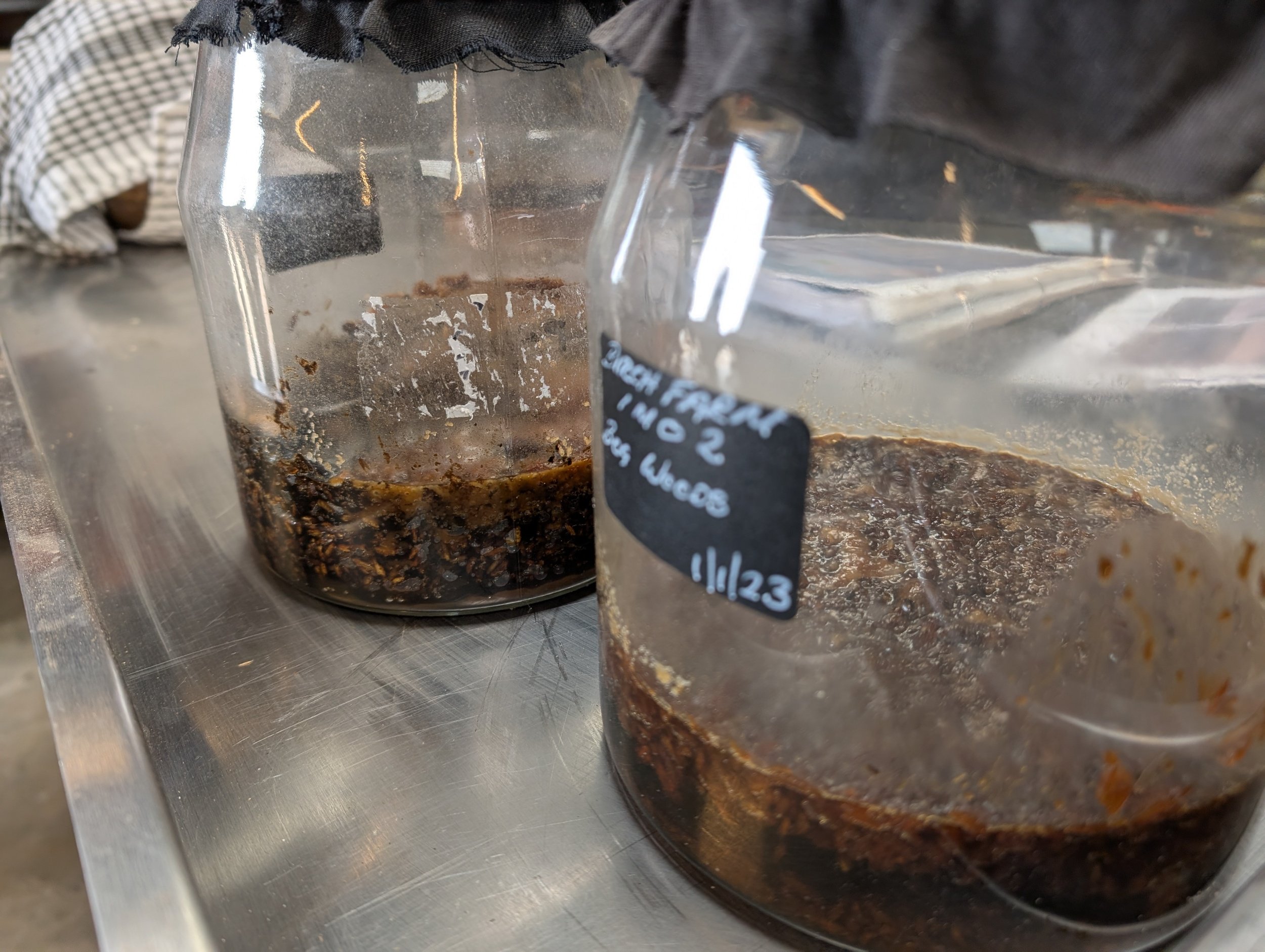
Credit Woolsery Project Brich Farm
You mix that colonised rice with sugar.
This does two things:
Preserves the microbes
Selects for fermentation-friendly species
Now you’ve got something stable. Alive, but controlled.
IMO 3 – Multiply
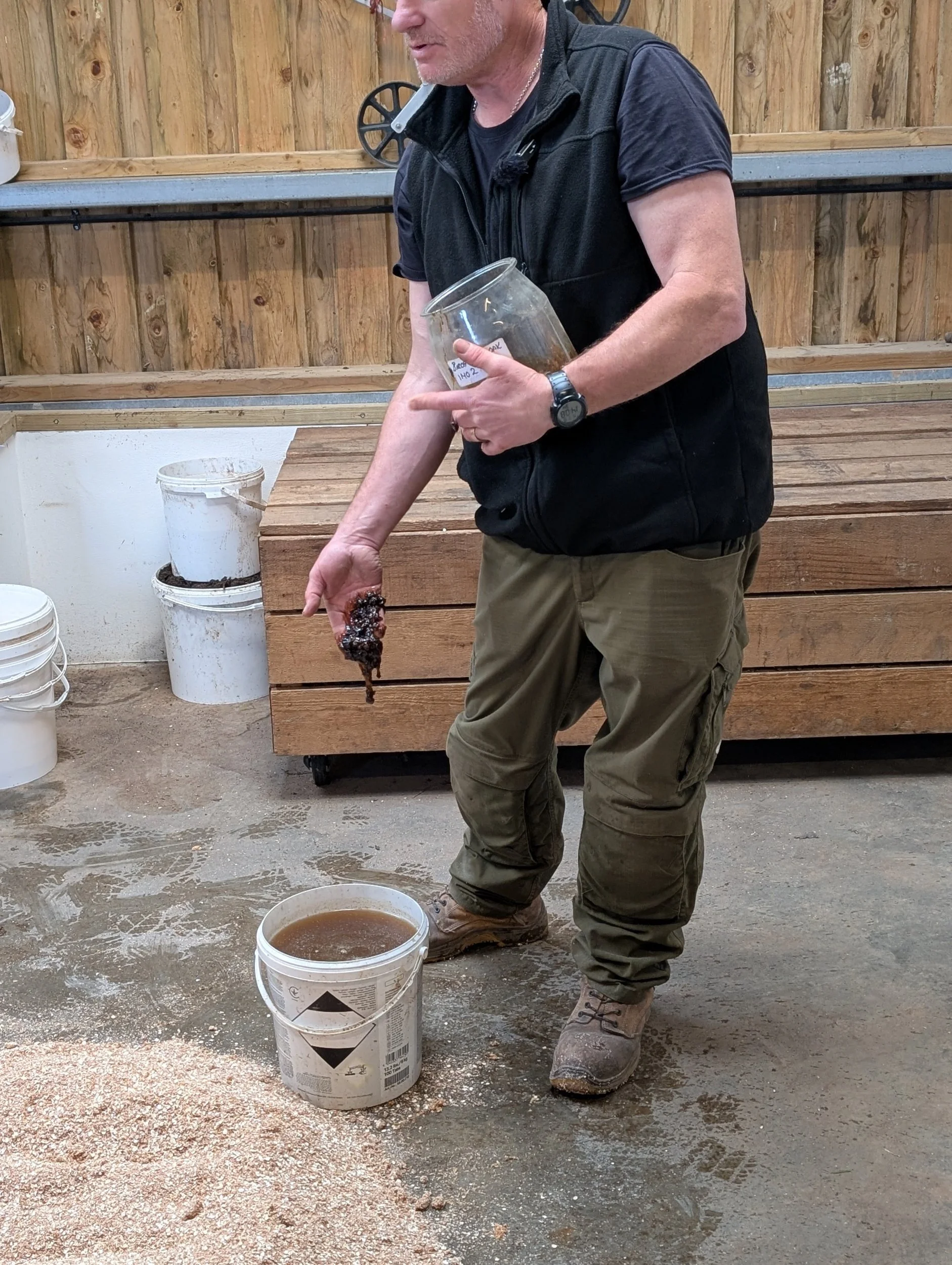
Credit Woolsery Project Brich Farm
Add the culture to a carbohydrate source like bran.
Now the microbes expand—this is where you start building real volume.
IMO 4 – Bring It Home
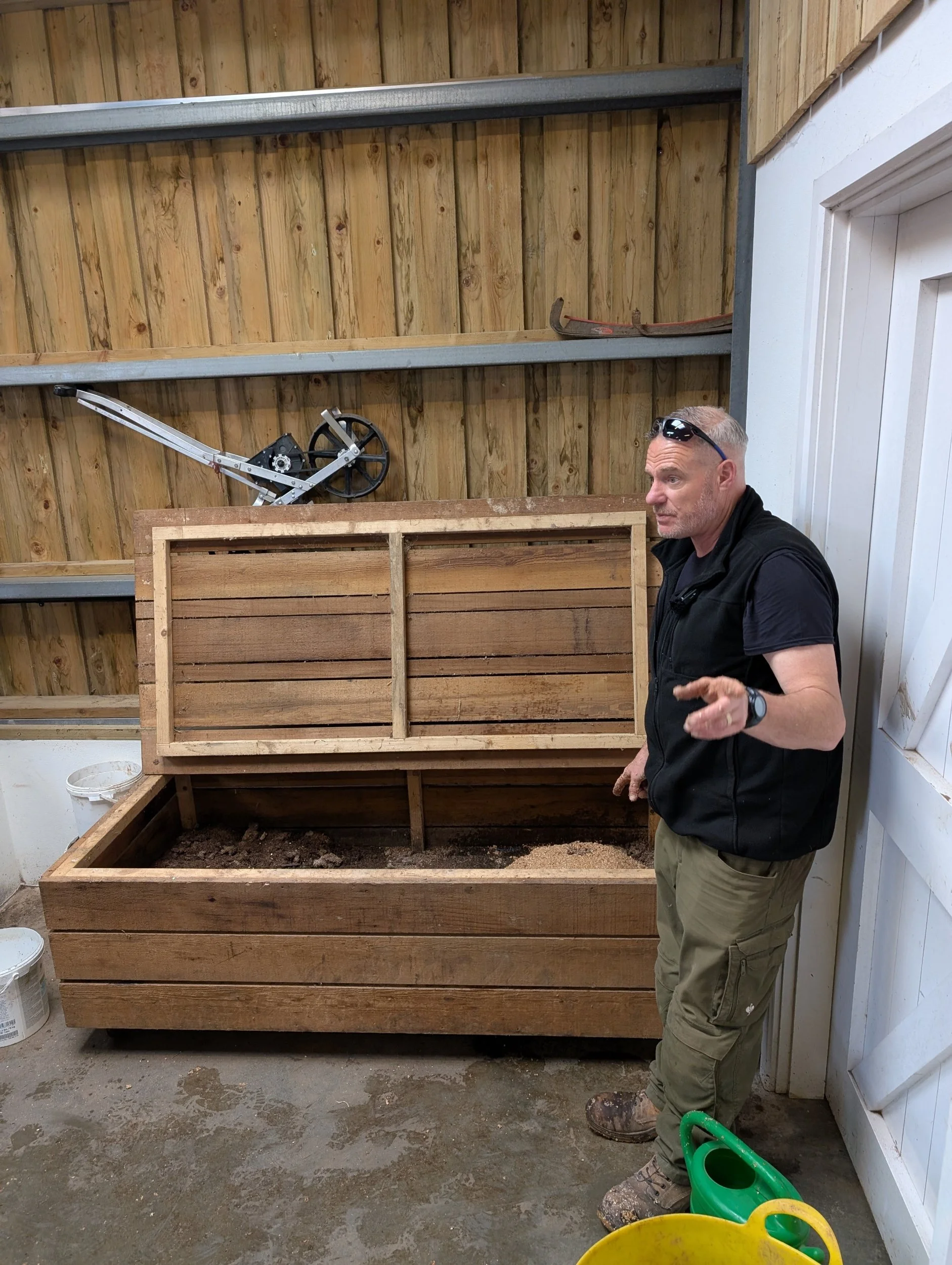
Credit Woolsery Project Brich Farm
Blend the culture into soil from your site.
This is the critical step.
You’re not just growing microbes—you’re reintroducing them into your land, adapted and ready to function.
What’s Actually Happening?
This isn’t just “adding microbes.”
It’s:
Increasing microbial diversity
Supporting fungal networks
Improving nutrient cycling
Building soil structure
At Birch Farm, this thinking runs deep.
It’s not about inputs—it’s about creating conditions where:
Biology leads
Plants respond
Soil builds itself
From IMO to EM: When Observation Meets Direction
Here’s where things get interesting.
IMO is about working with what’s there.
But sometimes, especially when you’re trying to process large volumes of organic matter or shift soil biology quickly, you don’t just want diversity—you want direction.
That’s where Effective Microorganisms (EM) come in.
EM is a curated mix of beneficial microbes—lactic acid bacteria, yeasts, photosynthetic bacteria—designed to push decomposition down a specific path: fermentation-led, not putrefaction.
Why That Matters
Left alone, organic matter can go one of two ways:
Putrefaction (rot) → smell, nutrient loss, instability
Regenerative decomposition → nutrient cycling, humus formation
EM helps tip the balance.
It:
Rapidly lowers pH, suppressing harmful microbes
Produces enzymes, vitamins, and organic acids
Drives a more stable microbial succession
Helps retain carbon and nutrients
So instead of losing value…
You’re guiding how that value is released into the soil.
EM + Flächenrotte: Surface Decomposition Done Properly
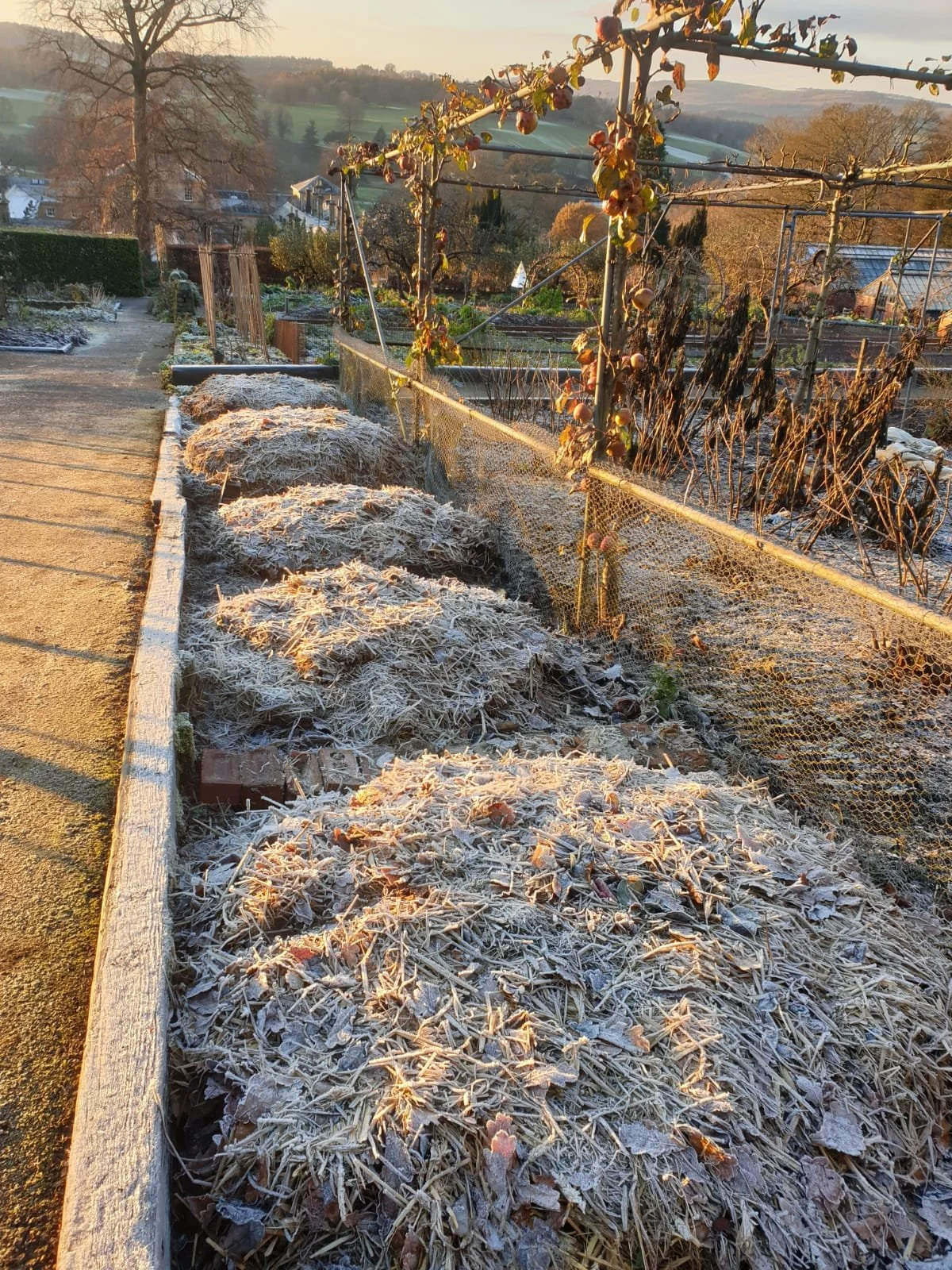
Credit Chatsworth House
This is where things move out of the bucket and into the field.
Flächenrotte (German for surface decomposition) is the practice of:
Laying organic matter directly onto the soil surface and letting biology process it in place.
No turning.
No exporting.
No “waste stream.”
Just:
Organic matter
Soil contact
Microbial activity
Where EM Fits In
In Flächenrotte systems, EM is used as a biological kickstarter.
Instead of waiting for decomposition to organise itself, you:
Spray EM (or activated EM like Actiferm) onto the material
Lightly incorporate or leave on surface
Let microbes take over
This does a few key things:
1. Speeds up colonisation
You’re not waiting for microbes to arrive—they’re already there.
2. Reduces nutrient loss
Fermentation pathways help hold onto nitrogen and carbon rather than letting them gas off.
3. Improves fungal:bacterial balance
Especially when paired with woody or high-carbon materials.
4. Creates a softer transition into soil
Material breaks down in situ, feeding soil life gradually.
IMO vs EM in Flächenrotte
This is where the two systems really complement each other.
IMO = local intelligence
EM = functional acceleration
A strong approach looks like:
Build soil biology with IMO (long-term resilience)
Use EM on fresh organic matter (short-term control and efficiency)
Where This Shows Up in the Real World
At Birch Farm, this philosophy is clear:
Minimal intervention
Maximum biology
Organic matter always cycling
Whether it’s through polycultures, agroforestry, or surface-fed systems, the aim is the same:
Keep the soil covered, fed, and biologically active.
Flächenrotte fits naturally into this.
It’s not a system you install—it’s one you allow.
The Bigger Shift
Whether it’s IMO, EM, or Flächenrotte, the underlying idea is the same:
Stop treating organic matter as waste.
Because the real loss isn’t the material.
It’s:
The carbon we let escape
The nutrients we lose
The biology we ignore
Traditional composting can lose a lot of this to the atmosphere.
Surface decomposition—done well—keeps it where it belongs.
In the soil.
Final Thoughts
IMO teaches you to observe.
EM teaches you to guide.
Flächenrotte teaches you to trust the process.
Birch Farm shows what happens when you bring all three together.
And people like Nev remind you this isn’t new—it’s just been forgotten.
