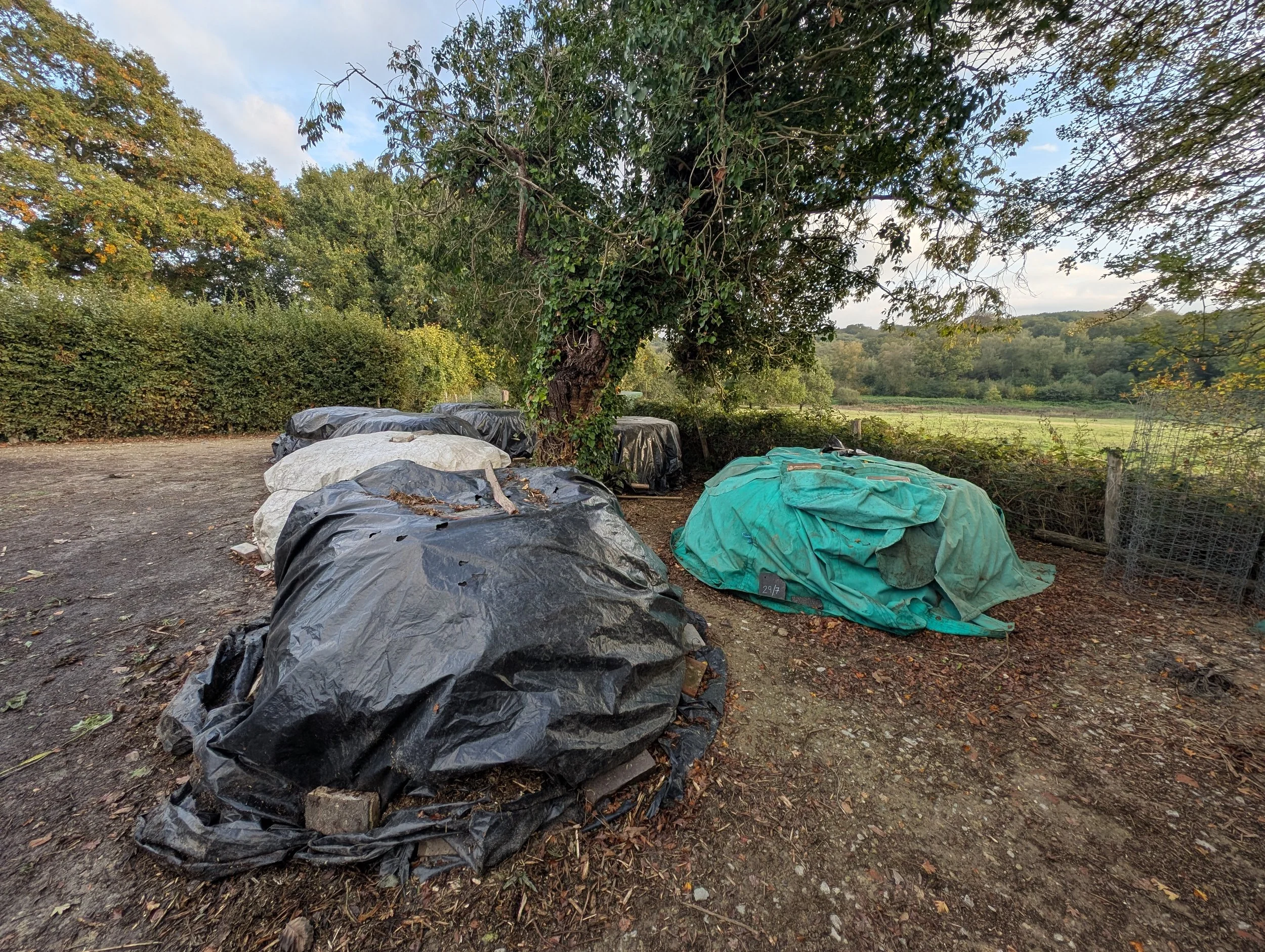
People visit Sissinghurst Castle Garden for the flowers, the planting and the beauty of a garden shaped over generations. On our visit, though, it was a much less glamorous corner that stayed with us.
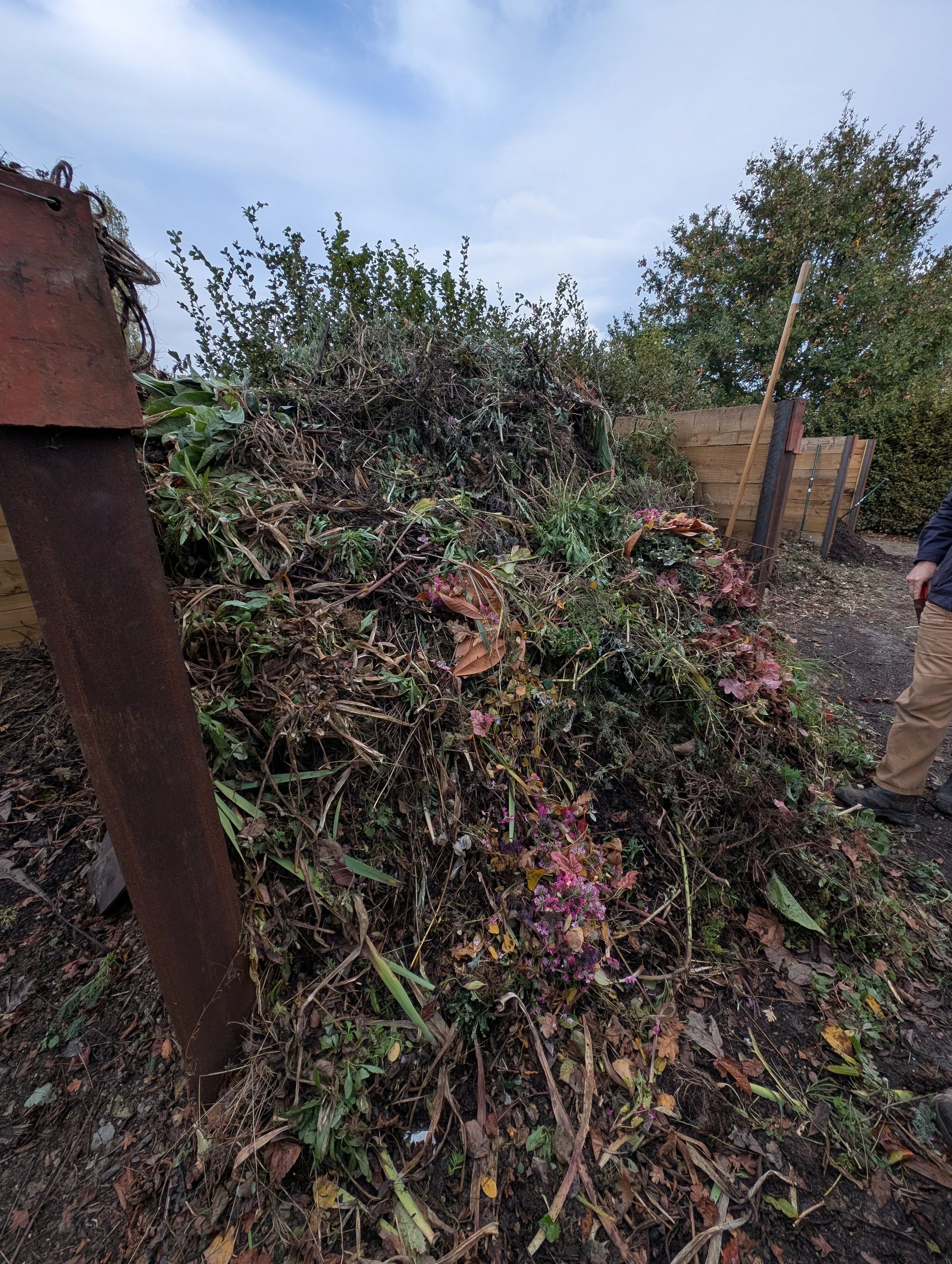
Behind the borders were bays of garden material, covered heaps and two information boards explaining what happened next.
This was Sissinghurst’s composting area. Away from the planting displays, it told a story about the work needed to keep a garden growing—and the people helping to do it.
Every garden produces material that needs somewhere to go. Plants finish flowering. Beds are cleared. Branches are pruned. At a place like Sissinghurst, those everyday jobs create a steady supply of stems, leaves and cuttings.
The question is what happens to them.
Sissinghurst’s team has spent several years developing an answer: a composting method that gives this material a useful role in the garden’s future.
The people behind the garden
A garden like Sissinghurst depends on patient, practical work. Its beauty is supported by jobs that visitors may barely notice: collecting cuttings, moving material, mulching beds and looking after the soil.
Volunteers are part of that work. The National Trust lists composting, mulching, pruning, no-dig gardening and harvesting among the activities its gardening volunteers support at Sissinghurst. Read about volunteering at Sissinghurst.
That gives the composting area a human significance as well as an environmental one. A useful system has to fit the people who work with it.
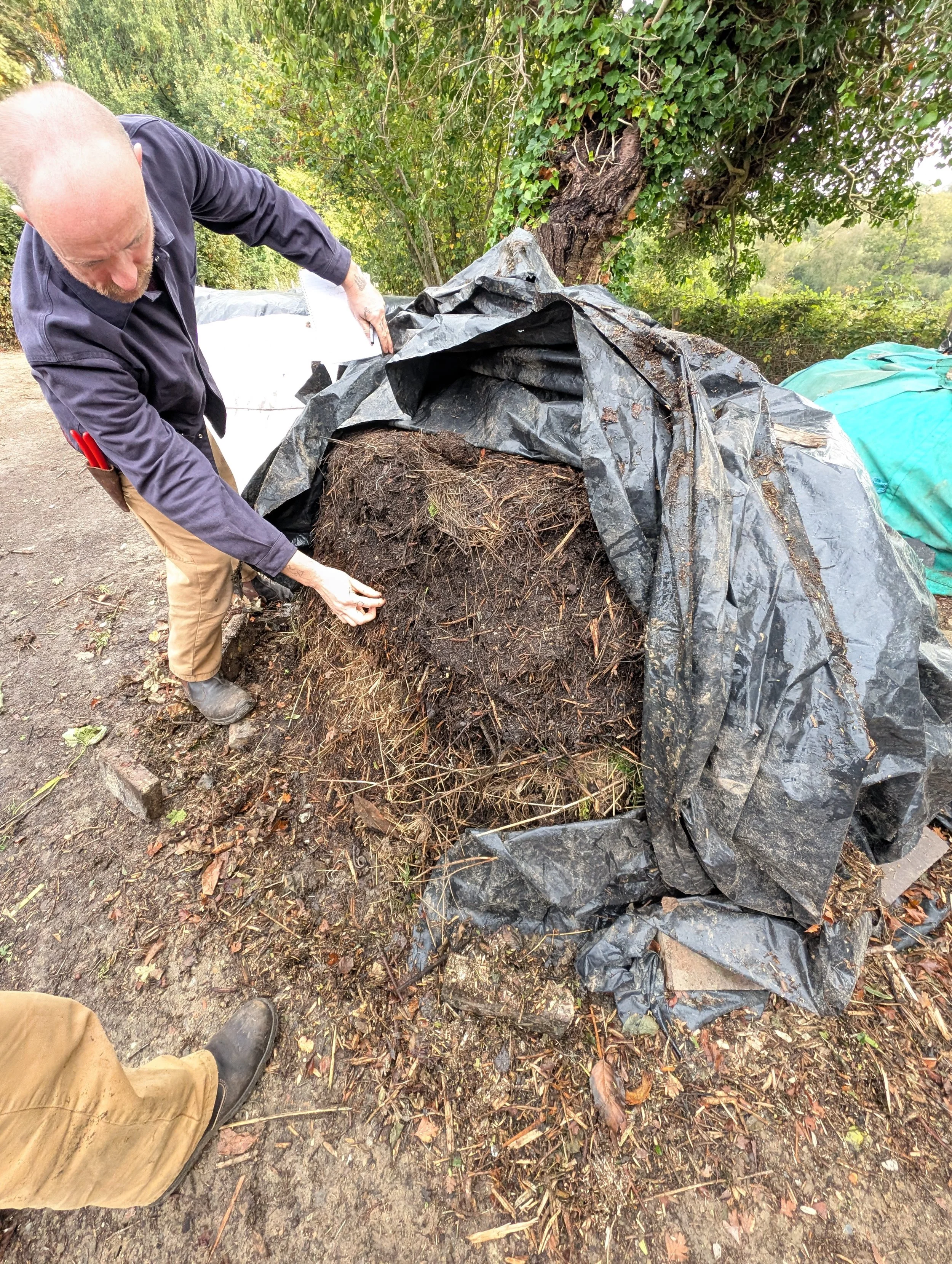
Sissinghurst’s information board explains that its compost “cakes” are manageable piles that can be handled without machinery. The method also avoids the regular turning associated with conventional composting. Those choices bring the process down to a scale that can be managed through hands-on gardening.
A new chapter for the cuttings
The journey begins with sorting.
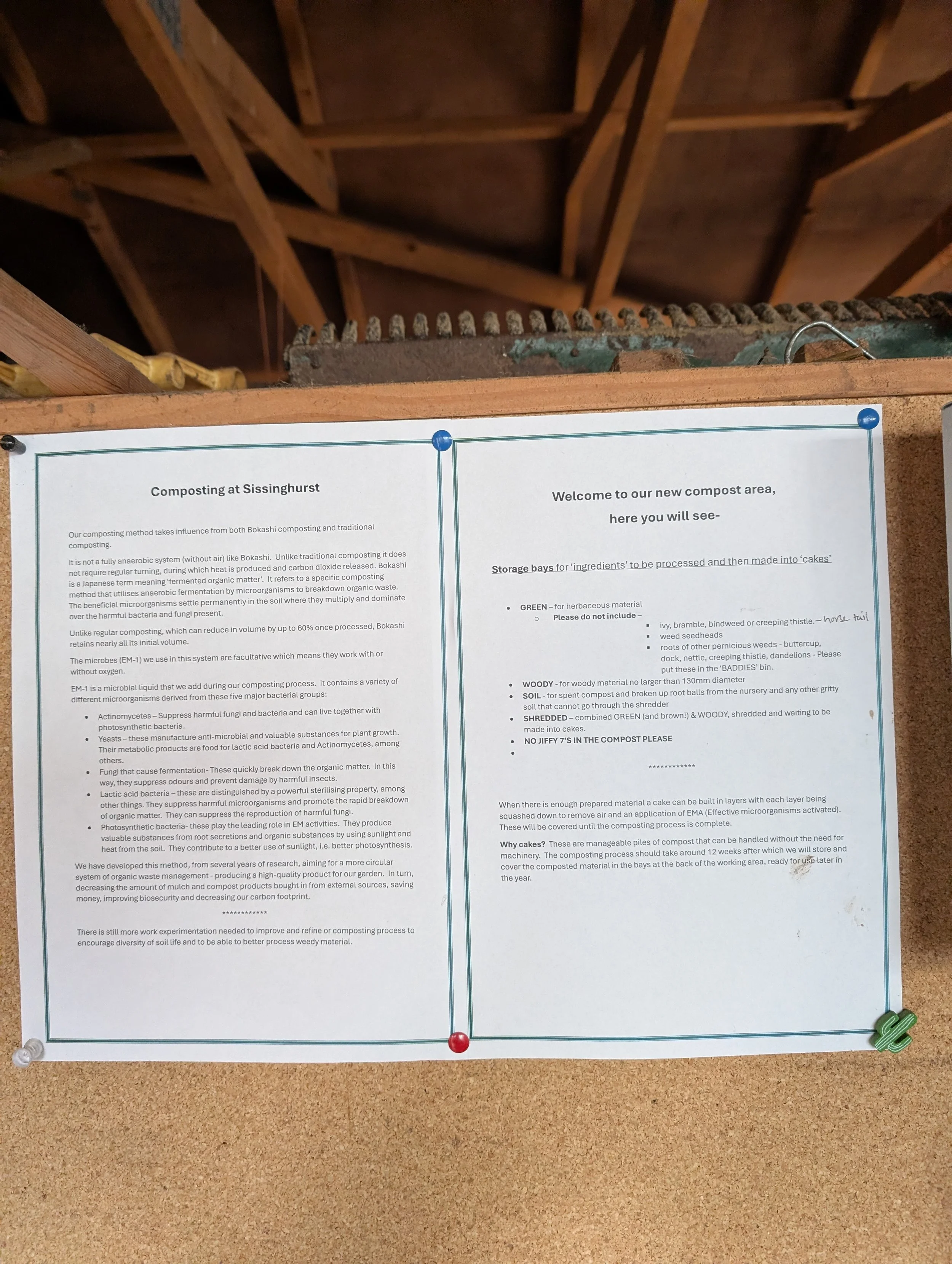
Herbaceous material goes into a green-waste bay. Suitable woody material has another. Spent compost and broken-up nursery root balls are kept separately from material going through the shredder.
There is care in what gets left out, too. The boards direct persistent weeds and their roots away from the main mix. This is a considered process, with instructions that help everyone contribute to the same result.
Once the green, brown and woody plant material has been combined and shredded, it is ready to become a cake.
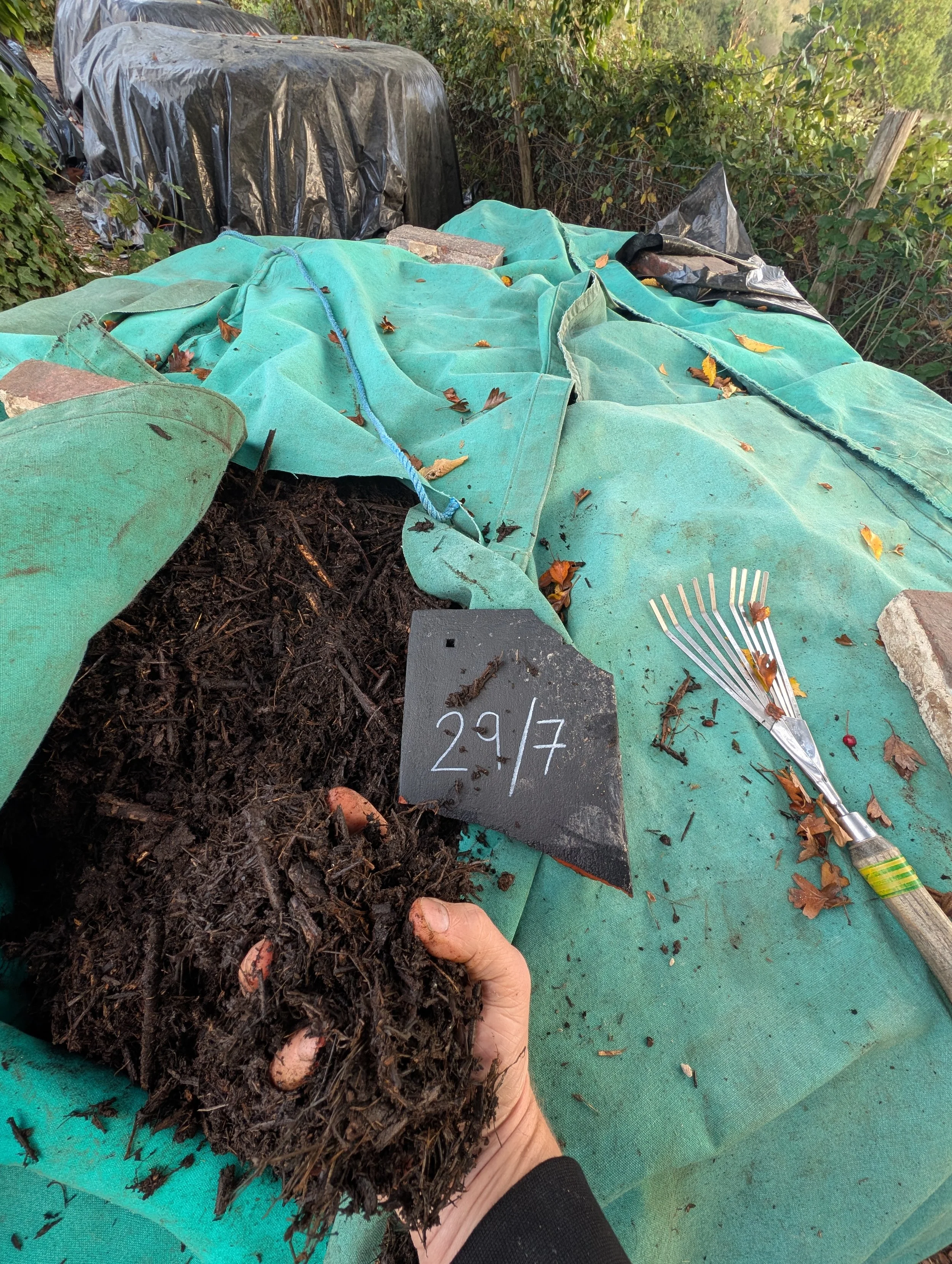
The team builds it in layers, pressing each one down to reduce air pockets and applying activated Effective Microorganisms, described on the board as EMA. The finished pile is covered and left to process.
Sissinghurst gives an approximate timescale of 12 weeks. Afterwards, the material is stored under cover until it is needed later in the year.
What began as the remains of a season’s growth is being prepared for another purpose.
Photo caption: The information boards in Sissinghurst’s composting area explain how garden material is sorted, shredded and built into covered compost cakes.
Working towards a smaller footprint
The environmental ambition is written clearly on the display: make better use of organic material on site and reduce the amount of mulch and compost brought in from elsewhere.
The team identifies saving money, improving biosecurity and reducing its carbon footprint as aims of the approach. The boards do not give measured carbon savings, but they explain the practical direction of the work.
For us at Agriton Home & Garden, that is what makes this corner of Sissinghurst worth talking about. Environmental change is often discussed in large, distant terms. Here, it takes the form of decisions made during an ordinary working day: where a wheelbarrow is emptied, how a pile is prepared and what can be used again.
There is also honesty in the display. The team says its method needs further experimentation, including how best to process weedy material. This is a garden learning from its own practice.
Returning to the soil
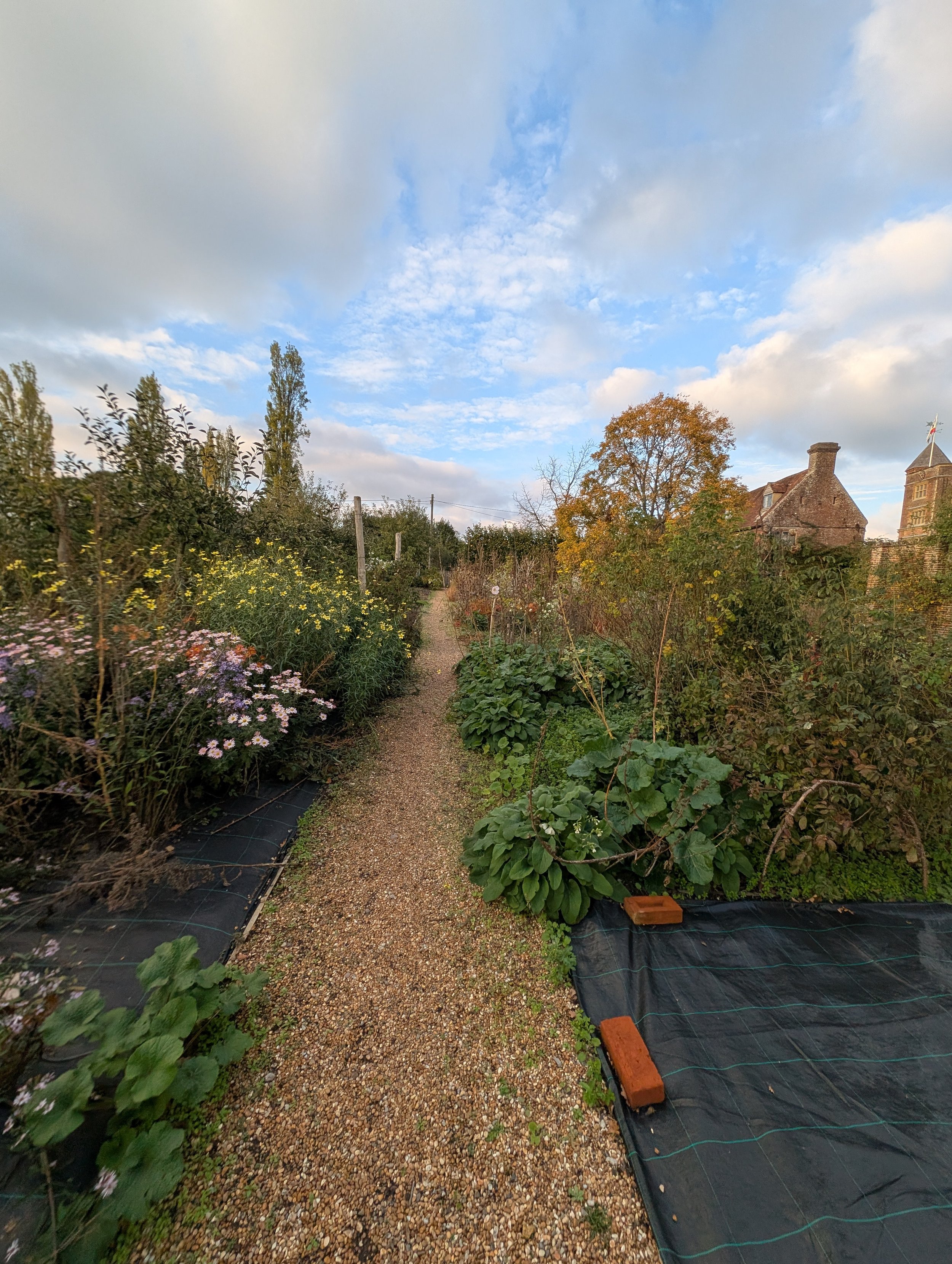
The story continues in Sissinghurst’s vegetable garden, where the National Trust describes a no-dig approach. Compost or mulch is added to the surface each year, rather than dug into the heavy Wealden clay. Companion planting and locally sourced materials also form part of the garden’s organic practices. Discover Sissinghurst’s vegetable garden.
Seen together, the composting area and the growing beds tell a connected story. Caring for a garden includes looking after what it produces at the end of the season, as well as what it produces at its peak.
Sissinghurst’s cake method draws inspiration from both bokashi and traditional composting. The team specifically describes it as not fully anaerobic, so it is an approach adapted to this garden rather than a standard sealed bokashi system.
That willingness to adapt is part of the lesson. The right process must suit the materials, the space and the people caring for it.
We left with an appreciation for more than the borders. The composting area showed another side of Sissinghurst: gardeners and volunteers contributing to the continuing work of caring for a place, with an eye on the resources it uses.
For those of us gardening at home, it is an encouraging place to start. The next pile of cuttings is an opportunity to look more closely at what our own gardens can reuse.
Watch our Sissinghurst visit, or explore Agriton’s green-waste bokashi guidance to learn more about managing organic material in your garden.
Compost-method details are based on Sissinghurst’s information boards photographed during our visit. Volunteer activities and vegetable-garden practices are sourced from the National Trust.