
The Hidden Universe Beneath Your Feet
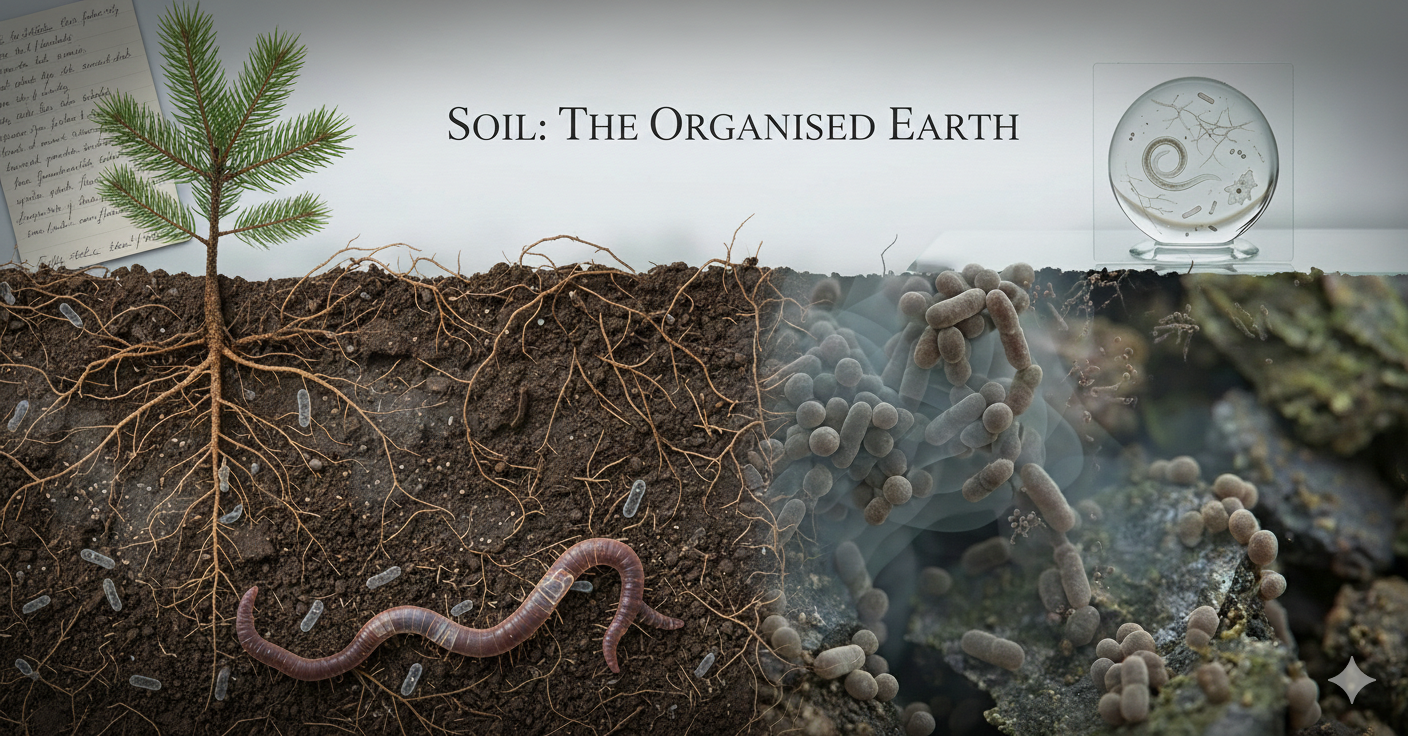
We often judge the health of our land by the vibrancy of a leaf or the weight of a harvest. But the real story of ecosystem function unfolds at a scale invisible to the naked eye.
Through the lens of a microscope, the Soil Food Web reveals itself as a functioning, communicative and highly adaptive biological engine — not just “dirt”, but a living infrastructure of bacteria, fungi, protozoa and nematodes.
Recently, we deepened our own practice by undertaking advanced microscopy training with Soil Ecology Lab — and it fundamentally sharpened how we observe, count and interpret soil life. Their hands-on, practical training bridges theory and field reality, giving growers and land managers the confidence to diagnose biology properly rather than guess.
If you are serious about understanding soil beyond lab reports, their training is genuinely worth exploring.
1. The Plant Is the Ultimate Decision Maker
One of the biggest misconceptions in soil management is that we can “balance” biology by simply adding the right input.
Microscopy tells a different story.
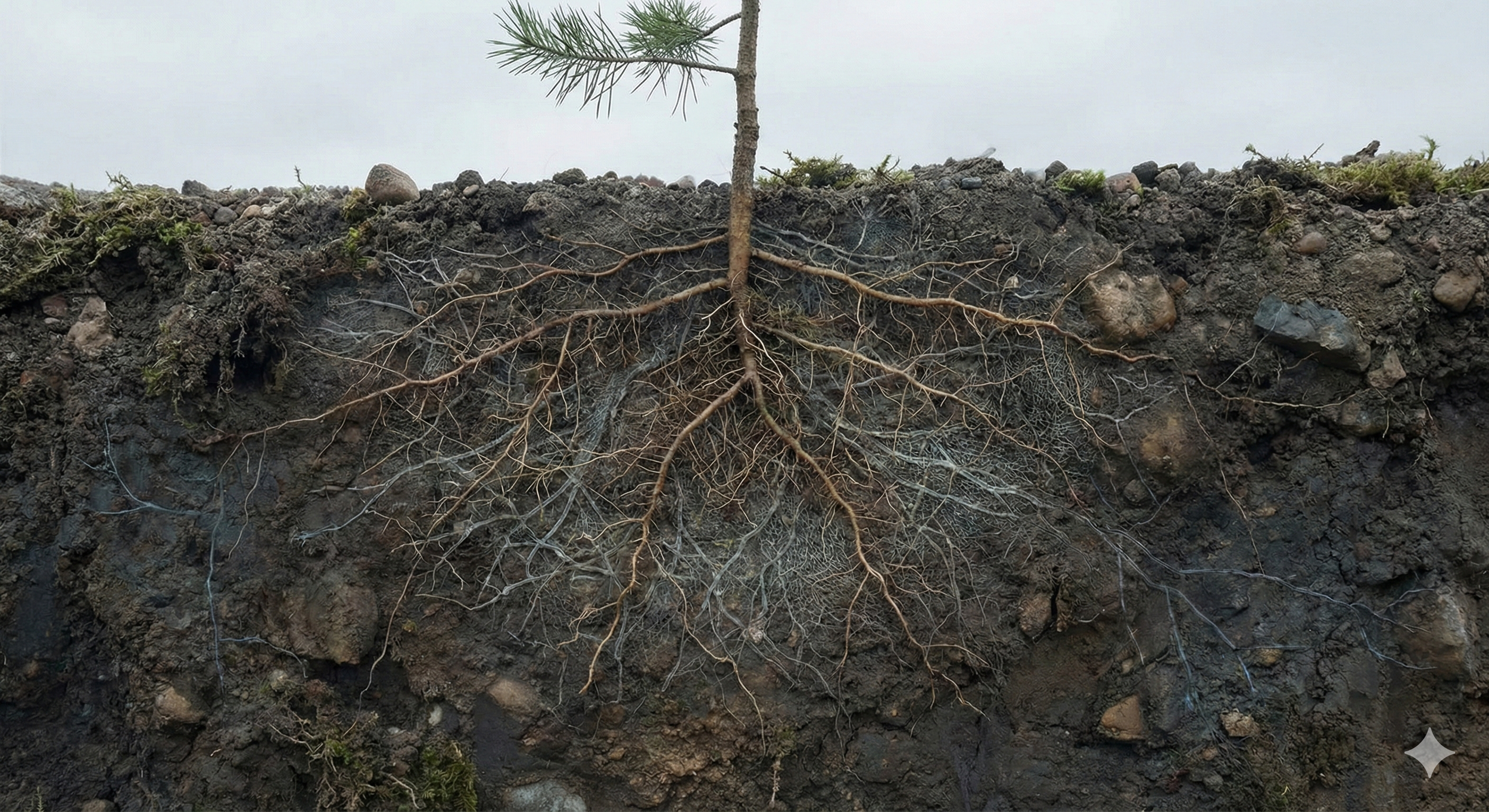
In multiple trials, high-quality fungal extracts were applied to bulk soil for months with almost no measurable shift in fungal-to-bacterial ratios. Yet at the root surface — in the Rhizosphere — fungal concentrations soared.
In one pine sapling study:
Fungal biomass at the roots increased dramatically
Microbial applications led to a 70× increase in salicylic acid production
Drought resilience improved — even though surrounding soil appeared unchanged
The conclusion?
The plant selects its microbial partners through root exudates. It dictates who lives, who thrives, and who fades away.
Implication:
We are not soil chemists trying to “force ratios.”
We are soil stewards providing the biological menu — and allowing the plant to choose.
2. Earthworms Are Soil Quality Control Managers
Earthworms are often described as biological ploughs. That is far too simplistic.
Under the microscope, their true role becomes clear: they are regulators of microbial populations.
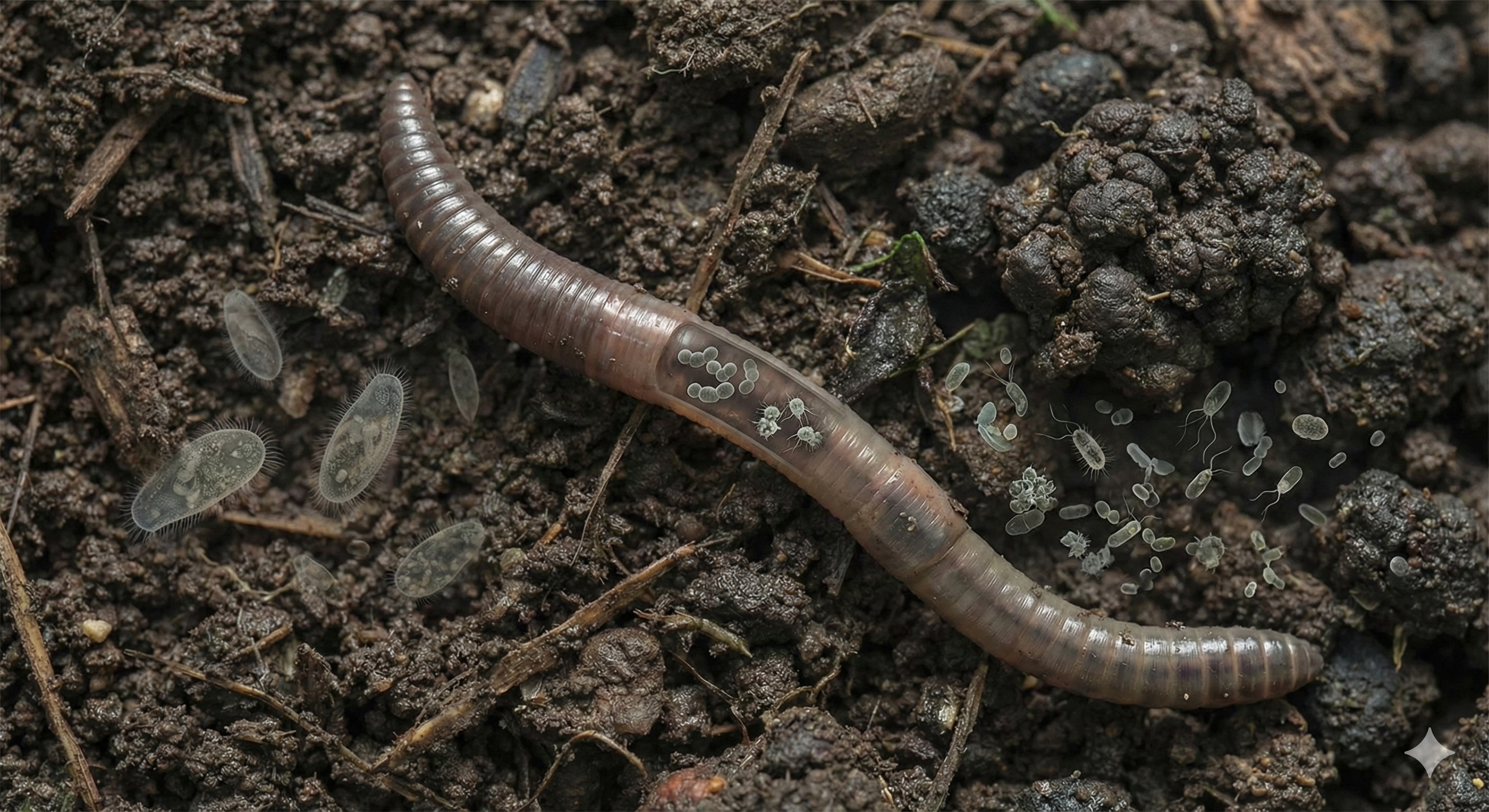
In an experiment where compost was deliberately contaminated with ciliates (organisms often linked to anaerobic, putrid conditions), composting worms were introduced. Within 48 hours:
Ciliate cysts disappeared
Beneficial flagellates dominated
The microbial balance shifted back toward aerobic stability
The worm gut acts as a biological filter — selecting for beneficial organisms and suppressing detrimental populations.
Implication:
Earthworms are not just decomposers.
They are guardians preventing systems from sliding into anaerobic collapse.
3. The “Dominant Hand Effect”: Why Method Matters
Microscopy teaches humility.
When placing an 18×18 mm coverslip onto a 50-microlitre drop, something subtle happens: fluid and organic matter accumulate opposite the analyst’s dominant hand. This is known as the Dominant Hand Effect.
If a right-handed analyst only scans the centre of the slide, results can be wildly skewed.
To correct for this, structured methods are used:
The “Five of Dice” pattern (corners + centre)
Swimming lanes (systematic strip scanning)
One of the biggest takeaways from training with Soil Ecology Lab was the importance of repeatability. Calibration between analysts, consistent dilution ratios, and disciplined slide scanning are essential if soil biology data is to mean anything.
Data is only as good as the discipline of the observer.

4. Quorum Sensing: The Secret Conversations of Bacteria
Soil life is not random chaos — it is organised communication.
Through a process called Quorum Sensing, bacteria release chemical signals to measure their population density. Only when they reach a threshold do they activate coordinated behaviours.
In a landmark study, researchers genetically “blinded” bacteria so they could not sense these signals. When introduced into mice, the bacteria remained harmless — they never detected enough of their peers to trigger toxin production.
In soil systems, this means:
Nutrient cycling is coordinated
Enzyme production is regulated
Pathogenic behaviour depends on population density
Implication:
Soil is a communicative network.
Resilience depends on these open-source microbial conversations remaining intact.
5. Spontaneous Functionality: The Nitrogen Fixation Paradox
One of the most fascinating discoveries in soil microbiology is spontaneous functional adaptation.
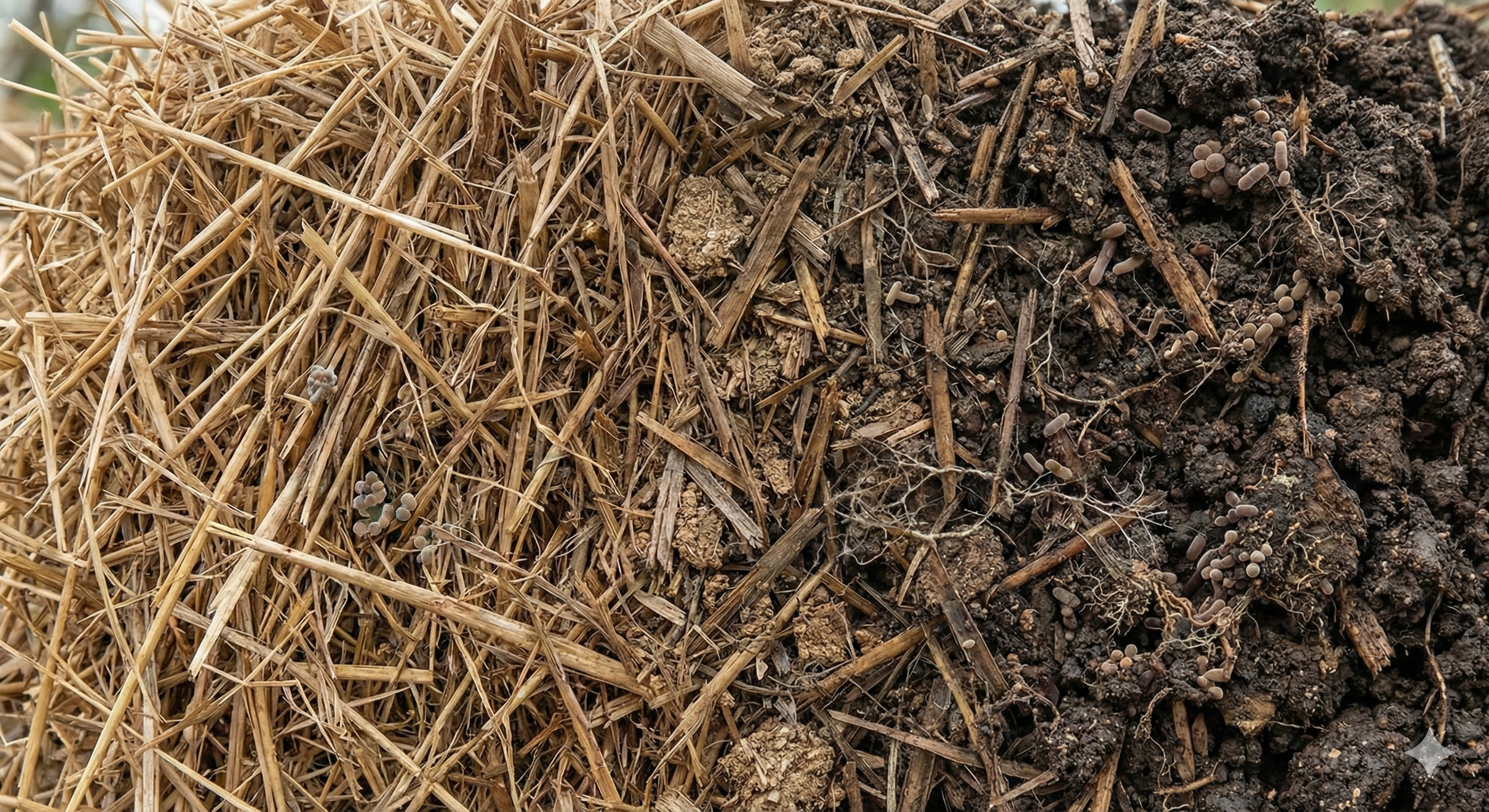
In a “straw-only” compost experiment:
Initial carbon-to-nitrogen ratio: 87:1
Initial nitrogen: 0.5%
After 13 months: 16:1 ratio
Nitrogen doubled to 2.5%
13 nitrogen-fixing species emerged
No significant nitrogen was added.
How?
Microbial communities adapted. Through mechanisms likely involving horizontal gene transfer, functionality emerged based on environmental demand.
When cellulose needed breaking down, cellulose-degraders flourished.
When nitrogen was limiting, nitrogen-fixers proliferated.
Implication:
If we provide organic matter and moisture — the infrastructure — biology solves deficiencies itself.
Why Training Matters
Microscopy is powerful — but only when done correctly.
Our experience training with Soil Ecology Lab reinforced three critical points:
Correct sampling depth (typically 3 inches for bulk soil)
True composite sampling in windrows
Proper diaphragm “shadowing” to see transparent organisms
Allowing 5–10 minutes for bacteria to settle before counting
Understanding ecological indicators (ciliates vs flagellates, fungi vs actinobacteria, root feeders vs bacterial feeders)
Without structured training, it is easy to misidentify organisms or misinterpret ecological signals.
For growers, composters, land managers or educators wanting to build real diagnostic skill — their practical, UK-based training provides both confidence and rigour.
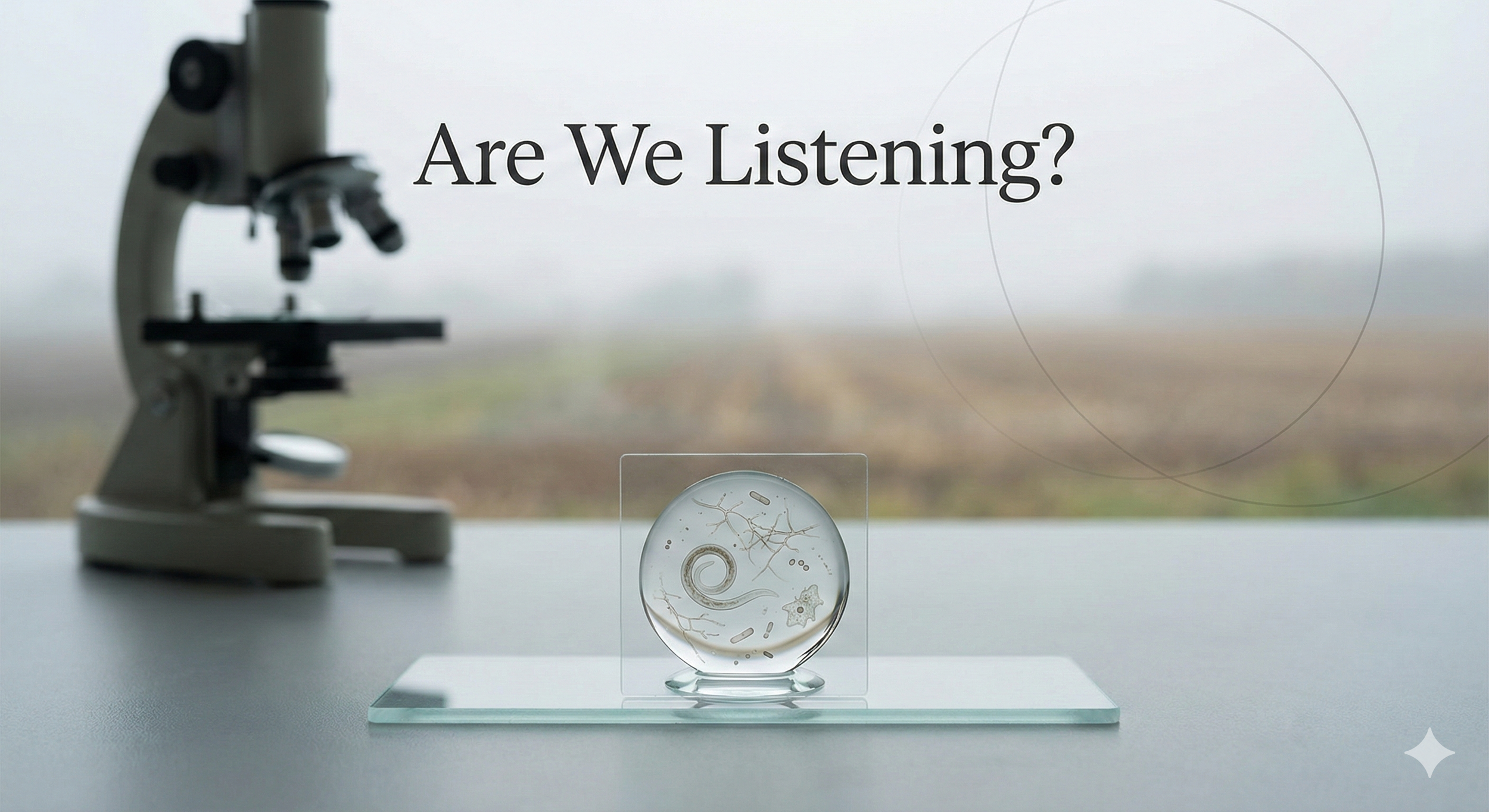
Are We Listening?
Microscopy reveals soil as:
Communicative
Adaptive
Structured
Responsive to plants
Resilient when infrastructure is present
In a single drop under an 18×18 mm coverslip, you may find:
Over 1,000 nematodes
Thousands of bacteria
Protozoa grazing
Fungi bridging nutrient flows
This is not passive material.
It is organised life.
If soil can:
Adapt nitrogen levels without inputs
Increase drought resilience via microbial signalling
Regulate its own biological balance
Then perhaps the real question is not:
“How do we control the soil?”
But:
Are we creating the conditions that allow soil biology to express its full potential?
And if we want to understand that hidden universe properly — learning to see it clearly, through proper microscopy training, is a powerful place to start.
