Wales’ First Hybrid Bokashi & Ridan School Composting System
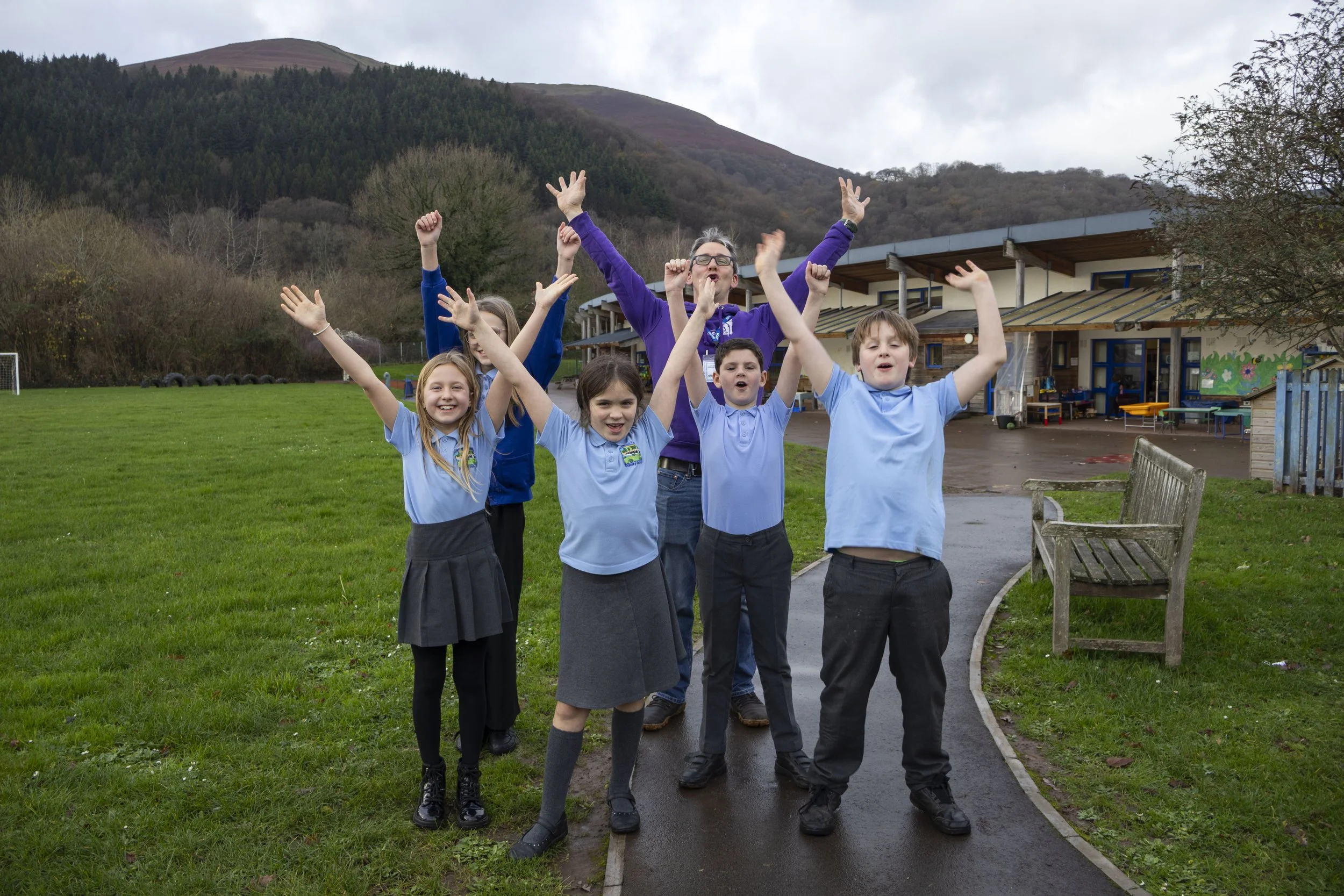
Llanfoist Fawr Primary School Case Study
Llanfoist Fawr Primary School in Monmouthshire has become the first primary school in Wales to implement a full hybrid Bokashi and Ridan composting system, transforming cooked food waste into nutrient-rich compost in approximately three months.
Supported by Monmouthshire County Council and the Shared Prosperity Fund, this pilot project demonstrates how schools can lead the way in sustainable food waste management, climate action and circular economy education.
🔗 Read the council feature here:
🔗 Monmouthshire Food Partnership article here:
Agriton UK supported the technical delivery of the Bokashi system and on-site implementation.
Why School Food Waste Is a Challenge
Traditional composting systems in schools are limited. Most can only process:
Raw fruit and vegetable scraps
Garden waste
Paper and cardboard
Cooked food, meat, dairy and plate scrapings are typically excluded due to:
Odour issues
Pest attraction
Slow decomposition
Hygiene concerns
As a result, large volumes of nutrient-rich organic material are sent to disposal.
Llanfoist Fawr Primary School decided to change that.
The Hybrid Solution: Bokashi + Ridan Composting
This pilot introduced a two-stage hybrid composting system that safely processes food waste unsuitable for conventional compost bins.
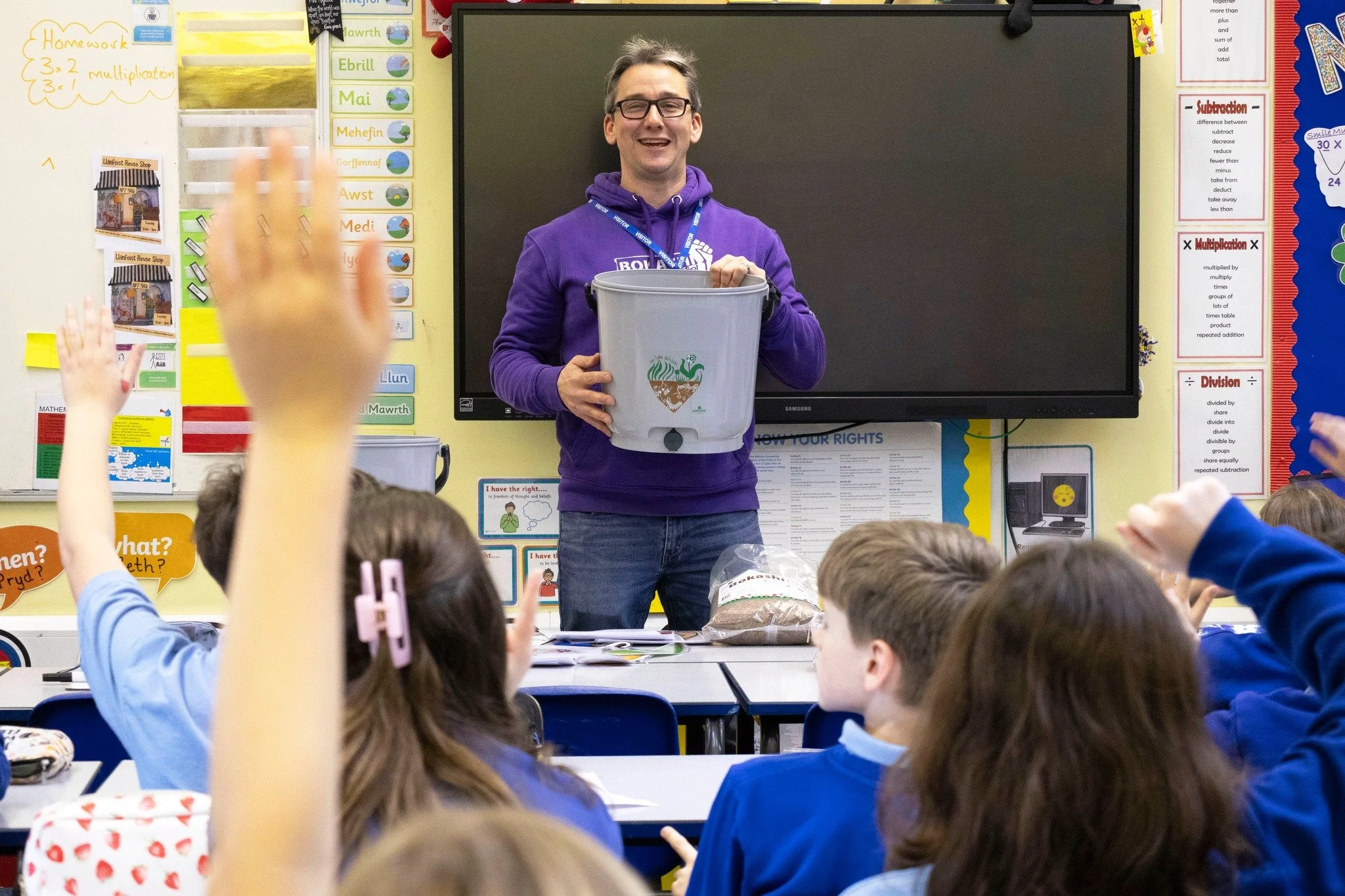
Stage 1: Bokashi Fermentation (Anaerobic Composting)
Bokashi is an anaerobic fermentation system using Effective Microorganisms (EM).
Food waste is placed in sealed containers and treated with inoculated Bokashi bran.
This allows schools to compost:
Cooked food
Meat and fish
Dairy
High-protein plate scrapings
Benefits include:
Odour suppression
Pest prevention
Nitrogen retention
Methane suppression
Safe handling of “difficult” waste
Unlike landfill, this controlled fermentation prevents harmful methane release.
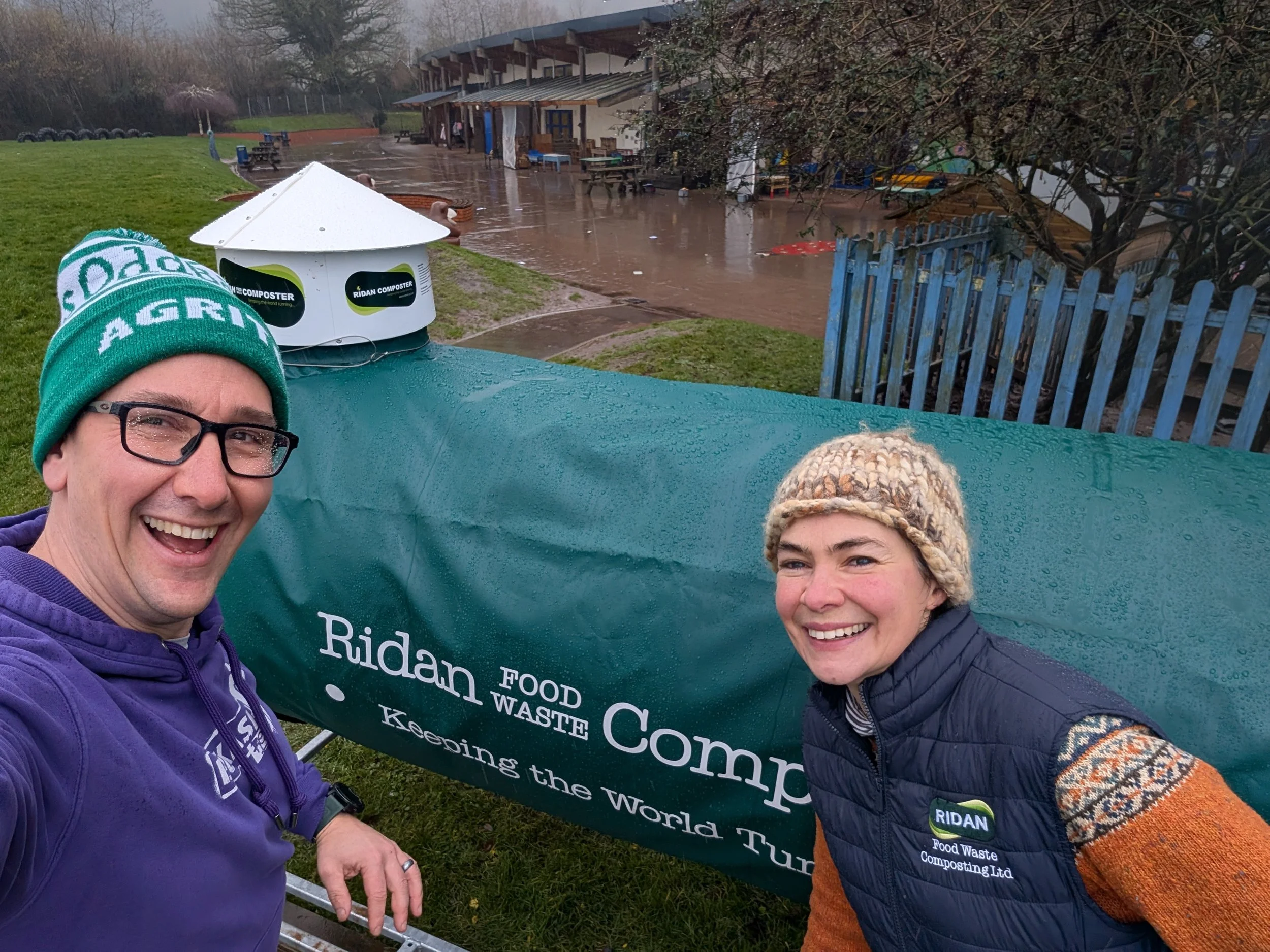
Stage 2: Ridan Aerobic Composting
After fermentation, the material is transferred into a Ridan food waste composter.
Here it is:
Mixed with carbon-rich material
Mechanically aerated
Stabilised within approximately 3 weeks
Final maturation takes place in compost bays.
Total time from waste to usable compost: around 90 days.
This rapid turnaround makes hybrid composting viable within a school term.
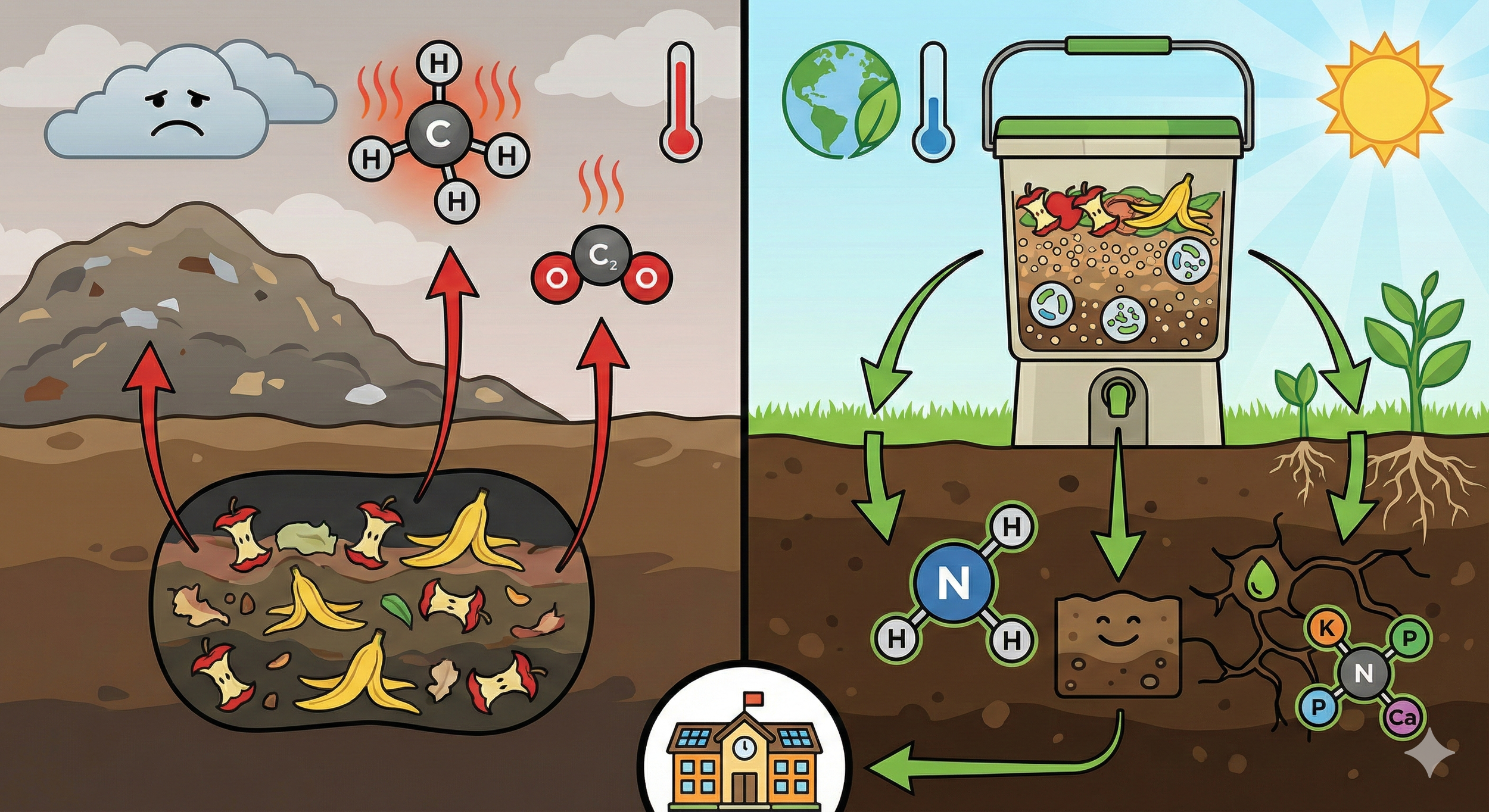
Climate Benefits: Reducing Methane & Transport Emissions
Food waste in landfill decomposes anaerobically and produces methane — a greenhouse gas significantly more potent than CO₂.
By managing waste on-site using Bokashi fermentation:
Methane production is suppressed
Nitrogen loss is reduced
Transport emissions are eliminated
Nutrients are retained in soil-building compost
This makes the Llanfoist pilot a practical example of school-based climate mitigation.
Circular Economy in Action
The compost produced is returned to the school grounds, where pupils grow:
Vegetables
Fruits
Flowers
This creates a closed-loop system:
Seed → Plate → Soil → Seed
Students are directly involved in:
Monitoring lunchtime waste
Managing Bokashi fermentation
Operating the composting system
Using finished compost in gardens
This hands-on approach embeds soil health and environmental stewardship into everyday learning.
Partnership & Delivery
This pilot was made possible through collaboration between:
Shared Prosperity Fund (SPF)
Agriton UK (Bokashi and technical implementation)
Cllr Sara Burch described the project as:
“A fantastic example of how schools can lead the way in sustainability while engaging children in meaningful, hands-on environmental learning.”
What This Means for Schools Across the UK
The Llanfoist Fawr case study demonstrates that:
✔ Schools can compost cooked food safely
✔ Meat and dairy can be processed on site
✔ Compost can be produced in under three months
✔ Climate impact can be reduced at source
✔ Students can lead sustainability initiatives
This hybrid Bokashi and Ridan model provides a scalable blueprint for:
Primary and secondary schools
Colleges and universities
Hospitals
Care homes
Public sector kitchens
The Llanfoist Fawr pilot proves that food waste does not need to be a disposal problem.
With the right biological approach and infrastructure, it becomes a resource.
Agriton UK is proud to support schools and institutions implementing Bokashi composting systems as part of wider circular economy strategies.
If you would like to explore hybrid Bokashi composting for your school or organisation, get in touch with Agriton UK.
Because waste is not waste — it’s nutrients in the wrong place.
